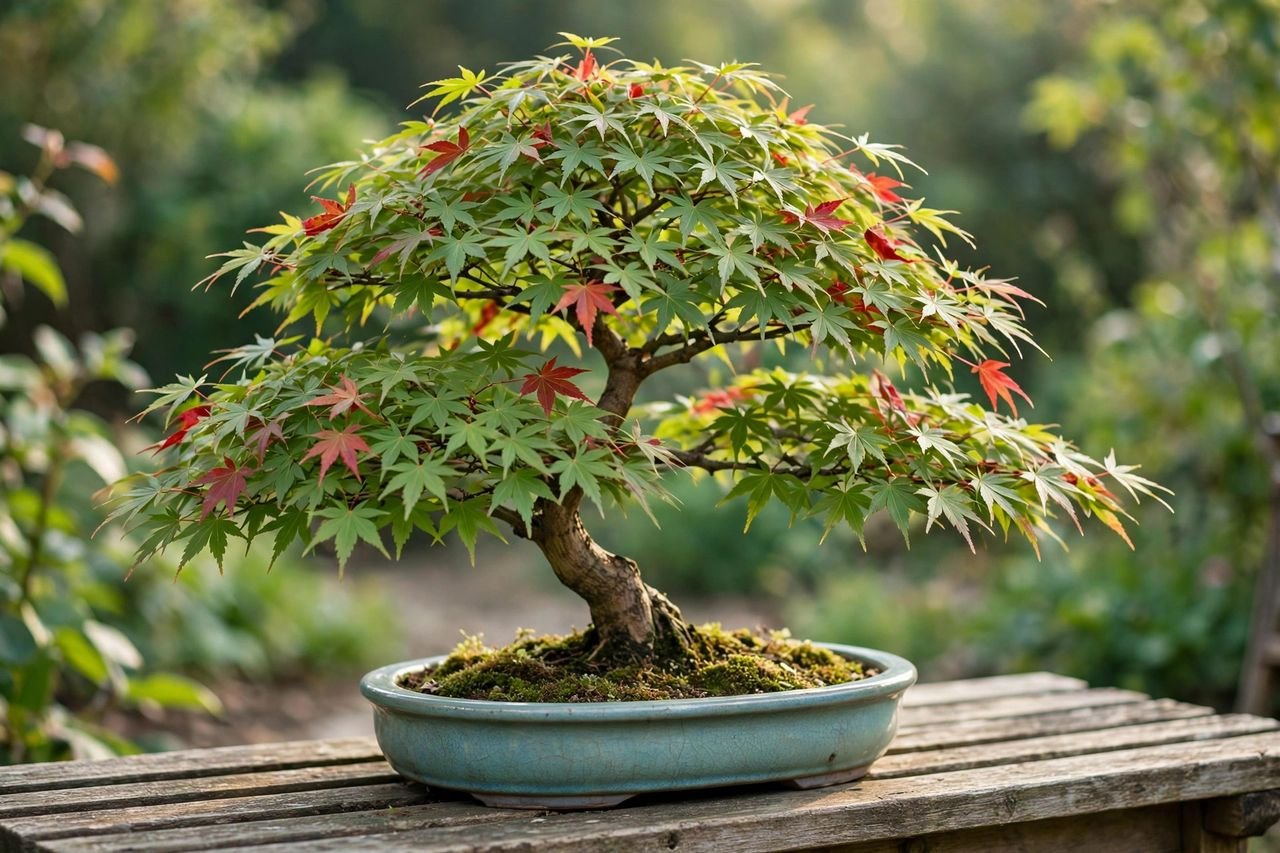
Choosing the right Japanese maple bonsai pot is the first step to a healthy tree.
A Japanese Maple bonsai can look very nice in the nursery but when you pot it up at home you might find it doesn’t look as nice. This is because the pot is too deep or too bright. After a few weeks the soil will remain damp, the leaves will turn lacklustre and the tree will stop growing because the pot only has one small drainage hole and no feet. The pot will make a nice frame for your tree but if you get it wrong your tree won’t look as nice and won’t be as healthy.
The Short Answer on Pot Choice
The best pot to use for your Japanese Maple bonsai is a shallow pot with at least 2 large drainage holes. The pot should have feet to raise it off the bench. The pot should be big enough to fit the roots in and allow some growth. Most informal upright maples will look nice in an oval or rectangular pot that is roughly 2/3 the height of the tree and the depth of the width of the trunk. The pot should be a muted glazed pot such as a pale green, blue or beige to compliment the leaves on the maple. A tree in training will need a larger training pot.
A good Japanese maple bonsai pot balances size, drainage, and style.
Why the Pot Matters More Than It Looks
Your bonsai pot has two purposes. To keep the roots alive during the hot summers and freezing winters whilst keeping your tree looking its best. If the pot is too deep the soil will remain damp at the bottom of the pot. There won’t be many roots down here and damp soil with no air will cause root rot.
If the pot is too shallow the soil will dry out by midday causing the fine roots to die and the leaves to become burnt. You want your tree to be healthy first and foremost and if you have the right pot for the roots it will usually look nice.
The right Japanese maple bonsai pot keeps roots healthy in every season.
Size: How Big Should the Pot Be?
Bonsai Empire have given 2 simple rules to follow:
Length: About Two-Thirds of the Tree’s Height
The pot should be roughly 2/3 the height of your tree. If your tree is 30cm you should use a 20cm pot. If you have a square or round pot it should be roughly 1/3.
This rule keeps a Japanese maple bonsai pot in proportion to the tree.
Depth: About the Width of the Trunk Base
The depth of the pot should be roughly the same as the diameter of the trunk. If your trunk is 3cm then use a 3cm pot. For more information on the mix of the soil (akadama, pumice and lava rock) click here.
Root Room: Leave Space to Grow
When repotting take your tree out of the pot and look at the roots. The pot should fit with a little trimming. You want around a finger width of fresh soil around the tree. If you have to cut a third of the roots away then it is too small. If the roots rattle then it is too big.
Drainage First: Holes, Mesh, and Feet
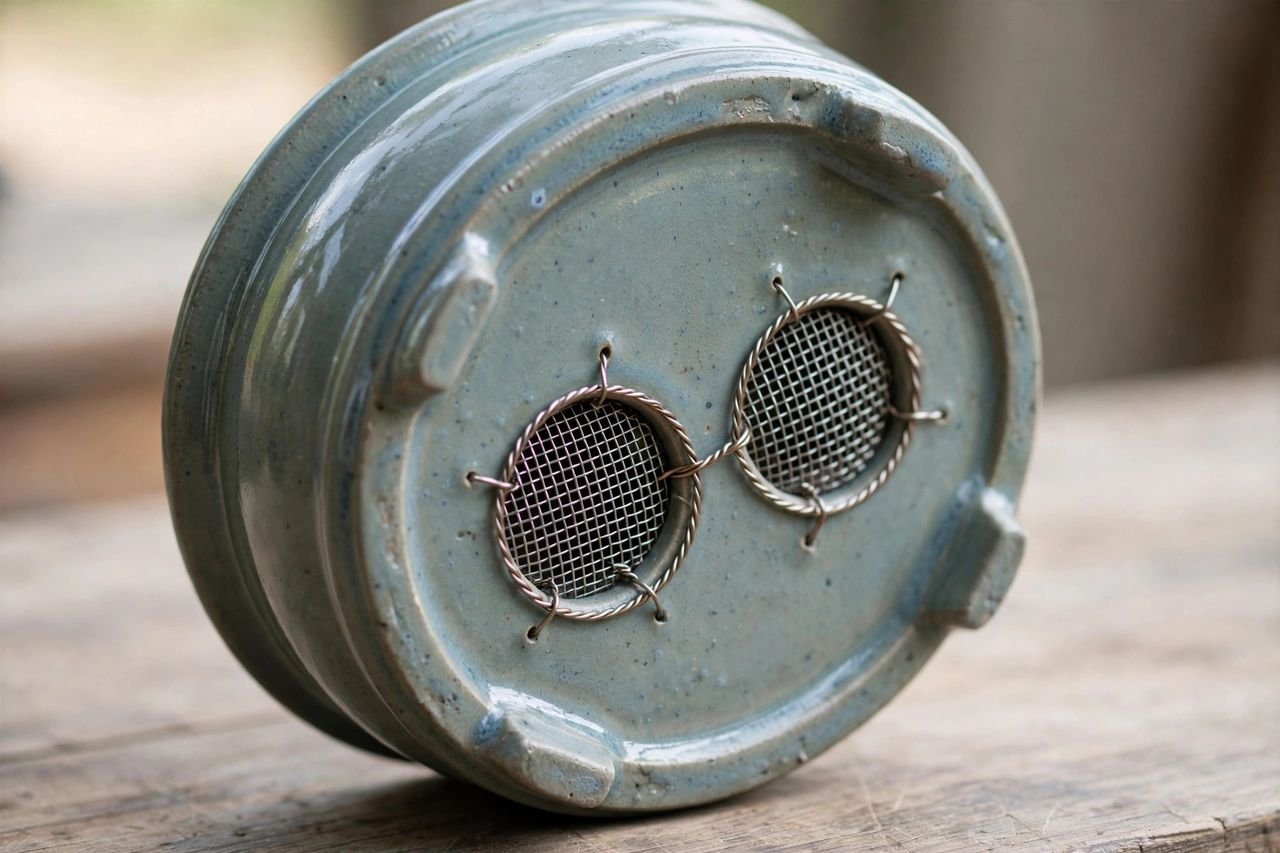
Your Japanese Maple bonsai should have at least 2 large drainage holes. This will help evenly drain the water and give you 2 places to thread your wiring through. Check the holes are large enough to fit a finger through (around 1cm). Add some fine wire mesh to the inside of each hole. Secure with a loop of wire. This will stop soil washing out but allow water to drain. Never use a pot with no drainage hole. The pot should have feet to raise the base off the bench. This will help water drain away. Check that the pot is frost proof.
Good drainage is the most important job of a Japanese maple bonsai pot.
Shape and Style: Matching the Pot to the Tree
Once you have got the right size and drainage your pot will start to look nice. Bonsai Empire have matched the pots to the trees. An informal upright tree with soft curves will look nice in an oval. A formal tree with straight lines will look nice in a rectangle. A cascading tree will need a tall and deep pot. Maples have changing leaves throughout the year so you want a muted pot. Pale green, soft blue, beige or grey brown. Never use a pot that will take away from your tree.
Shape is part of choosing a Japanese maple bonsai pot that flatters the tree.
Material: Glazed, Unglazed, or Plastic?
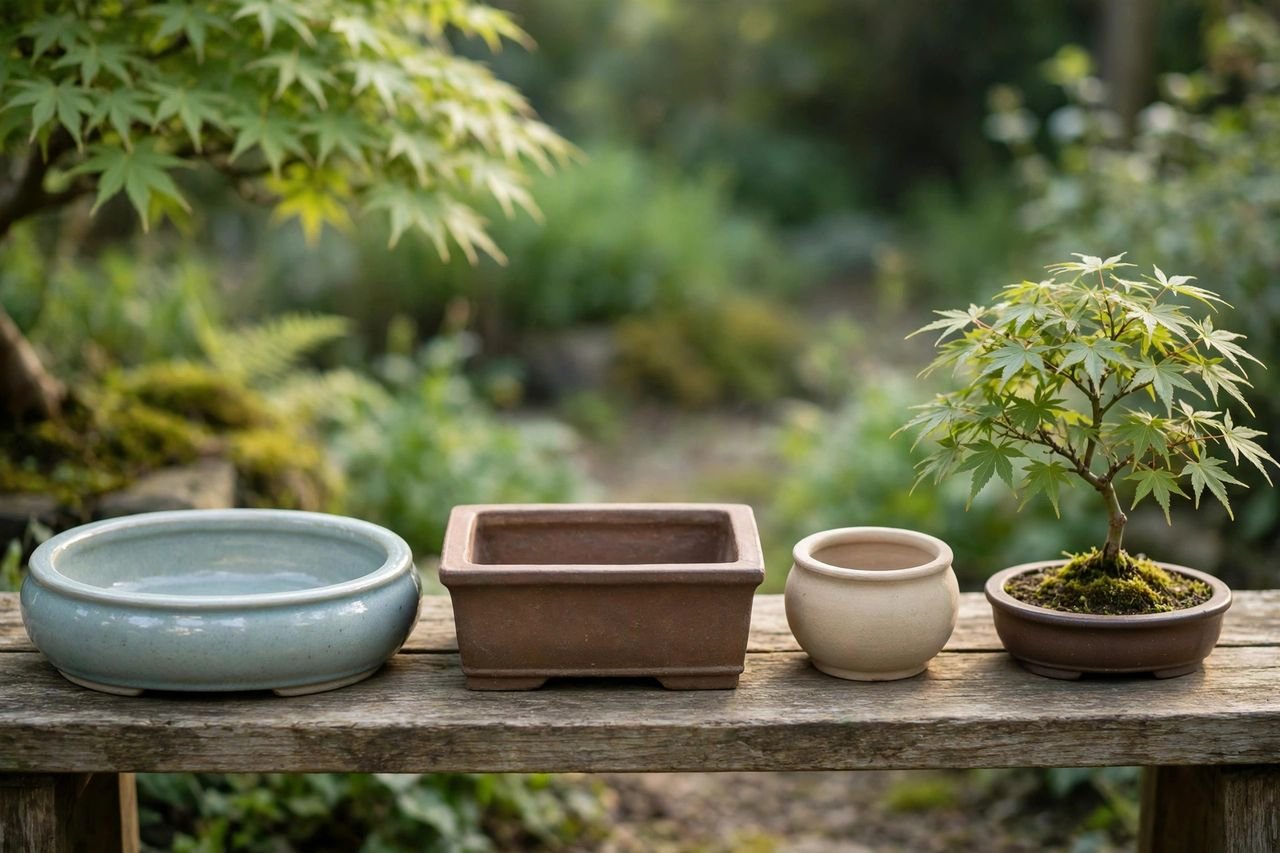
The material of your pot will change how It Looks, how heavy it is and how it handles frost. The table below shows the differences.
The material changes how a Japanese maple bonsai pot holds moisture.
Comparing Pots Side by Side
| Pot type | Best for | Drainage | Weight and stability | Watch out for |
|---|---|---|---|---|
| Glazed ceramic | A refined maple on display | Good, with two large holes and feet | Heavy and stable in wind | Bright colours can outshine the tree; check it is frost-proof |
| Unglazed ceramic or terracotta | Training and development | Good; porous walls dry a little faster | Heavy and stable | Dries out faster in hot weather |
| Plastic training pot | A young tree growing out | Good, with several large holes | Light, so it can blow over | Plain looks; roots can heat up in sun |
The classic pot to use for a showy Maple is a glazed ceramic pot. The glaze will help the pot retain some moisture. The muted glaze will help make the leaves stand out. Bonsai Empire note that usually broadleaved trees go in glazed pots and conifers in unglazed.
Unglazed pots will dry quicker. This is good for wet climates but will be very thirsty in hot summers. See our watering guide to see how to check how moist your pot is. Plastic pots are light and cheap. They are perfect for training but can blow over and get hot in the sun. Whatever pot you choose check it is frost proof.
Training Pots vs Display Pots
A tree in training will need a different pot to a showy tree. A common mistake is to mix them up. Trees in training are growing quickly so they will need a larger and deeper pot. Often they will be plastic or plain unglazed. A showy tree will have a set shape. They are not growing quickly so only have a little of the roots cut back when repotting. They will need a shallow show pot. If you use a show pot too early then it will slow down the development of your tree.
A tree in training needs a roomier Japanese maple bonsai pot than a show tree.
How to Choose a Pot, Step by Step
Use these steps to find the right Japanese maple bonsai pot for your tree.
Measure your tree.
Take your tree out in spring and check the roots. The pot should fit with the trimmed roots.
Shortlist your pots. Choose a pot that is 2/3 the length of your tree. The depth should be the same as the width of the trunk.
Check the drainage. The pot should have 2 large holes. It should have mesh and feet. Turn your pot over to check.
Check it is frost proof. Ask if it is designed for outdoor bonsai.
Try your tree in the pot. Place your tree next to your pot. It should frame your tree.
Check it is stable. If your tree is top heavy it will blow over. Choose a heavier pot.
Pot in early spring. Repot your tree when the buds are swelling. Wire your tree in and water well. Keep it somewhere sheltered for a week.
A Pot-Selection Checklist
Don’t buy your pot until you have ticked all the boxes!
A suitable Japanese maple bonsai pot should pass every check below.
- Length – 2/3 the height of your tree.
- Depth – roughly the width of the base of your trunk.
- Space – Enough space for roots and soil.
- Drainage – At least 2 large holes with mesh.
- Feet – Feet to raise the pot off the bench.
- Frost proof – Designed for outdoor use.
- Oval – Most maples look nice in an oval.
- Muted – Don’t take away from the leaves.
- Stable – Not top heavy.
- Tree is the main thing you will notice.
Cultivar, Climate and Pot: What Changes for Pot Choice
The right pot for your Japanese Maple bonsai will depend on what tree you have and where you live. The green Acer palmatum is the hardiest and will cope with most pots. Red cultivars need sun to keep their red colour. They will need a pot that dries well. A deep pot will keep the soil damp and make the colours look dull. Variegated and laceleaf maples will burn easily so will need a pot that dries evenly.
A young tree will need a larger pot. An old showy tree won’t need much space. In hot and dry climates you will want a deeper glazed pot to keep the moisture. In cool and wet climates you will want a shallow unglazed pot to help drainage. See our sunlight guide to see how much sun your maple will need to balance out. Dark pots will make the roots get hot in full sun. Only repot in early spring. Never in mid summer or deep winter.
Climate changes what a Japanese maple bonsai pot must do.
Two Pots, Two Different Trees
A grower in a mild climate has a young green maple. It is 25cm tall and has a 2cm trunk. She has potted it up into a shallow glazed oval pot. It is 17cm long. However by July the tree is wilting everyday and the leaves are burning. The pot was wrong as it was a show pot and the tree was in training. It was also too shallow for the quick growing roots. She should use a larger training pot with 2 large drainage holes.
Another grower has a red showy maple in a deep dark rectangular pot. The soil is staying damp for days after rain. Moving it into a shallow glazed oval pot (around 27cm long) will compliment the red leaves and the tree. These are just examples.
Both examples show why the right Japanese maple bonsai pot matters.
Pot Choice Mistakes to Avoid
Too small. A tree can suffer from root starvation within a season if you choose a pot that looks nice but is too small. If you have to cut the root ball back a lot then choose a pot one size larger.
Not enough drainage. Only one small hole can easily get blocked. A maple will drown if there are no drainage holes. Check underneath and add mesh.
Using a show pot. A shallow show pot will slow down your tree as it is in training. Use a training pot until the trunk and branches have developed.
Taking away from your tree. A bright pot or a large pot will take away from your tree.
Not frost proof. A pot can look nice in a warm shop but will crack in the first cold winter. Only buy pots that are designed for outdoor bonsai.
Most mistakes start with the wrong Japanese maple bonsai pot.
Pot Choice Not Improving? Check This
Water is sitting on the soil. Check the holes are not blocked and add mesh next time you repot.
Soil is staying damp for days. The pot is too deep or too large for the roots. Move your tree into a shallower pot next time you repot in spring.
Tree is drying out every afternoon in summer. The pot is too shallow or the material is drying too quickly. Water more regularly and give some shade in the afternoon. Next spring choose a deeper or glazed pot.
Pot is tipping over in the wind. The pot is too light for your tree. Choose a heavier or wider pot.
Pot has cracked over winter. The pot wasn’t frost proof. Replace in spring. Check the roots before repotting.
What Growers Ask About Pot Choice
How big should my Japanese Maple bonsai Pot Be?
Around 2/3 the height of your tree. The depth should be the same as the width of the trunk. If your tree is 30cm then use a 20cm pot.
This is the simplest rule for choosing a Japanese maple bonsai pot.
Do bonsai pots need drainage holes?
Yes! At least 2 large holes. If there is only one small hole or no holes your maple will drown.
Should I use a glazed or unglazed pot?
Most maples will look nice in a muted glazed pot. Training and wet climates will look nice in an unglazed pot.
A muted glaze suits most Japanese maple bonsai pot styles.
Can I use a plastic pot?
Yes! Plastic pots are light and cheap. They are perfect for training your tree. They aren’t good for showing off your tree as they can blow over and get hot in the sun.
A plastic Japanese maple bonsai pot is fine while the tree is still developing.
When should I change my Japanese Maple’s pot?
Only when you are repotting in early spring. Never in mid summer or deep winter. Young maples may need changing every year or 2. A showy tree can wait 3-5 years.
Conclusion
Your Japanese maple bonsai will let you know what pot to use. The pot should be around two thirds the height of your tree and the depth should be similar to the diameter of the trunk. The pot should be heavy to keep it stable in the wind. Broadleaved maples should be kept in glazed pots. If you live somewhere that gets cold in the winter then the pot should be frost proof. If the pot is too large then the soil will stay damp. If it is too small then the soil will dry out. This will punish your roots. Provide your tree with the right pot and it will reward you with the shape you want.
Sources
Trusted reference guides for further reading: