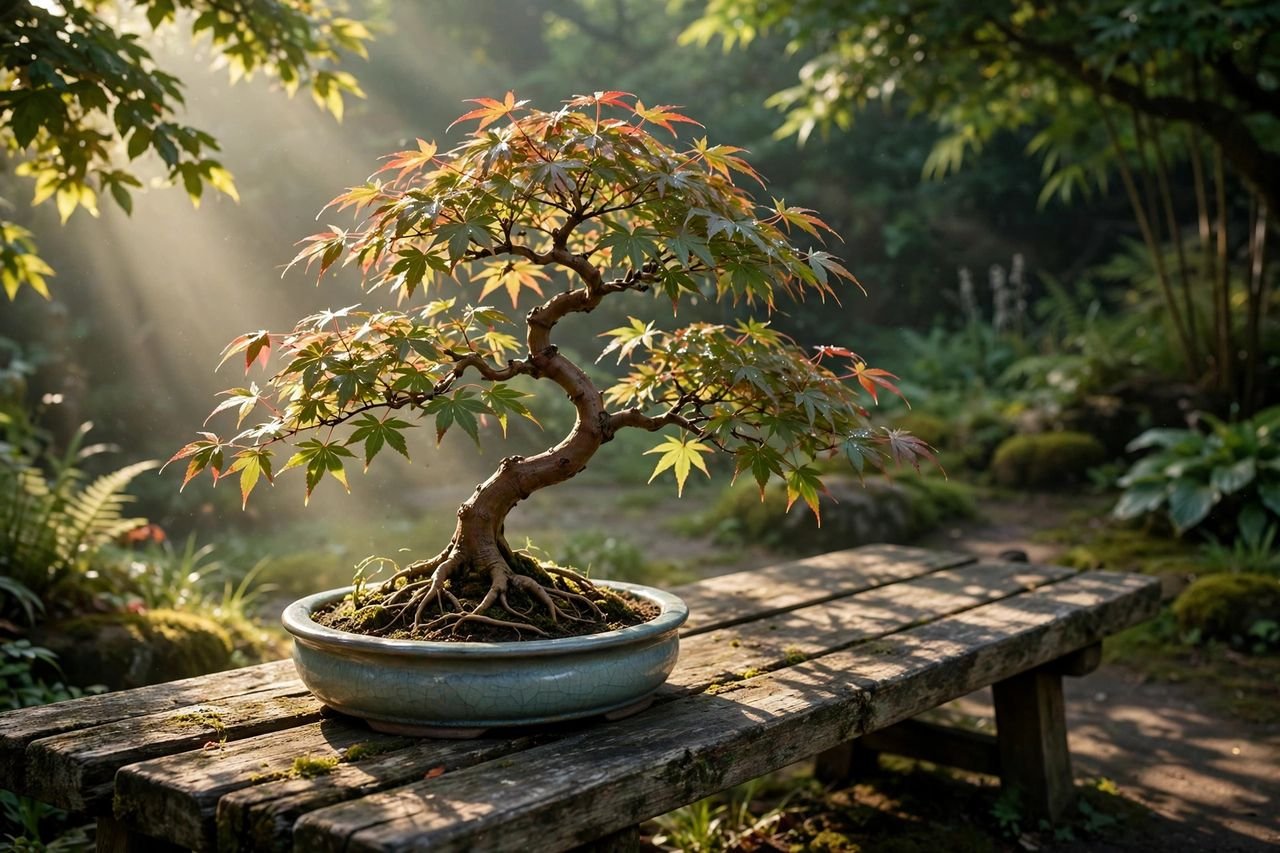
A Japanese maple bonsai can look fine in April but by July the leaves will have burnt. The leaves will begin to crisp around the edges, the colour will fade and growth will stop. This is because your tree is getting too much direct harsh sunlight in a small pot and not protected from the wind. Getting Japanese maple bonsai sunlight right is the first step.
Sunlight, in Short
Most Japanese maple bonsai prefer some morning sun and afternoon shade. They should be getting a few hours of soft sun in the morning and bright shade or filtered sun. The short answer is that Japanese maple bonsai prefer morning sun and will burn in afternoon sun.
Trees in cooler climates can tolerate more sun where as in a hot climate they will need more shade. The right amount of Japanese maple bonsai sunlight depends on your climate.
What Light Does for a Maple Bonsai
Light is essential for your tree. The leaves use the sunlight to produce sugars which will then be used by the shoots, roots and buds. If there isn’t enough light your tree will have long, thin shoots, large pale leaves and thinning inner branches.
Too much light will cause problems. The leaves will lose water faster than the roots can replace it. The thin maple leaves will get hot and begin to crisp around the edges. This is made worse by the bonsai pot. The pot will not have much soil so the roots will get hot and dry quickly.
The key is to ensure your tree has enough light to grow well but not too much to cause the leaves to burn. Getting Japanese maple bonsai sunlight in balance is the aim.
Morning Sun, Filtered Light, and Afternoon Sun
These three are not the same. The amount of light your tree gets is not as important as the type.
Morning sun is light before around 11am. It is cooler and often quite humid. This means the leaves can use the light without losing much water. Most maples will tolerate morning sun the best.
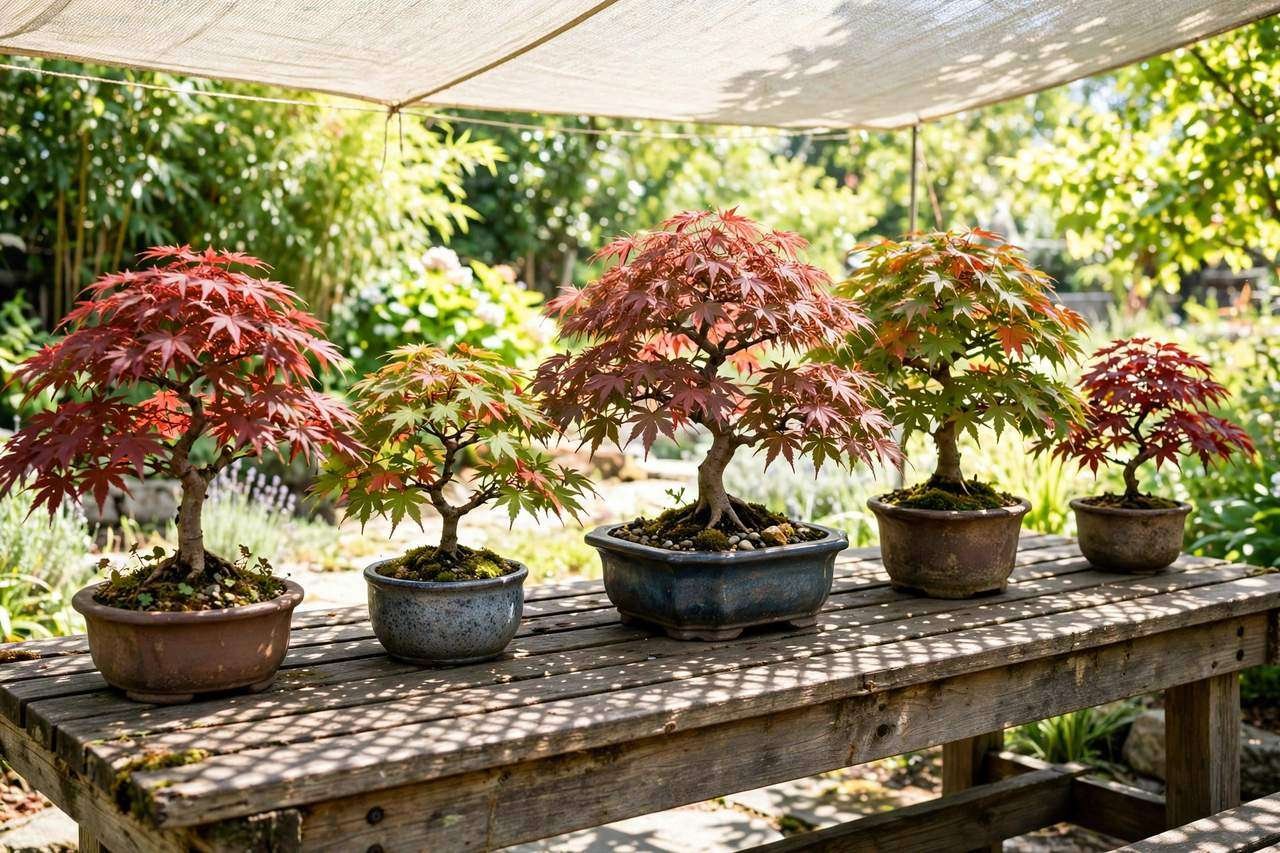
Filtered sun is light that has been filtered through leaves, shade cloth or a slatted screen. This is bright but the leaves are not sat in harsh direct sunlight for hours. A good example would be dappled shade under a large tree. Laceleaf and variegated cultivars will tolerate this best. Any tree on a very hot day should be in filtered sun. That is ideal Japanese maple bonsai sunlight on a hot day.
Afternoon sun is light from around 1pm onwards. This will be the hottest and driest part of the day. The leaves will already be hot, the soil will be drying and the wind often picks up. This is the main cause of leaf scorch.
How Much Sun Is Enough?
There is not a specific amount of sun that will work in all situations. The climate will affect how much. As a general guide try to give your tree around 4-6 hours of direct or bright filtered light in the growing season. Most maples will tolerate morning sun. That is a practical target for Japanese maple bonsai sunlight in the growing season.
If you live in a hot climate and have summer temperatures of over 90°F (32°C) then your Japanese maple bonsai will not tolerate much sun in the summer. Try to give them 2-4 hours of morning sun and then shade. If your temperatures are over 95°F (35°C) then even morning sun may be too much for your small tree in a shallow pot.
Signs of Too Little Light
Your tree will show signs of not enough light slowly over a few weeks. The shoots will be long and thin. Leaves will be large and pale as they try to get more light. Inner branches will lose leaves and die back as they won’t get any light. Red leaves will fade to green and will lack autumn colour.
Try to move your tree gradually.
Signs of Too Much Sun
Your tree will show signs of too much light quickly, often within a day or two of a hot period. The pattern to look for is where the damage sits: leaves on the afternoon-sun side crisp first, while shaded leaves stay fine. That tells you the light dose is too strong, not that the tree is sick. For the full list of leaf symptoms, see the summer care guide.
Scorch is rarely caused by just the sun. Dry soil, hot wind and a small pot will all make it worse. According to the University of Florida Extension, maple leaves often scorch in hot summer weather in USDA zones 7b and 8. Often due to not having some shade or watering in dry weather. Dry soil or poor roots can cause scorch. The sun, wind and dry soil work together. In short, too much Japanese maple bonsai sunlight, with dry soil and wind, causes scorch.

How to Move a Tree to More Sun
Never move your maple directly from shade into full sun. The leaves will be thin and soft and will burn within a day. The best way to start is to give your Japanese maple bonsai morning sun. Move your tree gradually over 1-2 weeks.
Start with 1 hour of morning sun and then move back into shade. Repeat this for 2-3 days.
Every 2-3 days increase the morning sun by an hour. If you notice the edges beginning to crisp then go back a step.
Once the tree can handle a full morning of sun without any issues then leave it there.
If it is a very hot or windy day then move back into shade.
Placement Through the Seasons
Spring
Spring is a good time for your tree to get some sun. They are putting on new growth so give them as much morning sun as they can handle. On cooler days give them full sun. Be careful of late frosts and move them under cover if there is a risk of frost.
Summer
Most Japanese maple bonsai will be in morning sun and afternoon shade. If temperatures are over 90°F (32°C) then give them filtered sun or full afternoon shade. Water in the morning to keep the soil moist. Check the soil again in the afternoon on hot days. See our watering guide to check how moist the soil is. In summer, Japanese maple bonsai sunlight should be gentle morning sun, not hard afternoon sun.
Autumn
As the days begin to cool move your tree back into more sun. Getting good light in autumn will help your tree produce sugars and good colour. Keep your tree outside. They will need cool nights to go into dormancy. In winter wind and pot protection are more important.
Cultivar, Age and Pot: What Changes for Sunlight
Green and red cultivars
Green Acer palmatum are the hardiest. They will tolerate more sun than most cultivars and will recover from a bad day. Red cultivars such as Bloodgood types will need some sun to keep their red colour but are more prone to scorch. Give them morning sun and afternoon shade. If they are in deep shade they will turn green. This means you should give them more morning sun. For red types, Japanese maple bonsai sunlight in the morning keeps the colour without scorching.
Variegated and laceleaf cultivars
Variegated cultivars will be the most delicate. The pale areas of the leaf will not have any green pigment so will scorch first. Give them filtered sun and afternoon shade. Even in a mild climate. According to the North Carolina Extension variegated types are more prone to scorching.
Laceleaf (dissectum) cultivars have very delicate leaves with lots of edges. This will dry out quickly so they will need dappled shade in summer. A young or newly potted tree needs more shade, because its roots cannot yet replace water fast enough. According to the North Carolina Extension laceleaf types should be in afternoon shade. New foliage can scorch in full sun in hot areas if the soil dries out.
Pot size and substrate
A tree in a shallow pot with free draining gritty substrate will dry out quickly so will need more shade. If you use a slightly more moisture retaining substrate or add some moss as a top dressing you can give your tree a few more hours of sun. With a moisture-retaining mix, Japanese maple bonsai sunlight can be a little stronger.
Sunlight on a Real Tree
A grower in a hot dry area of the United States has their red maple bonsai on a west facing patio. The tree is getting midday to evening sun. By July the leaves are beginning to crisp around the edges and the soil is dry by noon. This is due to the position of the tree.
Moving the tree to the east side of the house will give it sun until 11am and shade after. This will help most of the scorching in a week. This is not a personal story but to give an example. The position of your tree is just as important as how much you water. The fix was simple: Japanese maple bonsai sunlight in the morning, shade after 11am.
Sunlight Mistakes to Avoid
- Giving your tree full sun all day. Just because your tree is an outdoor tree doesn’t mean it will tolerate full sun. In the wild Japanese maples often grow as understorey trees so get filtered sun. A bonsai pot makes it harder to give full sun.
- Judging by how bright the light looks. The tree may look bright but still be too shady. Or the light may look average but be harsh in the afternoon. If your tree has long pale shoots then it is not getting enough light. If the edges are turning brown and crispy then it is getting too much.
- Moving your tree suddenly. If your maple has been in shade for months and you suddenly put it in the sun it will scorch. Even morning sun. Move your tree gradually over 1-2 weeks. This also applies to trees bought from a shaded nursery.
- Forgetting that wind will dry the leaves. A windy bench can cause your maple to scorch even if it is in shade. The movement of air will cause the leaves to dry out quicker than the roots can replace the water. Ensure your tree is protected from strong winds.
Light Problems? Start Here
If your leaves are scorching move your tree into afternoon shade today. If the soil is dry then water well. Ensure the drainage holes are clear. Don’t cut off all of the scorched leaves. Only cut off completely dry leaves.
If your tree is looking leggy and pale then gradually move it into more morning sun. Don’t feed your tree to help. Feeding will not make up for the lack of light and can encourage soft growth which will burn. Fix the light first. See our care guide for feeding information. Fix the light first, and Japanese maple bonsai sunlight in the morning will do the rest.
Sunlight Questions, Answered
How many hours of sun do Japanese maple bonsai need?
Most trees will do well with 4-6 hours of direct or bright filtered sun. This should be mostly in the morning. That is the usual Japanese maple bonsai sunlight target.
Can Japanese maple bonsai tolerate full sun?
They can in a cool climate. If they are a hardy green cultivar and have plenty of water they can tolerate full sun in spring and autumn. In summer they will scorch in full sun all day. Especially red, variegated and laceleaf trees.
Is morning or afternoon sun better for Japanese maple bonsai?
Morning sun is best. It is cooler and more humid so the tree can use the sun without losing too much water. Afternoon sun is hotter and drier and is the main cause of leaf scorch.
Why are my leaves turning brown around the edges?
This is usually caused by a combination of hot afternoon sun, dry wind and dry soil. Check the soil first. If it is dry then water and move into afternoon shade. The scorched leaves won’t recover but new leaves should grow clean in a better position.
Conclusion
Most Japanese maple bonsai will thrive on a few hours of gentle morning sunlight. Most of the time most trees will be fine with this. If you notice the edges of your leaves are burnt then you have too much sunlight. If your tree has long pale shoots then you aren’t providing enough. It is better to gradually move your tree to a new location. The seasons, cultivar, pot and climate will all affect how much light your tree needs. The best way to know is to look at your tree. Provide the right amount of light and your tree will show you with nice sized and coloured leaves.
Sources
Trusted reference guides for further reading: