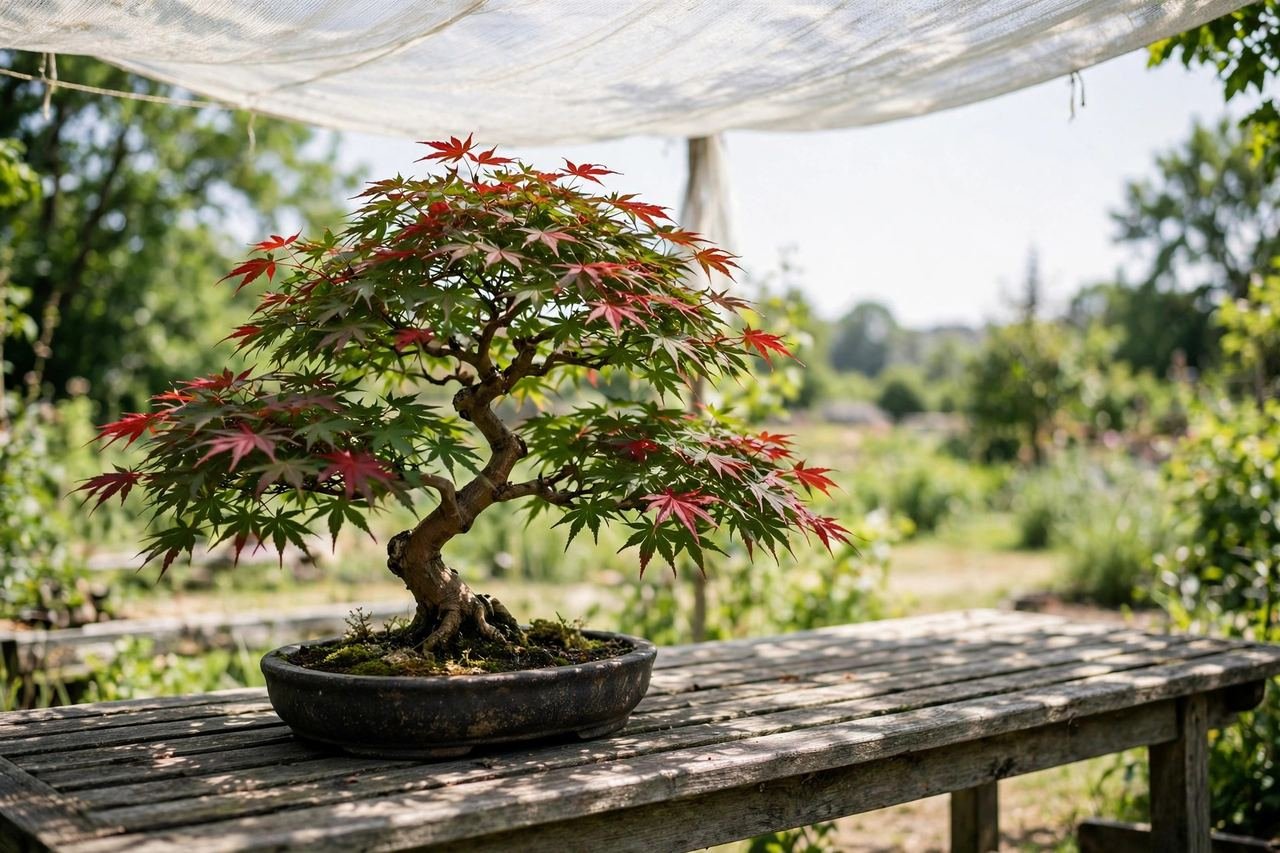
It’s going to be a hot one tomorrow (100°F), day after (103°F) and on Friday. This morning your maple looks fine with healthy green leaves and moist soil. However, by Thursday afternoon the edges of the leaves will begin to curl and the pot will be very hot. The leaves will be limp.
A heatwave means that the tree will be suffering from high temperatures for several days and won’t have time to recover overnight. Usually mistakes in Japanese maple bonsai heatwave care will be made within the first few hours of the heatwave. This article will show you what to do the day before, during and after.
Heatwave Care at a Glance
Japanese maple bonsai heatwave care. The evening before, put the tree in a shady area, move to the coolest spot in your home and ensure the soil is moist and drainage is good. During the heatwave, check the tree in the morning and evening, ensure it isn’t in direct sunlight, keep the pot cool and only water it if needed. Don’t feed, prune, repot or put in deep shade for days. Once the heat has gone, gradually reintroduce to the sun. Don’t feed for a week.
When Does a Hot Spell Become a Heatwave?
This is important to know so you can decide what to do. Bonsai Empire state that anything over 85°F (30°C) should be put in indirect sunlight. Most plants grow best between 59°F and 86°F but once temperatures exceed 90°F consistently growth will slow. Once temperatures reach over 104°F many plants will clearly suffer from heat stress.
As your maple is in a shallow pot there are three categories. Up to around 85°F you can follow the usual summer care in the summer care guide. Once temperatures reach 90°F consistently for several days, follow the Japanese maple bonsai heatwave care plan. Anything over 100°F, everything should be checked urgently. Small pots will heat up very quickly.
The low overnight temperatures will determine how bad it will be. If the temperature remains over 80°F at night, the tree will not have a chance to recover.
The Day Before: Prepare, Don’t React
All of the following can be done the evening before.
- Check the forecast
How many days will it be over 90°F? Which way will the wind be blowing? What will the low temperatures be? - Put the tree in shade. Either put a shade cloth over your bench or move the tree somewhere that won’t get the afternoon sun. See the summer care guide.
- Move to the coolest spot. This could be the east side of your house or beneath a larger tree. Ensure it isn’t on hot paving. The RHS recommend moving your containers onto grass to keep the ground cooler.
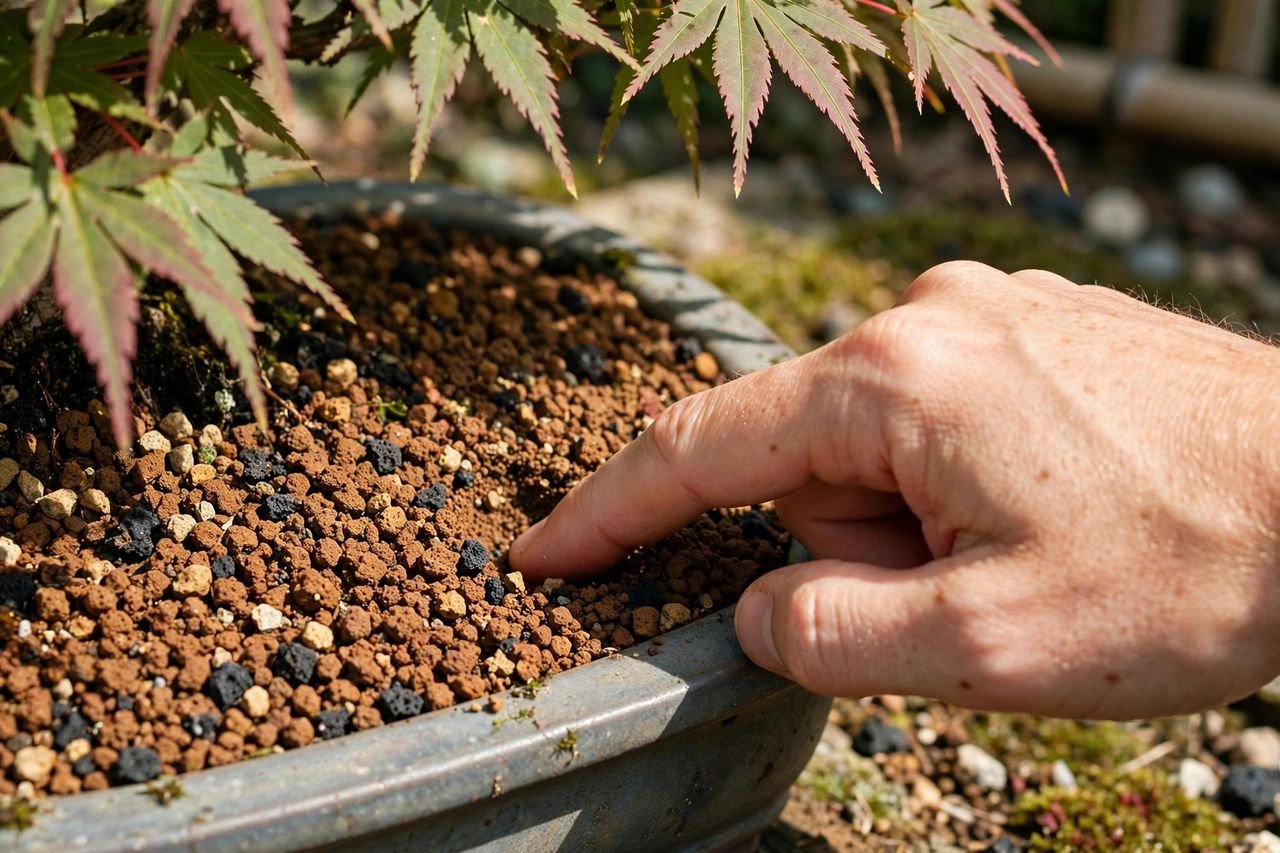
- Check the soil and drainage. Use the finger test from the hot weather watering guide and ensure the drainage holes are draining well.
- Water thoroughly. If the soil is dry, water gently until it drains from the holes underneath. Don’t overwater a completely dry pot.
- Group the pots together. The RHS state that grouping your containers together will create a cooler microclimate. Ensure there is still good airflow.
- Plan who will check. If you know you will be away, plan who will check. It’s best to ask a neighbour and give clear instructions.
During the Heatwave: Three Short Checks a Day
Most of Japanese maple bonsai heatwave care is checking.
Check in the morning. Use the finger test to check the soil. Check the leaves and feel the pot. If the soil is dry water at soil level until water comes out of the drainage holes. If the pot is warm already, put in shade. See the summer care guide.
Check at midday. Ensure the shade is covering the tree and pot. The sun will be moving. If the tree is wilting badly, put in shade and water gently.
Check in the evening. If the leaves are drooping in the afternoon but recover by the evening, they are suffering from heat stress. If the soil is damp don’t water as this will cause root rot.
Check the wind daily. Even if it was in shade in the morning, it might be in direct sunlight by the afternoon. The hot dry wind will cause the thin maple leaves to lose moisture quicker than the roots can replace it. A slatted fence or hedge on the windward side will help break the wind.
Heat-Stress Signs: What Is Normal, What Needs a Closer Look
Not all alarming signs mean your tree is suffering.
Signs that are usually normal
- Wilting in the afternoon but recovering by evening. The tree is suffering from heat stress. If the soil is damp put in shade.
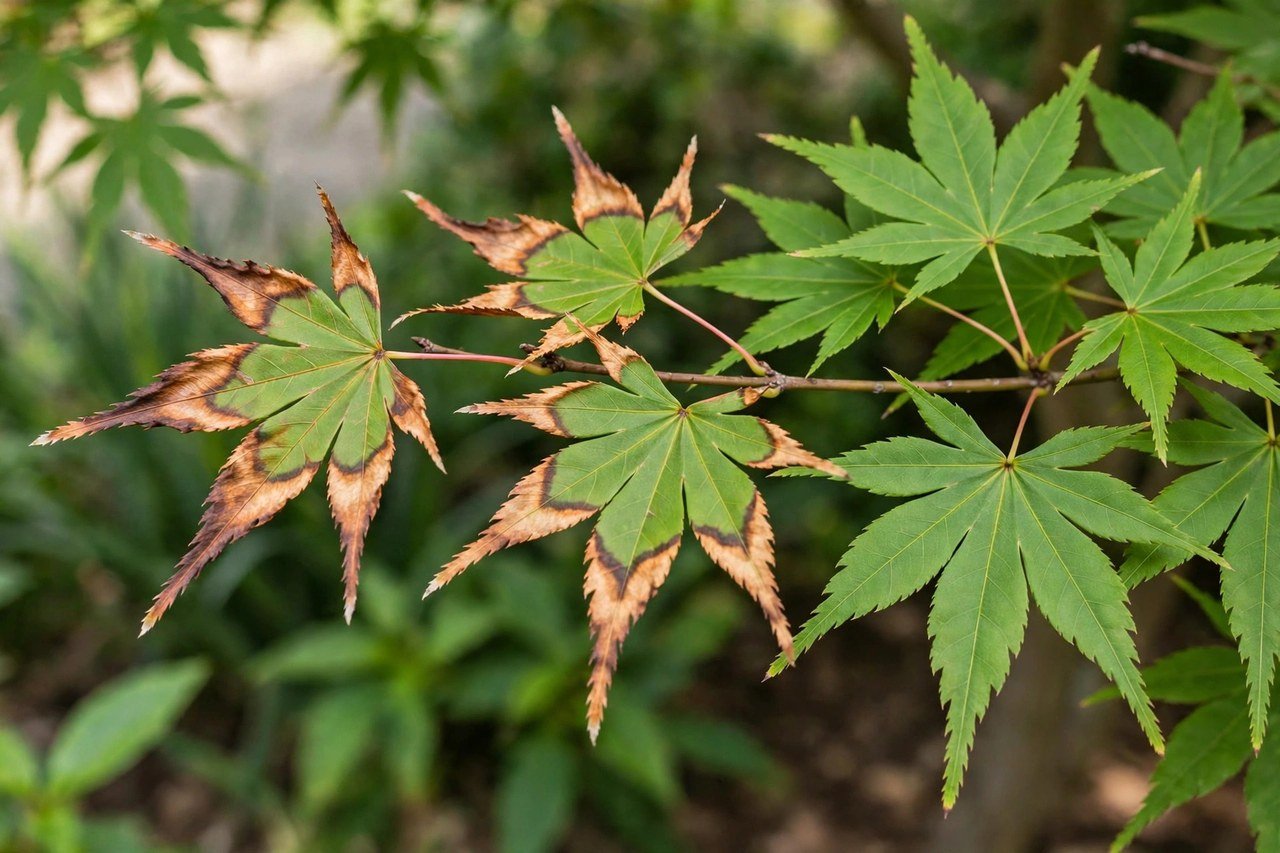
- Dry edges. Having dry edges is a survival tactic. The tree will still receive nutrients from the leaf.
- Slight curling. Rolling the leaf will close the pores to stop losing water. This is a defence.
Signs that need a closer look
- Wilting in the morning. If the tree hasn’t recovered overnight it has no margin left. Check the soil immediately. If dry water thoroughly twice. If wet it has root damage.
- Brown edges spreading towards the veins. A little browning on the edges is normal in Japanese maple bonsai heatwave care. If the browning is spreading, add some shade and cool the pot.
- Large amount of leaf drop. Some leaf drop after a heatwave is a defence tactic. If there is a lot of leaf drop during Japanese maple bonsai heatwave care it is suffering badly.
- Whole branches going limp or bark looking dull and shriveled. This is more serious than leaf stress. The branches are drying out. Monitor the branches for a week before pruning.
Why Sudden Drastic Changes Make It Worse
During Japanese maple bonsai heatwave care it can be tempting to make drastic changes. Almost all of these will have a negative impact as stressed trees struggle with sudden changes.
Putting in deep shade or indoors for days. A maple that has been in the sun all summer won’t be able to cope with sudden darkness. Oregon State warn that heavily shaded plants will stretch. Only use filtered shade during the hottest times of the day.
Overwatering dry soil. If the soil is completely dry most of the water will run down the sides of the pot. Water slowly twice.
Repotting or transplanting. Oregon State are very clear. Don’t plant or transplant until the temperatures have dropped. Repotting will cut the roots the tree needs to drink.
Feeding the stressed tree. The RHS recommend not feeding during hot weather. This will encourage soft new growth when the plant is already struggling for water. Fertiliser won’t help scorch.
Pruning. Oregon State recommend not to prune during intense heat. Removing leaves will expose previously shaded areas of the canopy to sunburn. Wait until the weather breaks.
Spraying the leaves. Spritzing in the morning can help but if the leaves are wet in direct sunlight it can cause scorch. See humidity guide.
After the Heatwave: Recovery, Slowly
Once the heat has broken it can be tempting to return to normal. Don’t! Gradually reintroduce to the sun. Add a little more morning sun each day. If the tree has been in shade for a week it can suffer from scorch if put back in full sun. See sunlight guide.
Don’t remove the scorched leaves. They will still provide nutrients. Even scorched plants will usually recover once the conditions have eased. Continue to water regularly for a week. Don’t prune or feed until it is growing well.
Why Heatwave Care Depends on Your Cultivar
The timings for Japanese maple bonsai heatwave care will be the same for all maples but the margin will vary. Green Acer palmatum are the hardiest. Red cultivars will scorch more easily. Variegated and laceleaf types are the most sensitive and should be checked first. See hot weather watering guide. Small pots will dry out quickly. Step up to a larger pot and you gain roughly half a day. In a dry climate the main issue will be wind. In a humid climate it will be overwatering.
A Heatwave Week on a Real Tree
Two neighbours have the same cultivar and there is a 3 day heatwave forecast. The first neighbour puts the shade cloth up the evening before and moves the pot to the grass. The second neighbour waits until Thursday afternoon and overwaters the pot. They also drag the tree into the garage and feed it to help it. By Sunday the first tree has a few scorched edges but the second has lost half its leaves. This is an example.
Where Heatwave Care Goes Wrong
Overwatering dry soil. Water slowly twice.
Putting in deep shade or indoors for the whole heatwave. Only use filtered shade. Putting in a dark garage for days will shock the tree.
Feeding the tree to help. This will encourage soft growth the tree can’t support. Wait a week.
Repotting or pruning. This will remove roots and expose shaded leaves. Wait until the weather breaks.
Removing scorched leaves. They will still provide nutrients.
When Heatwave Care Will Not Budge
Wilting leaves every afternoon but recovering by evening. The tree is coping but is suffering from too much heat. Add some shade and cool the pot.
Wilting leaves in the morning. Check the soil immediately. When the soil is dry well below the surface, water it twice and water it well. If it is wet it has root damage.
Edges of leaves have turned brown after one hot day. This is scorch. Add more shade tomorrow. The scorched leaves won’t recover but new growth should be clean.
Leaves falling after the heatwave. Some leaf drop after a heatwave is a defence tactic. Continue to water regularly. Don’t prune or feed until it has recovered.
Your Heatwave Care Questions
When should I go into heatwave mode?
If the temperature is over 85°F (30°C) put in indirect sunlight. If it is over 90°F consistently, go into full heatwave mode.
Can I leave the shade cloth up for the whole week?
Yes. Once the temperatures have gone back down.
Should I water twice a day?
Only when the soil dries out twice in one day. Use the finger test.
When can I feed?
Wait until it has had a week of normal weather and is growing well.
Conclusion
Most of Japanese maple bonsai heatwave care will be preparation. Put up the shade the evening before, ensure it isn’t on hot paving, check drainage and have the discipline to not feed or prune. During Japanese maple bonsai heatwave care, only check 3 times a day. After the heatwave gradually reintroduce to the sun, don’t remove the scorched leaves and water regularly for a week. The heat will pass and the leaves the tree has kept will tell you how it has coped.
Sources
Trusted reference guides for further reading:
- Heat wave in the garden: How to identify and prevent heat stress in plants – Oregon State University Extension
- Heatwave advice for community gardens – Royal Horticultural Society
- Care guide for the Japanese maple Bonsai (Acer palmatum) – Bonsai Empire
- Acer palmatum (Japanese Maple) – North Carolina Extension Gardener Plant Toolbox