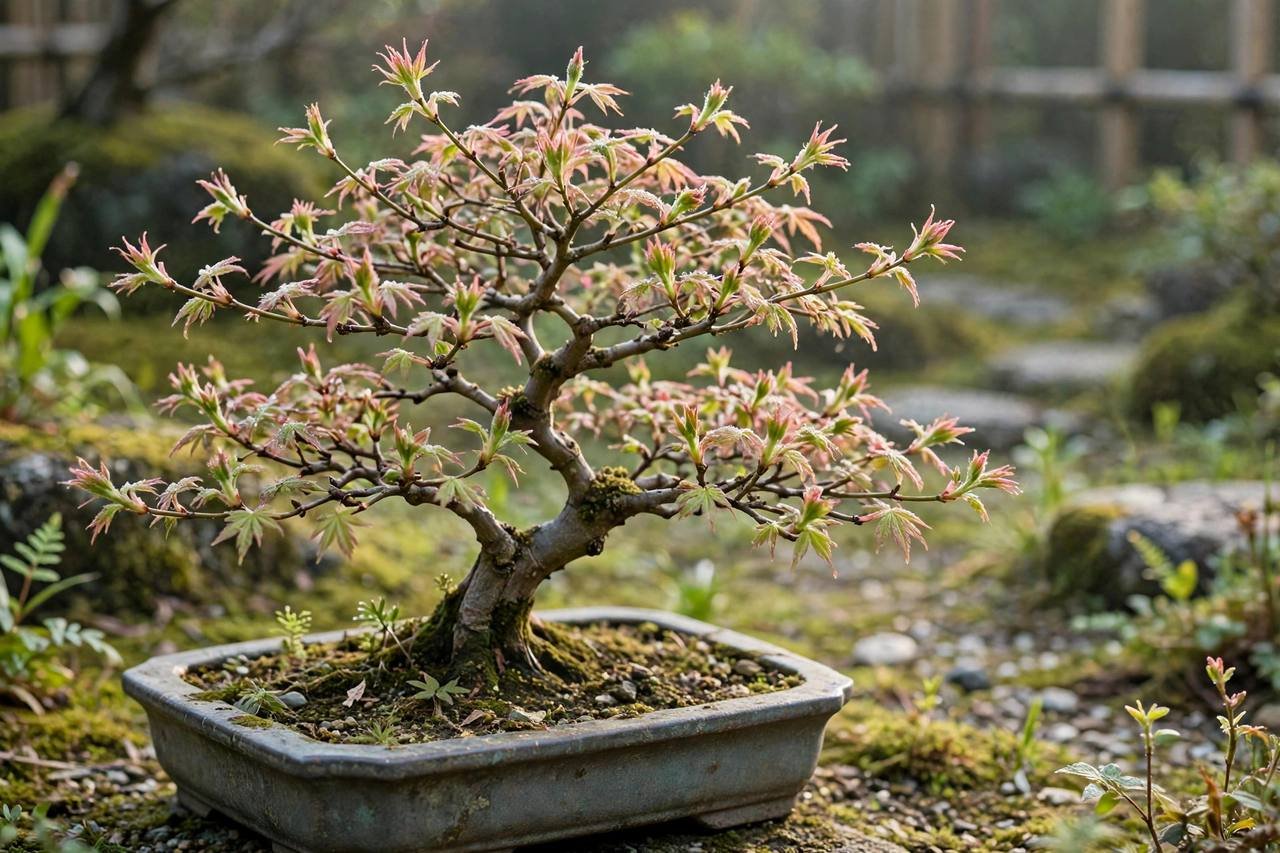
Every spring there will come a day where you go out to your bench and think nothing is happening. The buds are still tight and small and the cherry tree next to you has no leaves. After a week they will be plump and the tips will have turned green. Is it waking up?
This article will help you understand what to do during the exciting time of Japanese maple bonsai bud break. Bud break occurs in a slow process, so most of the anxiety will come from thinking it will happen all at once.
The Bud Break Answer, Briefly
Bud break occurs when the tight buds begin to swell and open. They will usually take between 2-4 weeks from swelling to fully opened and hardened leaves. Japanese maple bonsai bud break will usually be unevenk. The top will usually open first, then the outer branches, then the bottom and inner branches. If you have a bud that isn’t opening while others are, it’s likely just taking its time. During this time try to just observe. Check the soil, protect from frost and don’t feed or hard prune until the leaves have hardened.
The Stages, Up Close
Buds are tiny shoots that have been created last summer and are wrapped up in scales. During spring they will slowly wake up.
Swelling, Then the Scales Part
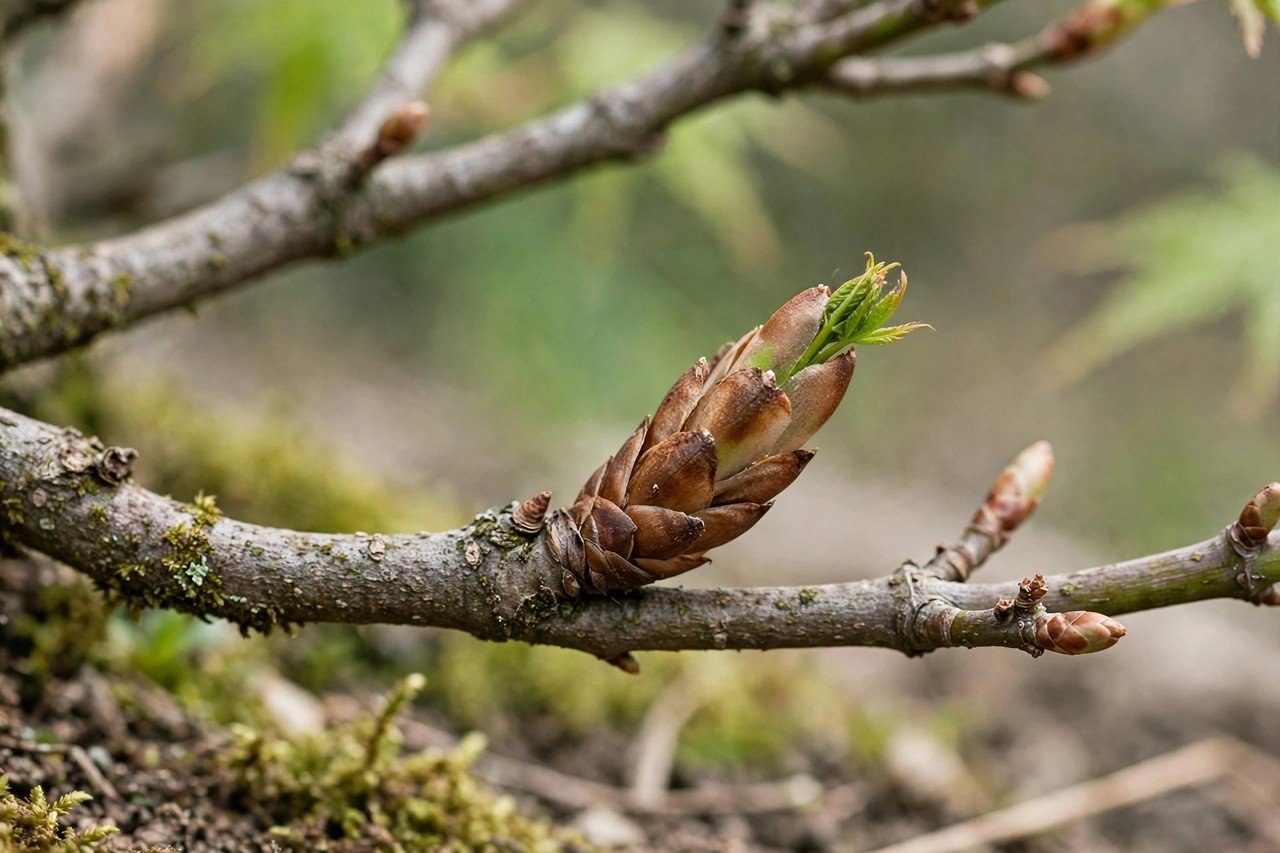
The dormant buds will be tight, small and hard. As the tree wakes up the buds will begin to swell, becoming lighter. The scales will open to reveal a small amount of green.
This means they are no longer protected from the elements. You now need to protect from frost. If the buds are swollen then they are alive. If they are still small, dry and papery then they are likely dead. Don’t cut them off though. Only decide based on if the surrounding leaves have hardened.
The Green Tip
The inner leaf will begin to poke through the scales. This will show as a green tip. Some red cultivars may show a pink or crimson tip. This is perfectly normal and depends on your cultivar.
This is the most exciting part but also the most delicate. The leaves have no wax covering and are mostly water. This means they will suffer the most damage during a frosty night. Don’t try to open the scales or put your tree in a warm room. The warmth will wake the buds up and the soft growth will be killed off by the next frost.
Leaves Emerge and Unfold
Once the green tips have appeared, things will start to speed up. The tips will grow longer each day and the leaves will begin to open like a fan. New leaves will appear in a range of colours from yellow to lime green to bright pink (depending on cultivar). The RHS note they will appear in the same range. If you have red leaves they may appear almost scarlet before settling. The shoots will expand rapidly during the cool spring days. This means your tree may look different every morning for a week.
The leaves will still be soft and thin. During a dry spring the wind will draw more moisture from the leaves than the roots can provide.
Expanding, Then Hardening Off
Finally, the leaves will fully open. The colour will settle and the texture will firm up. A thin layer of wax will form.
Once hardened off the tree can handle a light frost. It will just turn the edge brown and you can start feeding, pinching and pruning.
Why Your Tree’s Timing Is Its Own
No two maples will have the same Japanese maple bonsai bud break. Even the same tree may not have the same Japanese maple bonsai bud break date. Knowing what affects your tree will help reduce any worries.
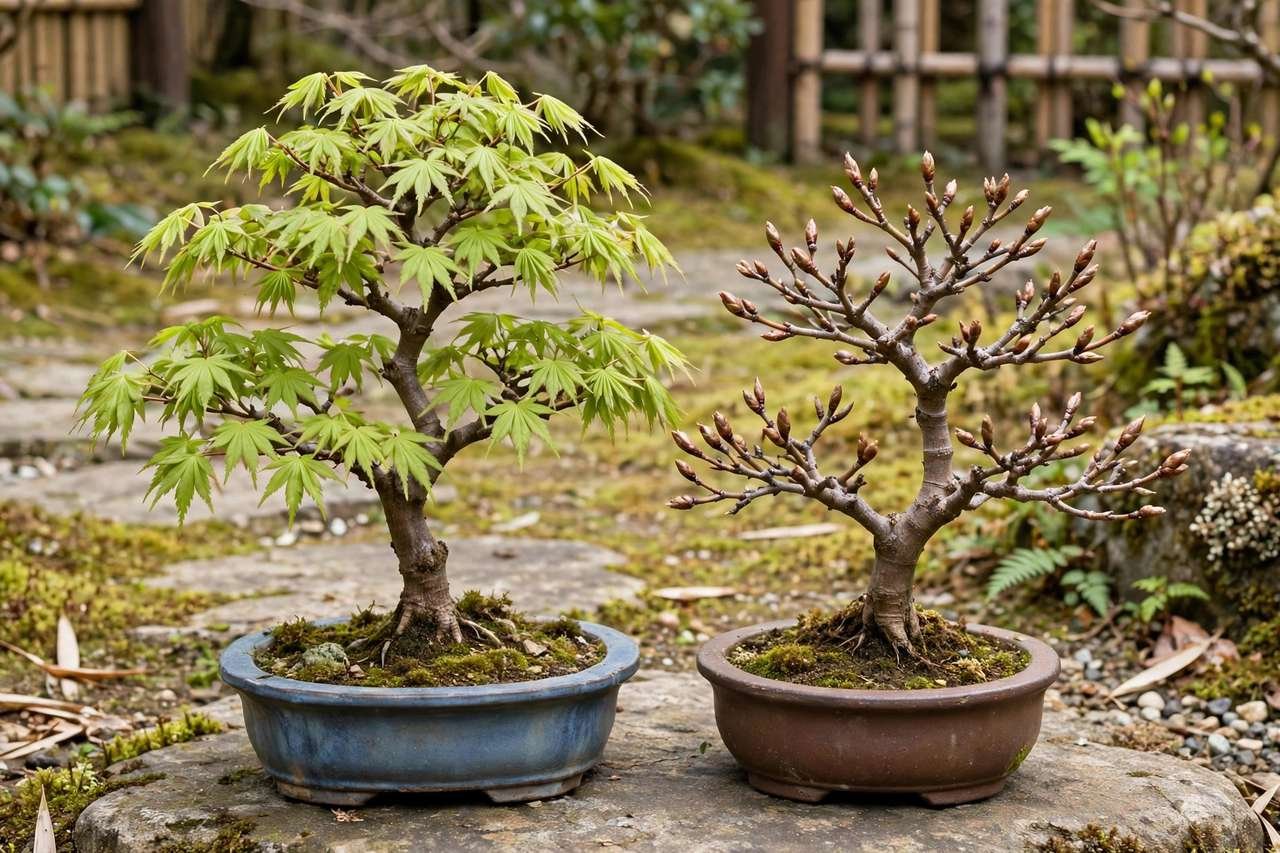
Cultivar – Dissectums usually have the latest bud break and will be the most variable from year to year. Red cultivars like ‘Bloodgood’ and ‘Deshojo’ often have an earlier bud break and will show red from the very first tip. Green seedlings are the most reliable as they will have an even bud break. Young trees will have an earlier and even bud break. Older trees may have a branch open a week later than the rest.
Microclimate – Trees can have different bud breaks depending on their location. A tree against a sunny south facing wall may have a bud break 2 weeks earlier than a tree of the same cultivar in the shade. The University of Illinois Extension note that plants in different exposures will have different bud breaks. A small pot will warm up quicker and dry out. This means your tree will wake up earlier.
During winter the tree must have a proper period of cold. They need around 1000 hours below 40°F. If they haven’t had enough cold hours they will wake up weak and unevenly. The dormancy guide explains why they need to be dormant. If your tree has an uneven leaf growth after a mild winter it’s usually because they didn’t get enough cold.
Water: Thirst Returns Before the Leaves Do
As the buds begin to swell your tree will begin to drink again. This is the first practical change of spring. Use your fingertip to poke a knuckle into the soil. If it feels cool and moist then leave it. If it’s dry on the surface then water. As the leaves begin to open they will become thirsty very quickly. A tree watered twice a week in March may need daily watering by May.
Be careful! If the soil is cold and wet then your tree isn’t drinking. If the pot is staying wet and cold while the buds are waking up then the roots are still inactive or there is a blockage in the drainage. Adding more water will make it worse. Don’t water on a schedule. Water based on observation. Never let the soil dry out completely. The watering guide explains how to tell.
Frost: The Short Danger Window
The danger period is short. From Japanese maple bonsai bud break to hardened leaves (usually 2-4 weeks). During this time the new leaves are mostly water and have a thin skin. This means they will freeze during a light frost.
If there is a frost warning (33-36°F) then you should protect your tree. If there is a freeze (below 32°F) then it will be worse. If there is a frost forecast while your buds are open then protect your tree. Either cover or move into shelter for the night. Uncover in the morning. See the full guide for evening frost protection. If your tree does get frosted don’t cut off the damaged leaves. The tree will usually produce a second flush.
Wait for the Tree, Not the Calendar
Your tree won’t know if it has an early or late Japanese maple bonsai bud break, if the leaves have hardened or if there is going to be frost on Thursday. It will give you signs.
Feeding – Don’t feed your tree when the first green tips appear. Nitrogen will tell the tree to grow. That soft growth will not survive the first frost. Once the leaves have opened and hardened slightly you can begin feeding. Use a balanced organic feed or half strength liquid feed. See the feeding guide for dates.
Pruning – Maples bleed sap if cut during late winter and early spring. Prune between July and January (RHS). Strong branches should be pruned during autumn or summer as they will form callus quickly (Bonsai Empire). The only pruning you should do during Japanese maple bonsai bud break is pinching. Once the first pair of leaves have opened, pinch off the soft growth between them.
Spring Care – See the monthly guide for what to do each month. See spring care guide.
When Buds Look Slow or Odd: A Quick Check
Check the following. Most of the time you will just need to be patient.
- Which buds have opened? The top will open first, then the bottom and inner branches. Japanese maple bonsai bud break will usually be uneven.
- Are the buds firm and plump? If they are firm and plump they are alive. If they are dry and papery they are likely dead. Wait until the surrounding leaves have hardened.
- Scrape the twig. Green wood underneath means the branch is still alive. If they are brown and dry then they are dead. Only scrape once the rest have leafed.
- Did they have enough cold during winter? If they have a weak and uneven bud break after a mild winter then they likely didn’t get enough chilling hours.
- Is the soil wet? If the pot is wet then there is a drainage issue.
Buds Opening on a Real Tree
Two growers live in the same town and have the same cultivar. Both have a green seedling maple. Both trees were kept on the same bench during winter. One was a young tree in a small pot at the sunny end. The other was 20 years old and in a large pot at the shady end. During the first week of April the young tree began to swell its buds. Green tips appeared and in 10 days they opened. The older tree took another 2 weeks to open. The buds opened branch by branch. By May both trees were in full leaf. The older tree was just slower.
What Not to Do With Bud Break
Feeding during green tips. Adding fertiliser during the week the buds open will create soft growth. This will be killed by the next frost. Wait until the leaves have hardened.
Hard pruning during bud break. Heavy pruning during early spring will cause the tree to bleed sap for days. The wound will heal slowly and leave your tree open to infection. Leave strong branches until summer/autumn.
Putting your tree in a warm room for a few days will wake up the buds. That soft growth will not survive the first frost. Keep your tree cold.
Cutting off dead buds. A bud that looks dead in April may still open in May. Don’t rush to cut off twigs. Wait and scrape.
If Bud Break Still Fails
Buds have swollen but stopped. This is usually due to a cold snap. Once they have met their chilling requirements they will wait for the warmth. If it gets cold again they will stop. Keep the soil just moist.
Only one side is leafing. This is usually due to sun exposure. The sunny side will wake up first. If the other side isn’t leafing once the rest have hardened then scrape. If it’s green then it’s alive but just slow. If it’s brown then it’s dieback during winter.
Leaves are appearing but turning black overnight. This is frost damage. It looks worse than it is. Don’t cut off the black leaves. The tree will usually produce a second flush.
Bud Break: Questions and Answers
How long does Japanese maple bonsai bud break take?
Usually 2-4 weeks. During a warm spring it will be quicker.
Is it normal for one branch to leaf first?
Yes. The top will open first, then the outer branches and finally the bottom and inner branches. An even bud break within a week is unusual.
My tree had a bud break during a warm spell. There is a frost forecast. What should I do?
Protect your tree or move into shelter for the night. Uncover in the morning once it’s above freezing. See the full guide for evening frost protection.
When can I start feeding?
Once the leaves have opened and hardened slightly.
Conclusion
Bud break is a rewarding process if you observe your tree. The changes are small but will tell you if your tree had a good rest, is drinking and if you can begin feeding. Japanese maple bonsai bud break isn’t a set date. It depends on your tree and how it is responding to its winter, cultivar and position on your bench. Give your tree some morning sun, consistent watering and protection from frosty nights. Don’t feed or prune until the leaves have hardened. Observe your buds.
Sources
Trusted reference guides for further reading: