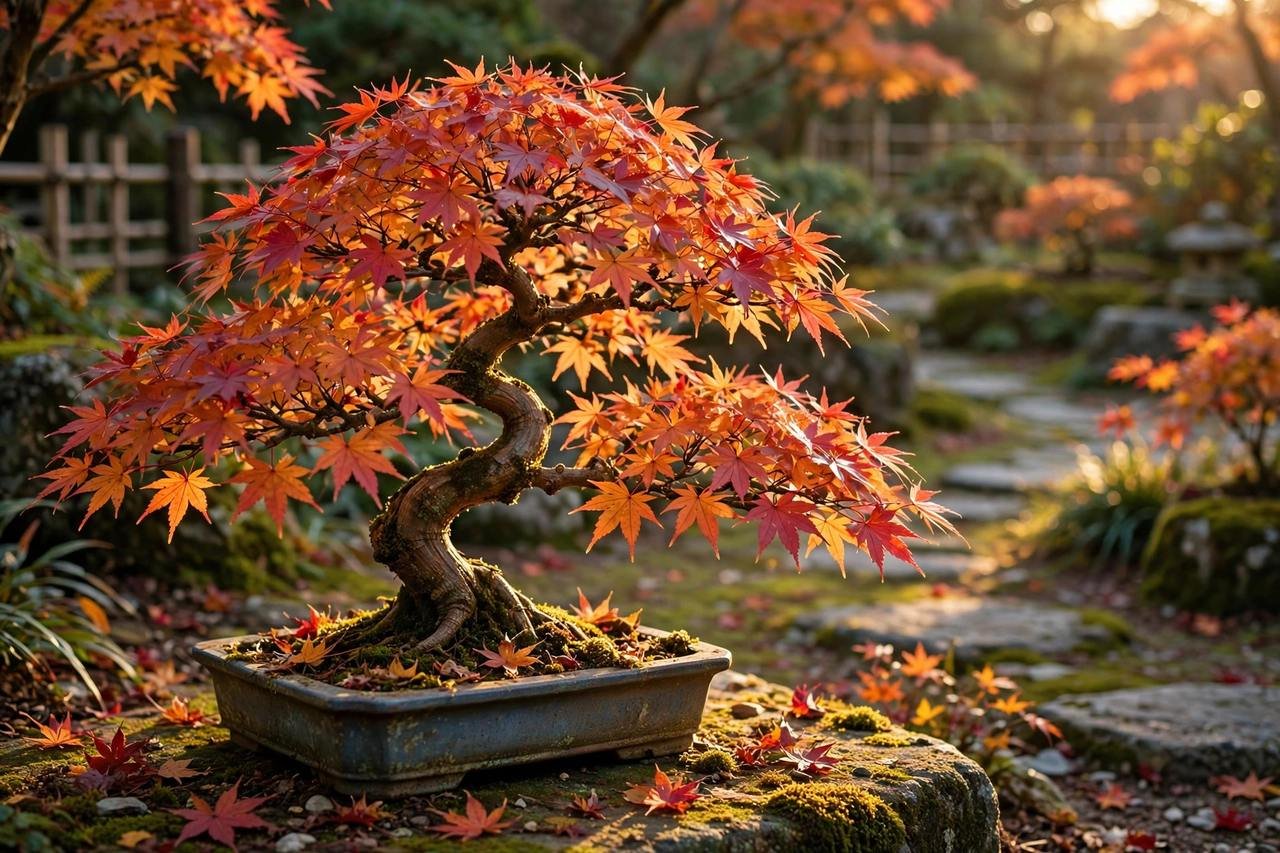
Your maple will look fantastic on the bench in October with all of its leaves turning a nice bright red. However, next year the leaves may be flat and turn a dull yellow in a week. This isn’t an indicator of how well you have looked after your tree, it’s just down to the chemistry, weather and genetics. Once you are aware of what’s going on, you won’t feel like you have had a disappointing year.
The Short Answer on Autumn Color
As the days become shorter and nights become cooler your maple tree will stop producing chlorophyll (the green pigment). The yellow and orange pigments that have been hiding all summer will start to show. The tree will also produce a new pigment called anthocyanin. The more sunny days and cool nights (above freezing) the brighter the colour will be. Warm nights, rain, wind and an early hard frost will create a duller colour. The range of colours will depend on your tree’s cultivar. Overall, Japanese maple bonsai autumn color is down to the green leaves turning red depending on the weather.
What’s Happening Inside the Leaf
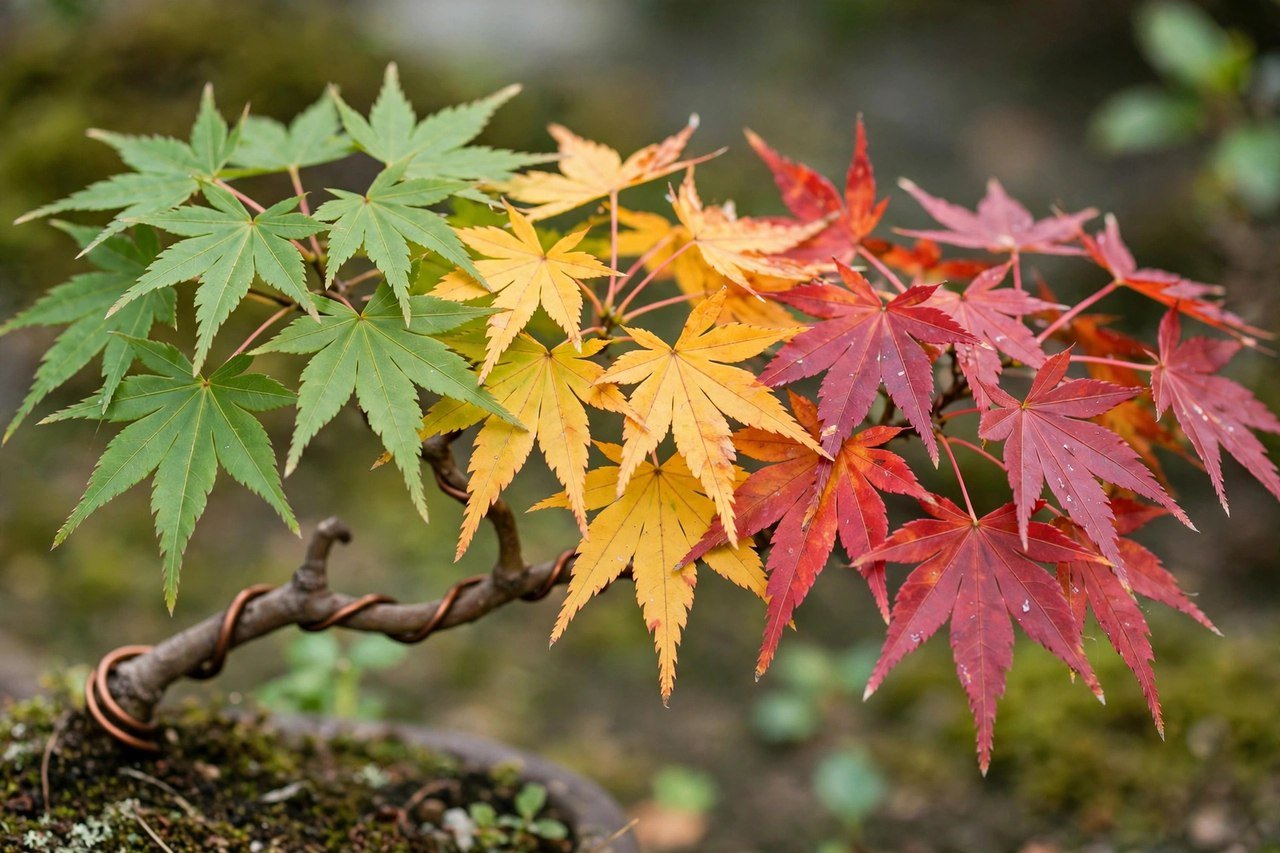
Your tree doesn’t turn red in autumn, it’s breaking down. The Japanese maple bonsai autumn color you see is what’s left and what’s created as your tree recycles nutrients. There are three different families of pigments.
Chlorophyll: The Green That Leaves First
Chlorophyll is what gives your tree’s leaves a green colour. Throughout the summer your tree will produce as much as it can. However, as the days become shorter your tree will stop replacing it. This is because it needs the nitrogen that is locked inside the chlorophyll to help it in spring. This is why Japanese maple bonsai autumn color starts dull first. Everything else is due to this.
Carotenoids: The Yellow and Orange That Were Always There
Carotenoids are responsible for the yellows and oranges of autumn. These were present throughout the summer but couldn’t be seen due to the intensity of the green. As the chlorophyll starts to fade, the yellows and golds will show. These pigments don’t break down quickly so they are the most reliable colours.
Anthocyanins: The Reds Your Tree Makes Fresh
Anthocyanins are responsible for the reds, crimson and purples. These pigments aren’t really present in your tree throughout the summer, they are produced in the autumn. As your tree seals off the leaf, a corky layer forms at the bottom of the leaf stalk. This causes the tubes that transport the sugars to narrow. More sugars are produced in the leaf and become trapped causing anthocyanin to form. The more sun your leaf gets, the more sugar will be produced making it a brighter red. This is why the sunniest side will turn red first and leaves at the bottom of a shady canopy often stay a yellow.
The red isn’t just for show. Whilst the leaf is breaking down, it’s quite delicate. If it gets too much bright sun it can cause damage. The red pigment acts like a sunscreen. This is also why it’s not a reliable colour. The yellows and golds will show but the red needs to be produced. This depends on the sun, sugar and cool nights.
Tannins are responsible for the browns but in maples it’s often due to damage.
Why Red, Yellow or Orange?
Depending on what pigments are in your tree’s leaves, they will turn a certain colour. If there are mainly carotenoids in the leaves they will turn yellow or gold. If they also produce anthocyanins they will turn orange first then red. If they produce anthocyanins early whilst there’s still chlorophyll in the leaf they will appear a dark burgundy. This is why you can get green, gold, orange and crimson on one tree. The maximum colour your tree can produce is down to genetics. See below to find out how.
The Weather That Decides the Show
Genetics will determine the range of colours your tree can produce, however the actual colour it produces in a given year will depend on the weather. Researchers from the University of Wisconsin say this is the most important factor. To get the best Japanese maple bonsai autumn color your tree needs to have sunny days and cool nights (above freezing). The sunny days will cause more sugar to be produced. The cool nights will slow the sugars escaping meaning they become trapped and anthocyanin is produced.
The best nights are in the 40s°F. Warm nights will cause the sugars to escape making the colours less vibrant. An early hard freeze can cause the leaves to die before they turn colour. Warm weather will cause the colours to be short lived. Wind and heavy rain will also cause the colours to die quicker. The University of Illinois say it’s simple, you want dry sunny days and cool (not freezing) nights.
The weather will have an impact months prior. A warm wet spring and consistent rain throughout the summer will keep your leaves healthy meaning they will turn the best colour. The University of Minnesota’s arboretum researchers say this directly. However if there is a short dry period towards the end of the season the colours can become deeper. If there has been a long period of real drought throughout the summer your colours will be short lived and often have brown edges. This isn’t due to autumn colours but due to stress in late summer. This is why Japanese maple bonsai autumn color will look different each year. The cultivar hasn’t changed but the summer has and October.
Cultivar: The Color Your Tree Was Born to Make
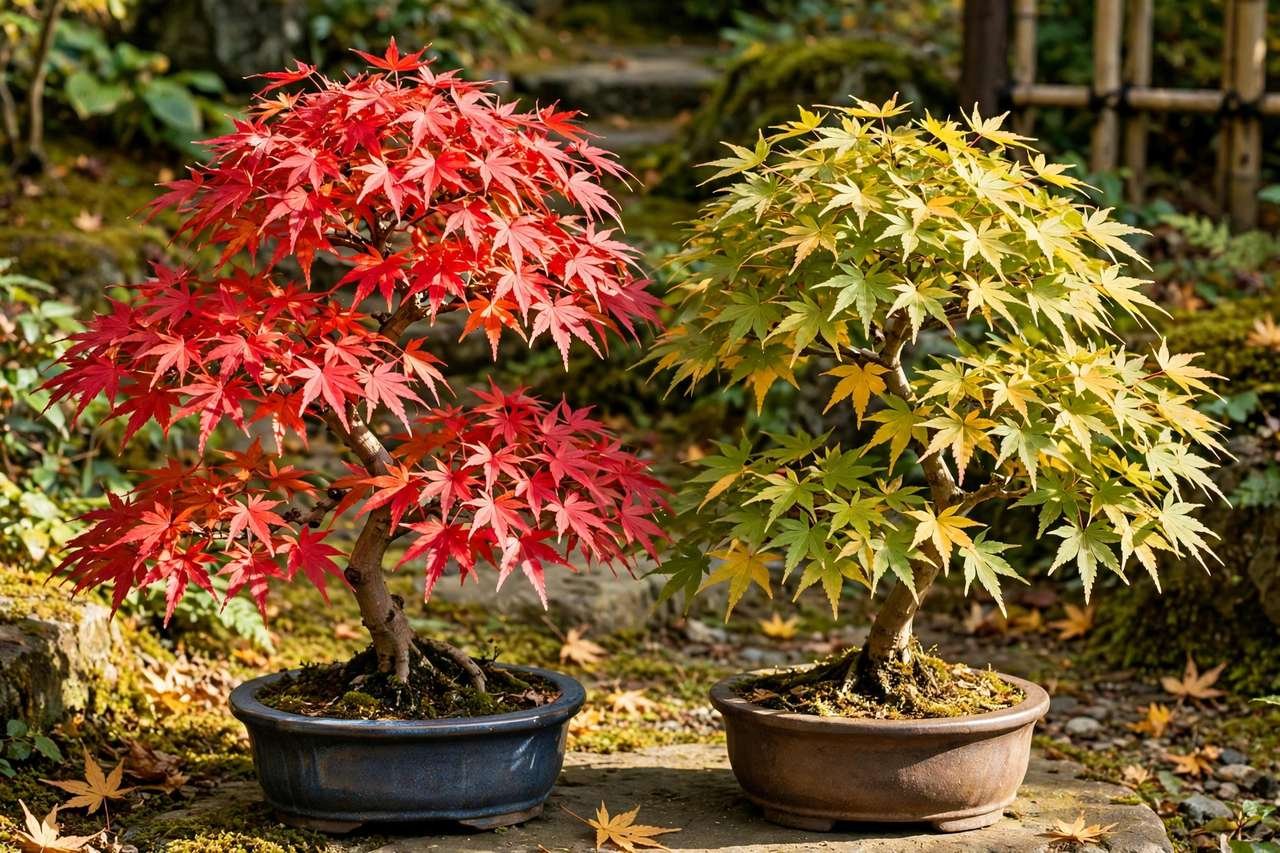
Before you get worried about your tree’s colours in autumn, know what it was bred to do. Red cultivars (Bloodgood, Emperor I, Fireglow) will turn red in the summer as they produce anthocyanins throughout the season. In October they will deepen to a crimson or scarlet. They need sun to do this so if they are in deep shade they will fade to a green. Green cultivars (plain seedlings and Osakazuki types) will turn yellow, gold or orange. These are the most reliable colours.
Coral bark types (Sango-kaku) will turn a pale yellow/gold. Their real colours are the red bark in winter. Laceleaf dissectums are the most variable. They can turn orange one year, gold the next and sometimes red. Remember these are not guaranteed. The picture you see at your nursery will only show you one tree in one garden in one good year. Give new cultivars a couple of years. Knowing what your tree’s cultivar is will help you understand Japanese maple bonsai autumn color. The other half is the weather.
Color Is Not a Health Test
Just because your tree has bright Japanese maple bonsai autumn color doesn’t mean it’s healthy and vice versa. Japanese maple bonsai autumn color is much more an indicator of the weather and cultivar. A stressed tree can produce amazing colours. Often if your tree is blazing red in September it’s a sign something is wrong. Look for firm pointed buds, flexible twigs and lively looking bark when you gently scratch it. These are the signs to look for. Colour isn’t listed in the fall care guide.
When the Color Looks Off: A Quick Check
If you’re not getting the colours you expect, check the following. Most of the time it will be down to the weather, light and cultivar.
- What cultivar is it? If it’s a green seedling it will never turn crimson.
- How much sun has it had? Sun will cause red colours. Deep shade will cause yellow/green.
- How were the nights? Warm nights will cause dull reds. An early hard freeze will stop the colours developing.
- How was the summer? Scorched leaves will cause early dull colours.
- Are the buds firm and pointed? If the twigs are green when you scratch them the tree is fine.
A Tree Turning Red in October
Two growers in the same town buy the same red cultivar in the same spring. One puts their tree in a sunny spot on the bench. The other puts theirs under a pergola in dappled shade. In October the first tree will turn a rich even crimson. The second will turn patchy burgundy on the outside and remain dull green on the inside. Neither growers have done anything wrong. The tree in the shade never produced enough sugar to produce the red pigment. The next year the second grower puts their tree in morning sun and it will follow the light.
Autumn Color Mistakes to Avoid
Feeding late to encourage colour. Adding fertilizer in September will not cause your tree to turn red. Adding nitrogen will tell your tree to continue producing chlorophyll meaning the colours will be delayed. It will also cause soft growth that will be killed by the first frost. See the fertilizer guide to find out why you stop feeding before autumn.
Pulling leaves off early. Taking the leaves off early will remove the leaves that would have turned colour. Let them fall naturally.
Putting your tree in deep shade all autumn. If your tree needed afternoon shade in July it can handle a lot more sun in October. It will need morning sun and some direct light. See the sunlight guide.
Judging your tree on one autumn. The weather will vary more year to year than you will. Give your cultivar a couple of years.
Autumn Color Not Improving? Check This
Brown instead of red/gold. Dry crisp leaves turning brown often means your tree was stressed in late summer. There is nothing you can do now. Give your tree a better spot next summer.
My red cultivar has turned green. If your red tree is turning green it’s almost certainly due to lack of light. Next season put it in morning sun. Over the course of a week gradually move it into the sun and it will turn colour next autumn.
Green leaves falling. Large amounts of green leaves falling often means the problem is with the roots. Wet soil or blocked drainage holes. Check the drainage. See the fall care guide for signs that aren’t normal.
What Growers Ask About Autumn Color
Will my tree turn the same colour every year?
No, this is normal. The cultivar will stay the same but the weather will change. If you have a sunny cool October after a kind summer you will get the best colours your tree can produce. If it’s a warm October you will get duller colours.
Can I improve Japanese maple bonsai autumn color?
Only slightly. Give your tree morning sun and some direct light in autumn. Keep it healthy in the summer and don’t feed late. You can’t force your tree to go beyond what it can due to its cultivar and the weather.
Does leaf colour mean my tree is ready for winter?
No. Leaf colour is to do with the leaves. Your tree is ready once its buds are firm and pointed and it is tucked into its cold, sheltered spot.
Conclusion
The colour change in your Japanese maple (Acer palmatum) during Autumn is an end-of-year event. The green is due to the tree needing its nitrogen back, the yellow and gold were always there and the red is newly produced due to the sugar getting stuck and the sun. This means that Japanese maple bonsai autumn color is all down to chemistry, uncontrollable weather and the tree being the cultivar it was bred to be.
All you can do is provide some sun during Autumn, keep the water steady and don’t feed towards the end. Keep an eye on the buds rather than the leaves. The Spring care guide will pick up from here when the tree turns green again.
Sources
Trusted reference guides for further reading: