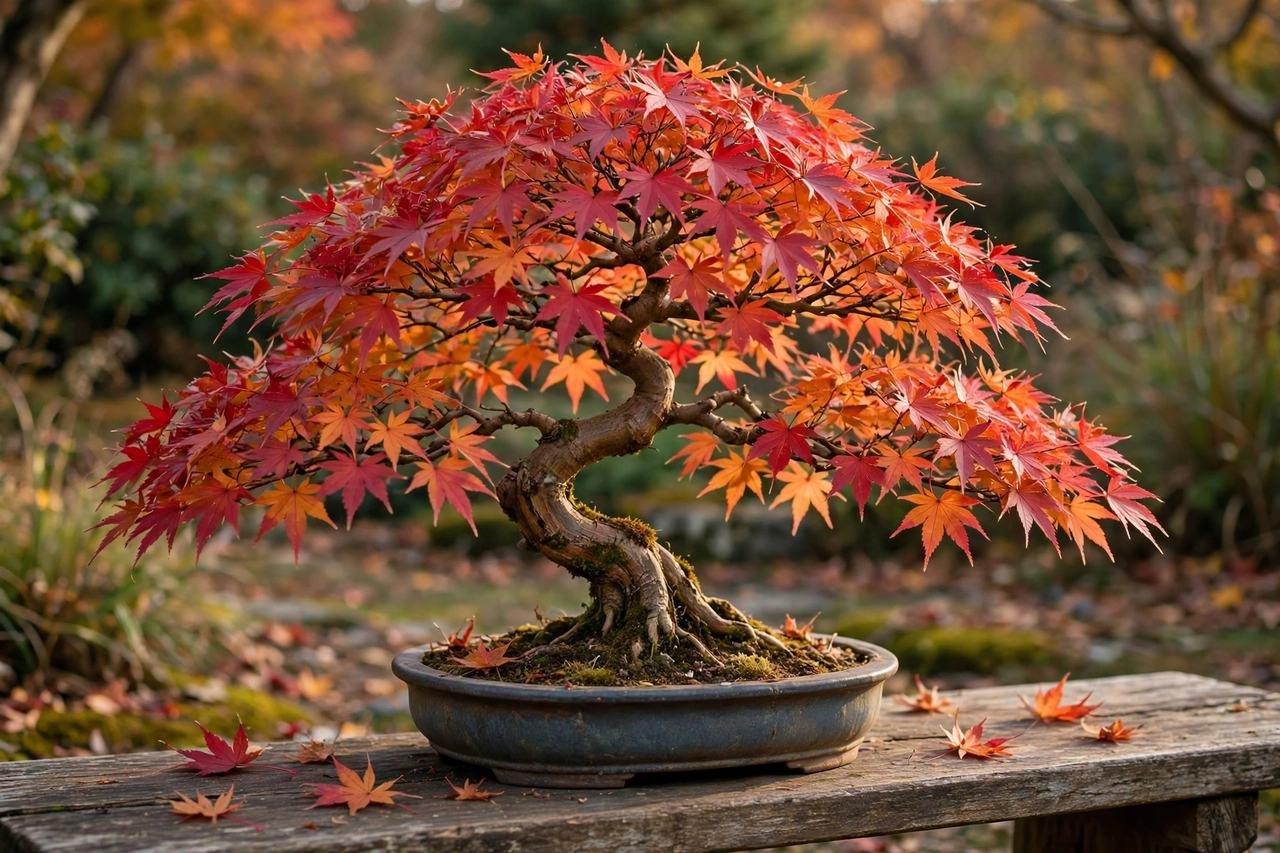
Your maple has been very active and green all summer, but as the days get shorter and the nights cooler you’ll notice your leaves turning edge to gold. This will turn to red in a week and then on the bench a week later. If you’re new to growing Japanese maple bonsai, this can look like a failure, but in fact it’s not. In Japanese maple bonsai fall care, less is more!
Fall Care at a Glance
Allow your leaves to change colour and fall. Reduce watering and stop feeding whilst it is healthy. Move to a cold, sheltered spot before the first hard frost. Protect the pot to prevent the roots from getting too cold. Overall, giving your bonsai less water, no food and a safe place to rest is the best Japanese maple bonsai fall care.
Why the Leaves Change Colour
As the days get shorter, the tree will stop producing chlorophyll. This means the yellow, orange and red pigments underneath will become visible. With the cool nights and sunny days your tree will really show off. The Royal Horticultural Society explain that your tree can display “a range of bright yellow to orange and intense red.”
The colour of your tree will largely depend on the cultivar. No-one can guarantee the exact colour you will get, but generally green trees will turn yellow or gold, red trees like Bloodgood will turn red and deepen into crimson. Laceleaf trees can vary from orange to gold each year. If your tree isn’t showing much colour this year, it could be because it is not getting enough sunlight.
The RHS explain that if you’re getting poor colour or a purple leaved tree turning green, it is likely to be due to lack of sunlight. Try increasing the amount of sunlight your tree gets next autumn. However, don’t over feed your tree to try and get colour. Feeding late in the season will encourage soft growth which will not harden. This will be the first part of your tree to be killed by the frost.
If your tree is a dull brown colour, this is not due to poor colour. If the leaves are turning brown and crispy at the edges, this is usually due to stress in late summer. This damage would have occurred weeks ago and there is nothing you can do to fix it.
Natural Leaf Drop, and Signs That Are Not Normal
What normal autumn leaf drop looks like
Healthy Maple trees will turn colour over a few weeks and start to lose their leaves. Often this will happen after the first light frost. They will lose their leaves one by one or all at once in the wind. The twigs underneath will be supple and alive. Once all the leaves have fallen, your tree will have already set its buds for next spring. These will be small, pointed and firm along the branches. Your tree is now completely leafless but not dead. It is in dormancy.
Signs that are not normal
Large amounts of green leaves falling early in Japanese maple bonsai fall care usually means your roots are unhappy. This can be due to the soil staying too wet or blocked drainage holes. Black spots on the leaves or dieback from the tip of the branches can indicate a disease. Verticillium wilt will cause black spots on the wood. Unfortunately this cannot be treated. It spreads through dirty tools.
If you notice this pattern, clean your tools, isolate your tree from your other trees and get a local expert to look at it. A single twig dying is normal. However if a branch is dying back whilst still in leaf, this is abnormal.
Watering in Fall
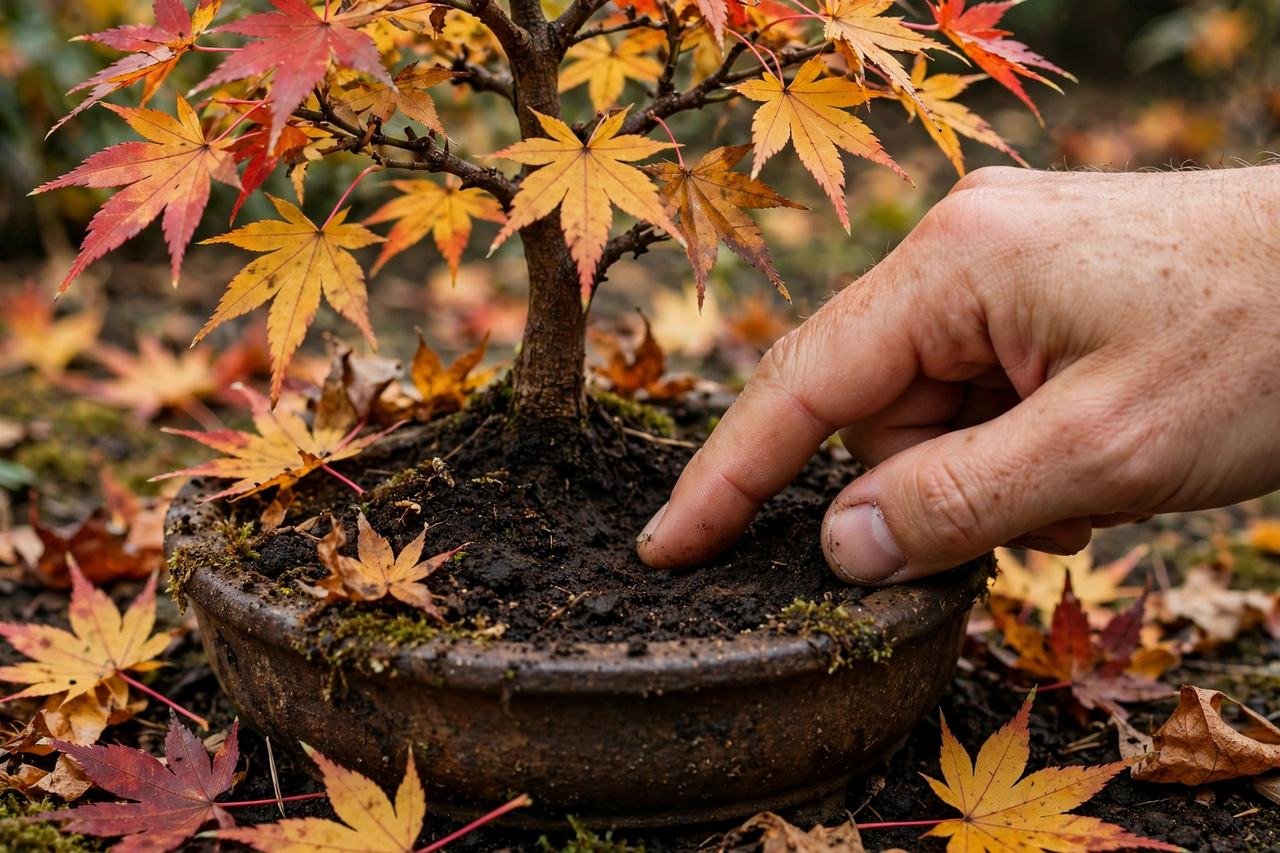
Your tree will not be drinking as much during Japanese maple bonsai fall care. A pot that would dry out by midday in summer will stay damp for days in October. To avoid rotting the roots, follow your summer watering schedule. However, always check the soil first. Follow the finger test from the watering guide. If the soil feels dry at the depth of your fingertip, water. If it is cold and damp, wait.
Let the soil dry out a little between waterings but never completely. You don’t want your tree to dry out completely before winter. It still needs some moisture and it can be difficult to get moisture back into a dry rootball. Often a shower will not penetrate through to the soil. Just water the canopy. As the leaves are falling, you don’t need to water as much. However, once a week with a light watering on a mild day is enough.
Feeding: Stop in Time
Don’t feed your tree during Japanese maple bonsai fall care. If it is healthy you can give it one last light feeding in early autumn (around a month before dormancy). See the full feeding schedule in the fertiliser guide. After this, do not feed. Feeding a tree that is going into dormancy will cause it to produce soft growth which will not harden. This will cause the tree to waste energy.
Often a tree will not be hungry in October. The leaves will turn yellow as the tree is pulling the nutrients out of the leaves. Feeding will not make them green again. Save feeding until spring.
Light in Autumn
The sun will not be as strong during Japanese maple bonsai fall care. If your tree needed afternoon shade in July, it can have much more sunlight in October. Generally the more sunlight your tree gets, the better the colour. Move your tree out of deep shade.
Place it in morning sunlight and some direct sunlight. Keep it away from strong winds. This will cause the leaves to lose moisture. Green cultivars will turn the best colour with a little direct sunlight. Red cultivars will need sunlight to keep their colour. If your tree has been in deep shade all year, move it gradually over the course of a week.
Pruning: Leave the Big Cuts
Japanese maple bonsai fall care is not the time to shape your tree. Main pruning should be done in late winter when your tree is in dormancy. See the full schedule in the pruning timing guide. In Japanese maple bonsai fall care, only prune dead wood. This will be obvious as it will be dry and brittle. Snap or cut back to live wood. Anything larger than this should be left.
However, once your tree has lost its leaves, the sap flow will have slowed. This means it won’t bleed when you make a structural cut. Experienced growers will often use autumn as a second chance to make large cuts to branches. However if you are a beginner it is safest to leave it. Large cuts made late in autumn can sit unsealed for a long time in the freeze. Note this and make the cut in late winter.
Getting Ready for Dormancy
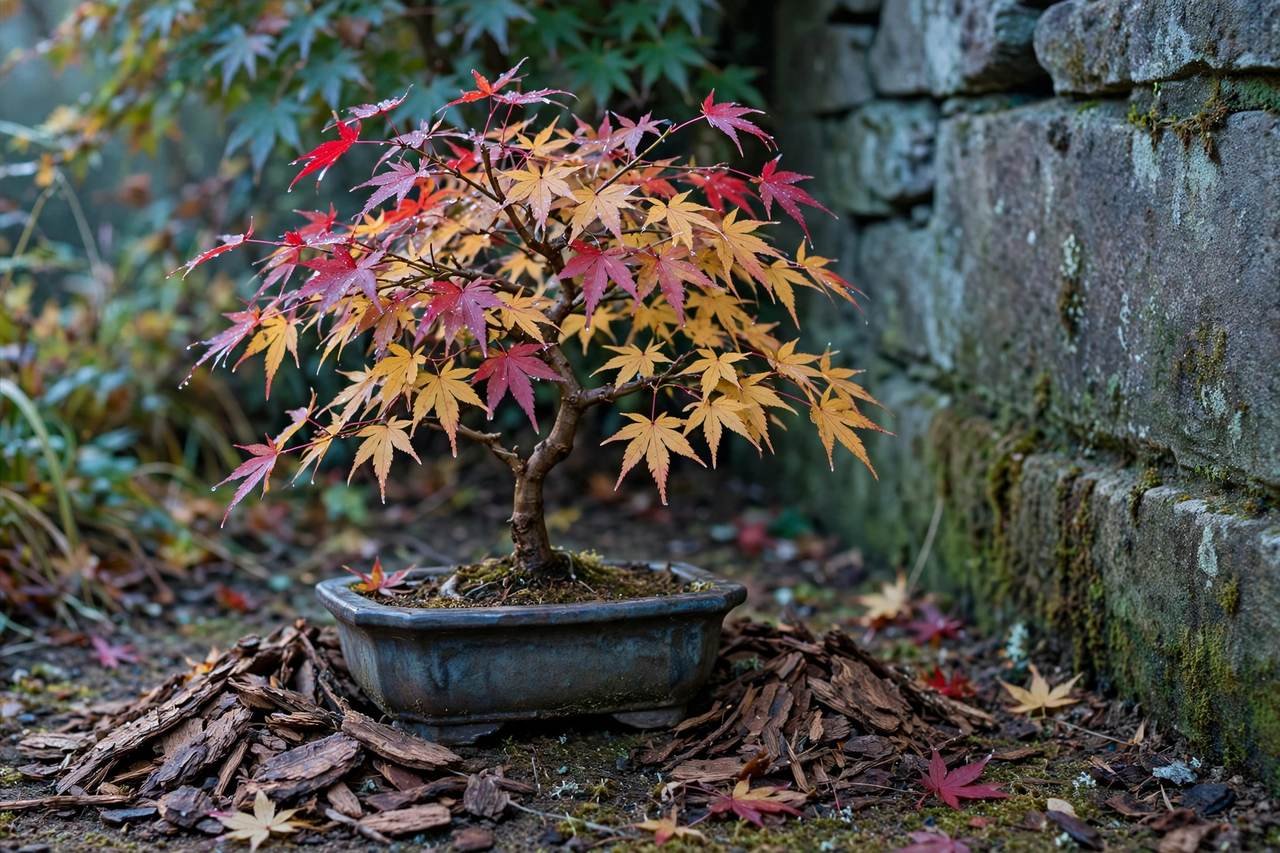
Dormancy is something your tree will do naturally. As the days get shorter and temperature drops, your tree will stop growing, set its buds and create its own protection against the cold. All you need to do is provide a safe place for your tree to rest. This can be done in autumn.
Firstly, allow your tree to lose its leaves naturally. Don’t pull them off and don’t move your tree to a sheltered spot whilst it still has leaves. Your tree needs the cold to signal it to go into dormancy. If you keep it warm it won’t rest properly. How much cold a maple tree needs and why keeping it in a heated room will kill it can be seen in full in the indoors and dormancy guide.
Choose a cold spot to move your tree to. This should not be a place where it will get severely frozen. An unheated garage, cold frame or against a wall. Place your pot on the floor and surround with mulch (bark/straw). This will prevent the roots from freezing completely.
The RHS explain that you should “group your pots together and move them to a sheltered spot. Wrap them in hessian or bubble wrap.” Bonsai Empire explain that if your tree is below 15°F (-10°C) you should protect it. For example in a cold frame. If your winters are not too cold, a sheltered spot against a wall is usually sufficient.
A Six-Step Fall Routine
- Watch your colour. Let your tree turn colour. Note which branches turn colour first to see where the sunlight is hitting.
- Reduce watering. Always check the soil before watering. Increase the time between waterings as the leaves fall.
- Stop feeding. If your tree is healthy you can give it one last light feeding in early autumn. After this stop feeding.
- Increase sunlight. A few hours of direct sunlight in autumn will improve the colour.
- Remove fallen leaves. Pull the leaves off the surface of the soil.
- Protect your pot. Make sure your pot is on the floor, surrounded with mulch and in a sheltered spot before the first hard frost.
A Fall Week on a Real Bench
A maple that had been in deep shade all summer turned a dull yellow brown in October and lost its leaves early. This was fine as it had never had enough sunlight to turn a good colour. Next autumn it was moved into morning sunlight in September and turned orange/red. It held onto its leaves for weeks longer.
A second tree was fed in late October. This caused it to produce soft new growth just before the frost. The growth turned black and died back. This caused dead tips that would need to be cut off in spring. The tree had wasted energy by being fed.
Where Fall Care Goes Wrong
- Feeding late in autumn. Feeding your tree once it has started going into dormancy will cause it to produce soft growth. This will be killed by the frost. Stop feeding whilst it is still healthy.
- Watering as you would in summer. A pot that would dry out daily in July will stay damp for days in October. Always check the soil first.
- Moving your tree inside for winter. A heated room will rob your tree of the cold rest it needs. Your tree should be outside.
- Pulling the leaves off. This is defoliation. This is a technique used deliberately and can have risks. See the defoliation guide. Let your tree lose its leaves naturally.
- Expecting an exact colour. No cultivar will turn the same colour every year. The colour will depend on the weather. Look at how healthy your tree is.
When Fall Care Will Not Budge
- Green leaves falling. This is usually due to drainage issues. The soil is staying wet or the drainage holes are blocked.
- Dull brown colour. This is usually due to stress in late summer. The tree is getting too much sun, wind or dry soil. There is nothing you can do to fix it. The tree will start again in spring.
- Leaves still on in midwinter. Young trees often keep some leaves on in winter. If the buds look firm it is normal.
- Buds have swollen due to a warm spell. Keep your tree cold. It will usually wait until proper spring.
Before the First Frost: A Quick Checklist
Leaves have turned colour and fallen. Watering reduced. No feeding. More sunlight. Leaves removed. Pot on floor. Mulched. In a sheltered spot.
Your Fall Care Questions
When will the leaves fall?
Over a few weeks of Japanese maple bonsai fall care. Often after the first light frost. This will depend on the cultivar and weather.
Should I remove the fallen leaves from the pot?
Yes. Remove from the surface of the soil.
Can I repot my tree?
You can slip pot into a slightly larger pot early in autumn. However full repotting should be done in spring.
Can I expect the same autumn colour from my tree every year?
No. The colour will depend on the weather. The cultivar will dictate the range of colours.
Conclusion
Japanese maple bonsai fall care is simple. Allow it to turn colour and lose its leaves. Place it in a cold, safe spot for winter. In spring your buds will be ready.
Sources
Trusted reference guides for further reading: