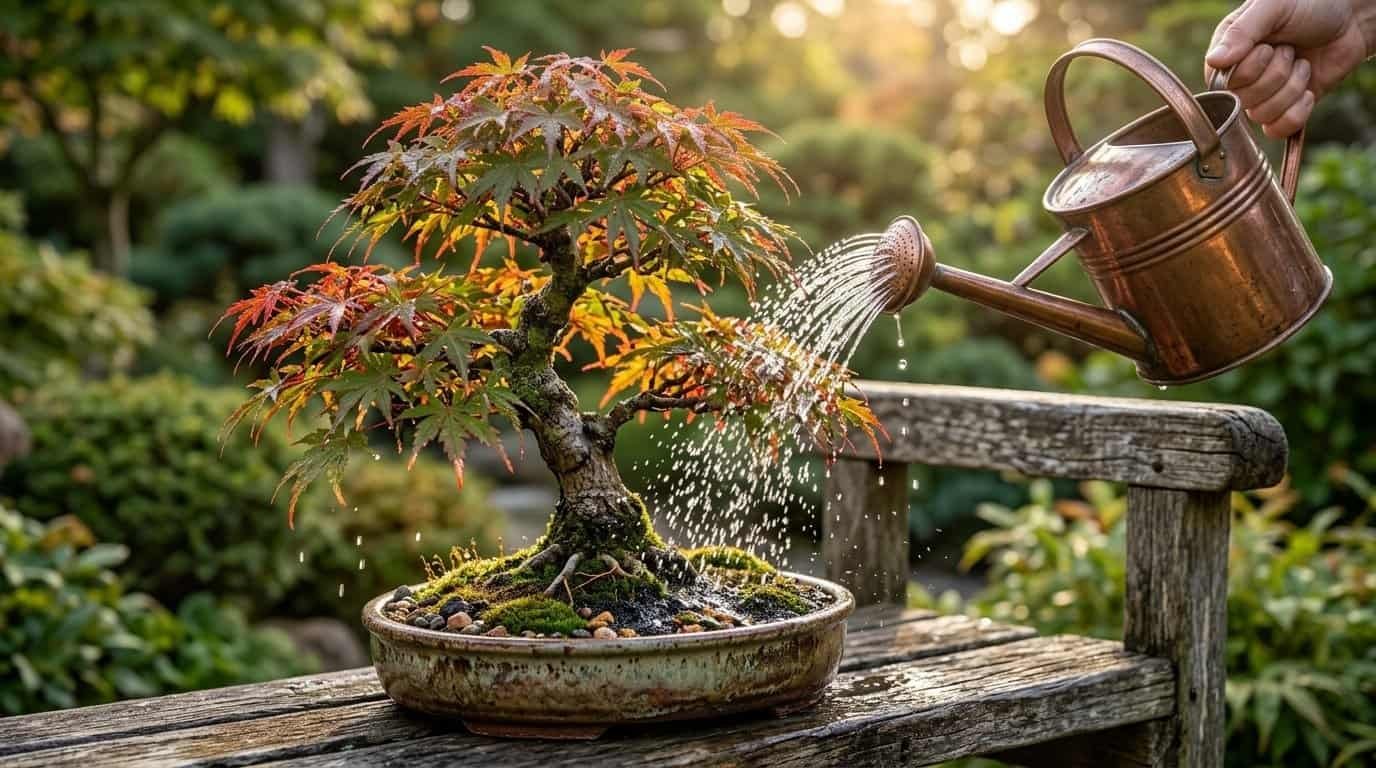
Last summer I left for work at 7 am with my little maple looking perfect and come home at 5 pm to find crispy brown edges on the leaves, the soil pulling away from the pot and a sad looking tree.
There was no rain, it wasn’t even that hot, just very windy. The little pot was drying out much quicker than I had expected.
This taught me the answer to the question of how often to water a Japanese maple bonsai.
Short Answer
Water when the soil begins to dry. As a guideline,
- Spring – 1-3 times a week
- Summer – Once a day. Sometimes twice in hot/windy conditions.
- Autumn – 2-3 times a week. Less frequently.
- Winter – Only when the soil is just beginning to dry. Often once a week.
Depending on your pot, type of soil, climate and sunlight this can vary. Use the guidelines but go by the soil.
Why Maples Are Thirstier Than They Look
Acer palmatum have delicate, thin leaves and are grown in shallow pots. This means there is very little soil to hold onto water. In windy or sunny conditions, they lose moisture quickly.
According to Bonsai Empire’s care guide, your Japanese maple bonsai needs to be watered daily during its growing period. However, leaf scorch can occur when the soil is too dry or there is too much exposure.
If you’re new here, my Japanese maple bonsai care guide covers light, soil, and pruning. This post goes deeper on water.
Finger Test
This simple habit will solve most watering issues.
- Stick your finger into the soil about 1 cm (half an inch).
- If it comes out feeling cool and damp, don’t water.
- If it comes out feeling dry and crumbly, water.
You could also use a wooden chopstick. Stick it into the soil near the edge of the pot. If it comes out dark and damp, don’t water. If it comes out pale and dry, water.
I have tried using a cheap moisture metre. It was good for the first few weeks but didn’t work properly in the grainy bonsai soil. I would go with the finger test.

Proper Watering Techniques
As well as watering regularly, it’s important to know how to do it properly. Spritzing on the surface can cause stress.
- Get a watering can with a fine rose or a hose on shower setting. Don’t use a strong jet as this will wash the soil out.
- Gently pour over the entire surface area of the soil.
- Continue until water is running freely out of the drainage holes.
- Wait a minute and then water again. Often the first watering will only wet the top layer.
The aim is to get the whole root ball wet.
If Your Maple Dried Out Completely
When the bonsai soil is very dry, water can run down the sides of the rootball and straight out of the pot.
Here’s the fix I use:
- Fill a bucket with water.
- Place the pot into the water so the water line is just above the soil.
- Leave for 10-15 mins until no more bubbles are coming up.
- Remove and allow to drain. Then place back in the shade.
Unfortunately, scorched leaves won’t turn green again. However, if the buds and twigs are still alive, the tree can produce new growth.
Factors Affecting Watering Frequency
Pot size. Shallow pots will dry out quickly. If you’re working on Japanese maple bonsai styling, you will notice that the smaller pots with a nice aesthetic will need the most attention. My larger maple in a deeper pot takes an extra day between waters.
Soil mix. Akadama, pumice and lava rock are all gritty soils which drain well and help keep roots healthy. However, they will dry out quicker than normal potting soil. If your soil is staying wet for 2 days, it is likely too dense.
Sun and wind. If your maple is getting morning sun and afternoon shade you won’t need to water as much. Wind will cause the soil to dry quicker than most expect.
Leaf count. – More leaves = more water. This is one reason Japanese maple bonsai pruning affects watering too. A dense canopy will use more water.
Tree age and roots. Trees with lots of fine roots in the pot will dry quicker. If you notice your tree needing to be watered twice as often, it may be time to repot.
Season by Season
Spring
New growth is tender and requires lots of water. Check the soil each morning and water when the top layer is dry.
Summer
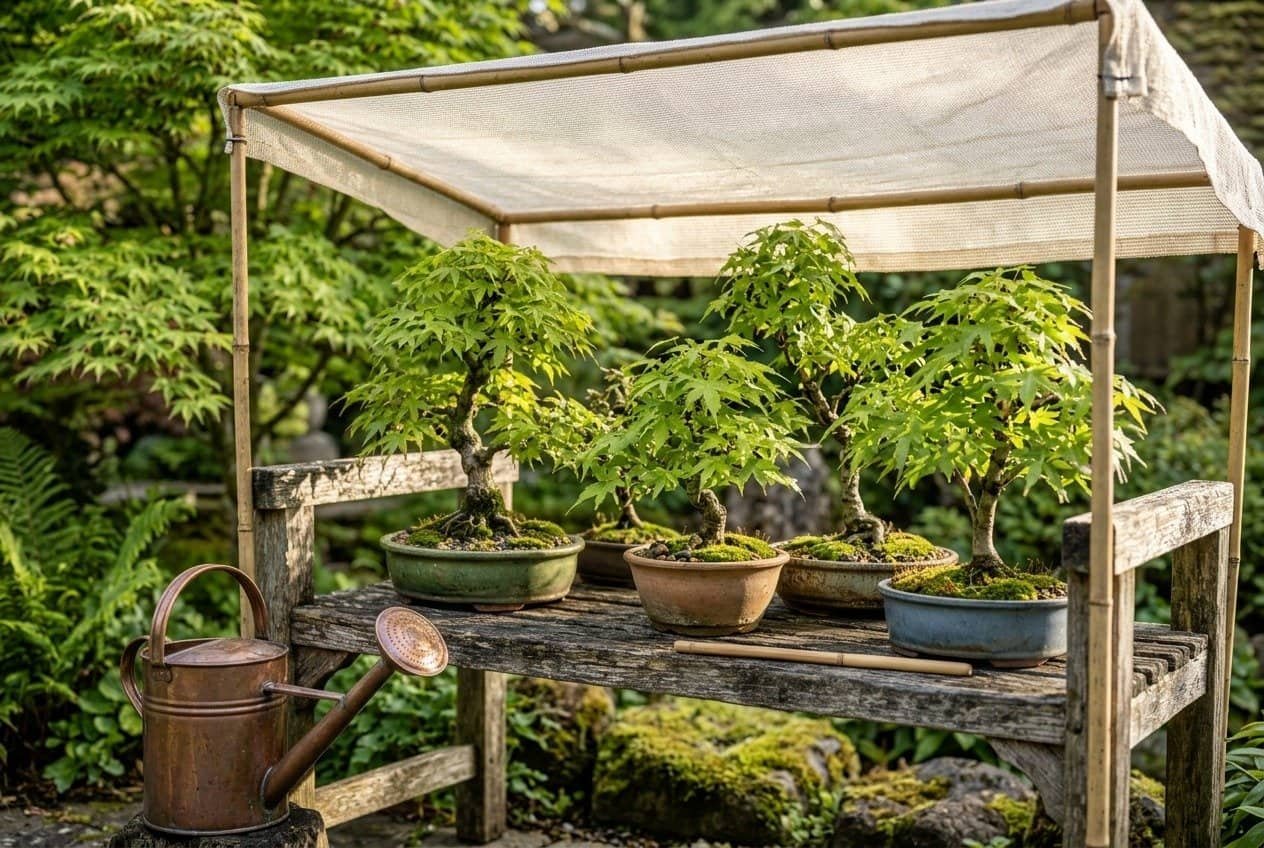
This can be tough. Check in the morning and afternoon on hot days. Using a shade cloth (30-50%) on your bench makes a big difference. The Missouri Botanical Garden note that new foliage can suffer from leaf scorch in hot summer regions. If the soil is not kept consistently moist, this can happen. Mulching will help with keeping moisture and roots cool. Adding a thin layer of moss to the surface of the soil works well for bonsais.
Autumn
As the days begin to cool and the leaves change colour, your tree will use less water. Still check but less frequently.
Winter
Your tree will be dormant but the roots will still be alive. Keep the soil slightly moist. Water in the morning on a day that is not frosted. Don’t water just before a heavy freeze.
Morning or Evening?
I prefer to water in the mornings. This gives your tree all day to take in the water and means the pot isn’t sitting in water overnight. On hot days I will check in the afternoon and water if the soil is dry.
Overwatering vs Underwatering
These two look similar, which is why they’re confusing.
Too little water:
- Crispy, brown leaf edges.
- Dry soil pulling away from the pot.
- Sagging leaves that perk back up when watered.
Too much water:
- Soil remains wet for days.
- Yellow leaves that don’t perk back up.
- Sagging leaves despite wet soil.
- Dark, soft roots at repotting.
Don’t add any more water if the soil is wet and the leaves are sagging. Check drainage.
Water Quality
Ideally rainwater. Most people will use tap water but if you have very hard water you may get build up of minerals. The Japanese maple prefers neutral or slightly acidic pH so try to avoid heavily calcareous water. A rainwater barrel is a cheap solution.
Going Away for a Few Days
If you are going away for the weekend, give your tree a good soak. Place in a shady, sheltered spot and ask a neighbour to check. If you are going away for longer, invest in a drip irrigation kit with a timer. Try it out for a week to make sure it actually gets to the pot.
Common Mistakes
- Watering on a fixed schedule instead of checking the soil
- Light sprinkles that only wet the surface
- Letting the tree dry out even once in summer
- Standing the pot in a saucer of water
- Watering at night in cold weather
- Using dense potting soil that stays soggy
- Forgetting that wind dries soil as much as sun does
If you’re getting into Japanese maple bonsai growing from scratch, these are the mistakes I’d fix first.
FAQs
How often should I water my Japanese maple bonsai in summer?
Usually once a day. Sometimes twice in hot/windy conditions. Check soil in the morning and afternoon.
Should I water my Japanese maple bonsai every day?
Only if the soil is dry. Often too much in spring and autumn. Often required in summer.
Can I mist my maple?
No. This won’t reach the roots.
How do I know if my maple is overwatered?
The soil remains wet, leaves are yellow and/or sagging. Roots will look dark and soft at repotting. Reduce watering and check your soil mix.
Do Japanese maple bonsais need watering in winter?
Yes, but much less. Keep the soil slightly moist.
Conclusion
There is no set watering schedule, this is the whole point. You can tell by looking at your soil. The best way to check is with your finger. Water thoroughly when the top centimetre of soil has dried out and allow it to drain. How often you will need to do this depends on the season, pot and weather. Every week will be different. If you’re seeing burnt leaves and drooping shoots then you’ll know you need to change up your watering routine. Once you get into the habit of checking your soil in the mornings it will no longer be a concern and will become the easiest part of your day.
Sources
Trusted reference guides for further reading: