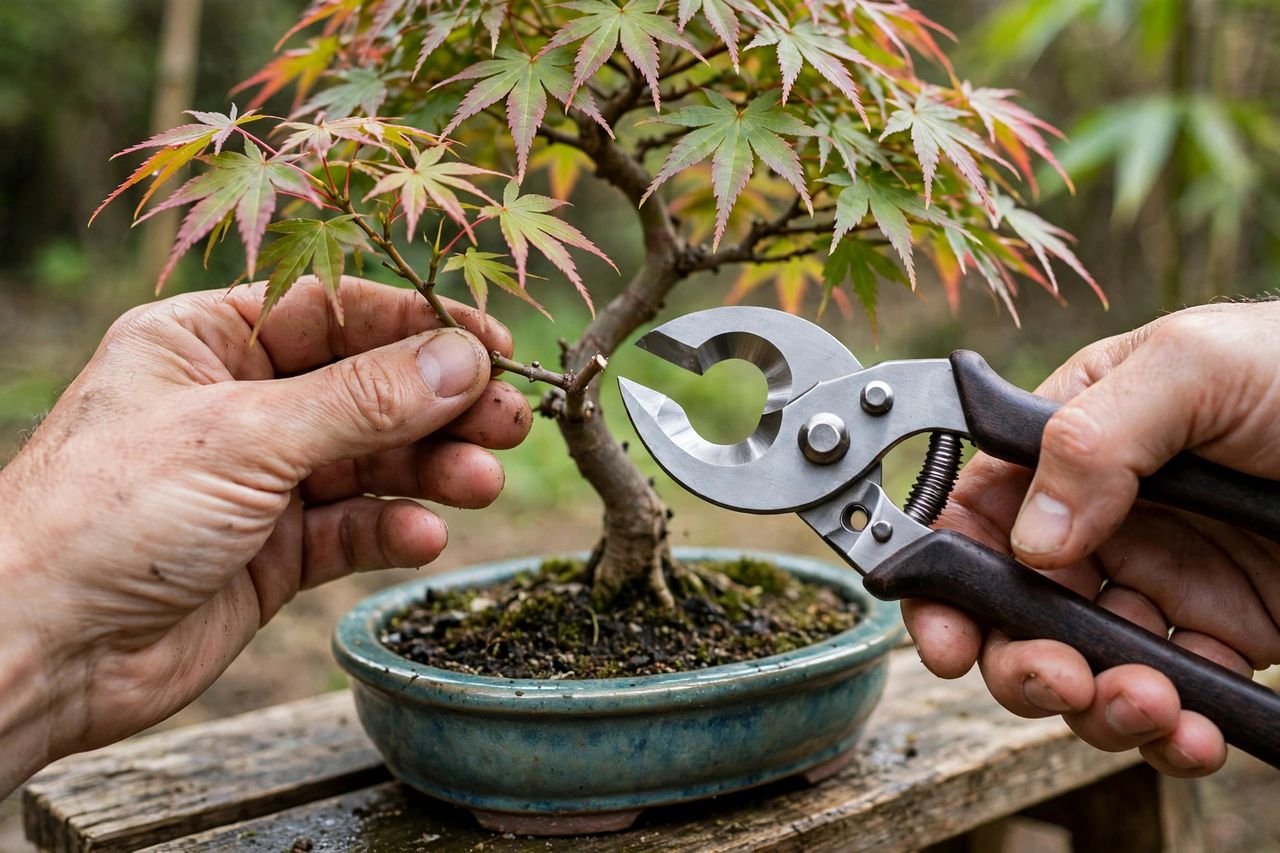
Pruning a Japanese maple bonsai is a decision about which branches stay and which go. Cut the wrong branch and the tree loses years of shape, and cut too much at once and it weakens. However, pruning Japanese maple bonsai is all about how little you can cut.
Pruning, in Short
Pruning Japanese maple bonsai starts with knowing how little to cut. Sketch the shape you are aiming for before you cut. Remove any dead, crossing or unwanted branches. Any new growth should be cut back to 1 or 2 pairs of leaves. Any heavy structural pruning removes whole branches, so plan the shape first and see the when-to-prune guide for the right season. Any maintenance pruning can be done throughout the growing season. Don’t remove more than around a quarter of the live canopy. Make sure all cuts are clean and as close to the bud/ side shoot as possible. Provide some shade, water and time.
Structural Pruning and Maintenance Pruning Are Two Different Jobs
Pruning Japanese maple bonsai means knowing structural work from maintenance work. Structural pruning is where you change the structure of the tree. This involves choosing which branches to keep and remove, and the spacing of main branches. This is a slow process and you should only make a few cuts at a time. It should only be done once a year and often over a couple of years. It is important to do structural pruning on young trees to help create taper and movement.
Older trees won’t need much structural pruning. Maintenance pruning is where you keep the structure of the tree. This is done by cutting back long shoots, pinching back soft new growth and thinning out crowded twigs.
A structural cut will remove an entire branch and all leaves. Whereas a maintenance cut will remove a few centimetres of soft growth. Know which type of pruning you are doing before you start. Don’t turn maintenance pruning into structural.
Plan the Shape Before You Cut
Pruning Japanese maple bonsai starts with a plan, not the shears. Start by looking at the tree. You should have it at eye level and slowly turn it so you can decide what angle you want the front of the tree to be. This will be where the trunk has the best movement and branches are spread out. Decide what cuts you want to make based on this.
Look for crossing branches, two branches at the same height, branches growing straight towards you, and a heavy top. Decide what 3 or 4 branches you want to keep and remove one at a time. Make sure the canopy is allowing some dappled light to get to the inner twigs. If not, the inside will become bare. See the sunlight section for more info on why maples need a balance of morning sun and afternoon shade.
Tools and Clean Cuts
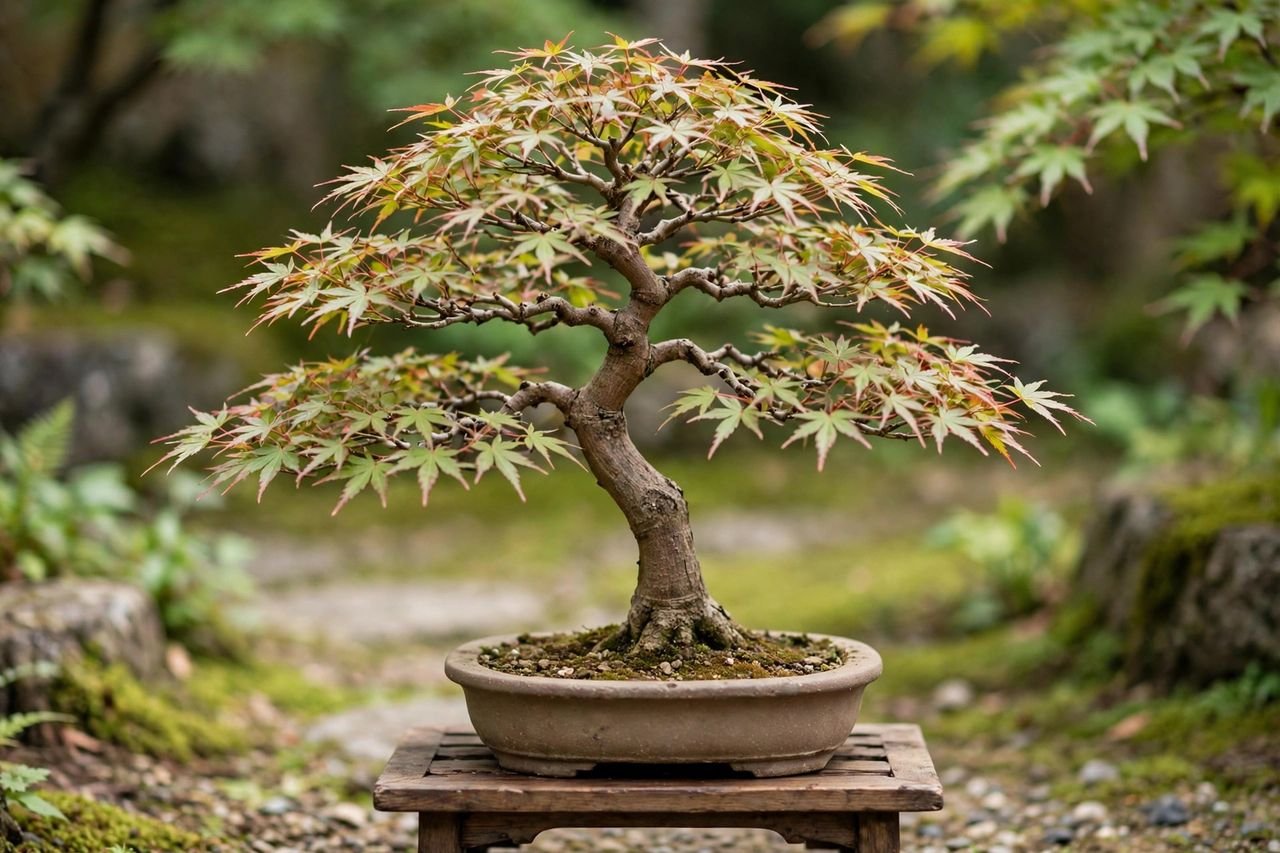
Pruning Japanese maple bonsai needs sharp, clean tools for clean cuts. It is better to make a poor cut rather than a cut in the wrong place. Maples are prone to fungal infections so it is important to use sharp tools. Use bonsai shears for twigs, concave cutter for branches up to finger thickness and fine saw for anything thicker.
Clean your blades with rubbing alcohol before and between trees. Make sure all your cuts are just above a bud or side shoot in the direction you want growth. If you are removing an entire branch, make sure to cut as close to the trunk as possible. However, don’t cut off the small collar at the base of the branch as this will help to seal the wound. If the branch is thick use a 3 cut technique to avoid tearing the bark.
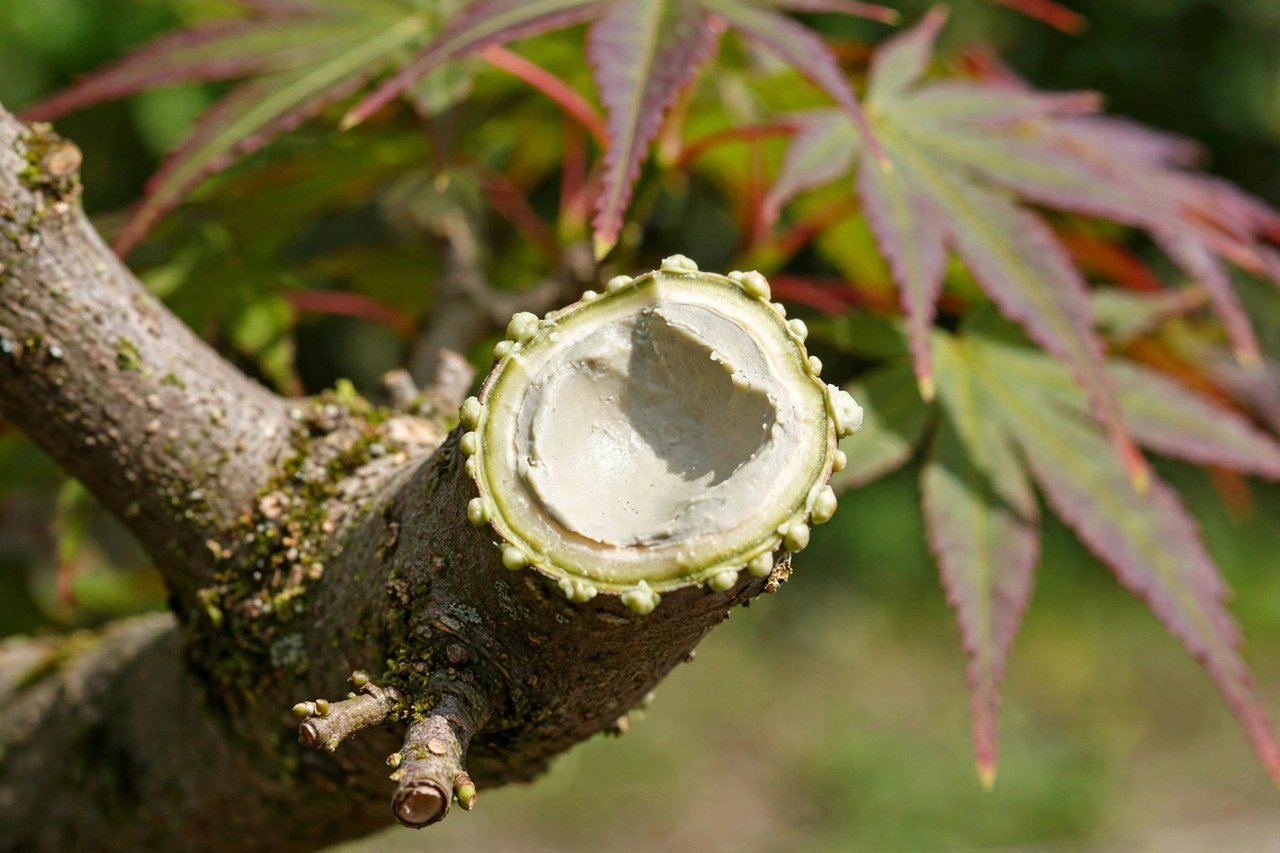
A sharp blade will cut through the wood. A blunt blade will crush the wood and cause die back. Test your cutters on a spare twig first. Make sure you make a single confident cut. Bonsai Empire recommend using cut paste on thick cuts on maples to prevent fungal infections.
Which Branches to Remove
Pruning Japanese maple bonsai means removing only the branches that do not belong. Start by going through the tree and removing:
- Dead, broken and diseased branches. Dead branches will be grey, brittle and have no leaves. Gently bend them to see if they are alive. If they are alive they will bend, if they are dead they will snap. Remove back to live tissue.
- Crossing and rubbing branches. Crossing branches will cause wounds as they thicken. Keep the best placed branch and remove the other entirely.
- Inward and downward growing branches. These will create extra shade and mess. They rarely have much foliage so they are safe to remove.
- Water sprouts and suckers. Maples will produce lots of vigorous straight shoots from the trunk and thick branches. These will grow quickly with long internodes and will never fit into your design. Remove early whilst they are soft and small.
- Bar branches. If two branches are coming from the trunk at the same height but opposite sides this will create a bar. This will ruin the taper. Keep the stronger branch.
- Long branches. If a branch is growing outside of your silhouette, cut back to a side branch in the direction you want your new tip to grow. Never cut back to dead wood.
A Safe Pruning Session, Step by Step
Pruning Japanese maple bonsai safely means following the steps in order. Follow these steps. Stop when you have planned.
- Look before you cut. Decide on your front and what branches to keep/remove.
- Remove dead branches. Can be removed any time of year.
- Remove crossing branches. Keep the best placed branch.
- Remove branches that don’t fit. Remove any branches growing straight towards your front, straight up or straight down.
- Cut back long shoots. Cut new growth back to 1 or 2 pairs of leaves.
- Thin out. If there are 3 twigs growing from one point, keep the best placed.
- Stop, clean and check. Remove any fallen leaves. Check the front and back of the tree. Your maple should look a little lighter and more open.
How Much Can You Safely Remove?
Pruning Japanese maple bonsai safely means taking no more than a quarter of the canopy. The Maryland Extension recommends removing no more than around a quarter of the canopy of Japanese maples in one year. At most a third. This will cause too much stress to the tree and the cuts may not fully seal before decay occurs. A quarter is a maximum for bonsai. If your tree is young, weak or has just been repotted you should remove much less. Remember that structural, maintenance and pinching all come from the same budget.
Pinching: The Gentlest Cut
Pinching is the gentlest form of pruning Japanese maple bonsai. Pinching is the gentlest type of pruning and is often underused by beginners. Pinch off the soft tip of new growth when they have opened their first pair of leaves. This will stop the shoot from growing and keep the twig thin. It will also encourage further branching. However, pinching all your shoots will weaken your tree. Bonsai Empire advise that constantly pinching will weaken your tree in the long run. Only pinch if you need to shorten a shoot.
Aftercare: What the Tree Needs After You Cut
After pruning Japanese maple bonsai, the tree needs shade, water and time. Your tree will still be wounded after pruning. If you have done a heavy prune, move your tree to some dappled shade for a few days. This will prevent it from drying out in the wind and harsh sun. Keep the soil evenly moist. See the watering section for info on how to tell when to water. Don’t feed your tree after pruning. Fertiliser won’t help to heal the wounds. Feeding a stressed tree can burn the roots. Wait until you have strong new growth and feed as normal. See the fertilising section for when and how much to feed. Don’t wire your branches.
Cultivar, Climate, Age and Pot: What Changes for Pruning
Pruning Japanese maple bonsai is never one rule for every tree, since cultivar, climate, age and pot all change the answer. There isn’t a set rule for pruning maples. Green Acer palmatum are the hardiest and most forgiving. Red cultivars are more prone to scorching. Variegated and laceleaf types are the most delicate, so prune them the least of all. Young trees in growing pots can be pruned more heavily. Older trees with delicate ramification should only be pinched. If your tree is weak don’t prune until it has had a full season to recover.
Depending on your climate your tree will need more or less time to recover. If you have a cool and humid climate your tree will quickly callous over. If you have a hot and dry climate your tree will take longer to heal. Keep your structural pruning to a minimum and protect from drying winds. The size of your pot will also affect how quickly your tree will recover. If your maple is in a large training pot with free draining soil it will recover quickly. If it is in a small display pot it will have very little margin. See the soil section for info on the free draining granular soil.
Pruning in Practice: Two Trees
These examples show pruning Japanese maple bonsai on a young tree and an old one. These are examples.
Young Upright Maple. You have a 5 year old green upright maple in a training pot. It is growing well but has 2 leaders fighting for the top. There is a thick branch crossing the trunk low down. You will remove the weaker leader, the crossing branch back to the trunk and cut the longest branch back to a side twig. This is around a quarter of the crown. As the tree is vigorous it will regrow its foliage within a season. Pinch once the growth has hardened.
Old Laceleaf Maple. You have a 15 year old laceleaf maple in a display pot. It has delicate fine ramification and a good silhouette. There isn’t any structural pruning needed. You will only be doing some maintenance pruning. Remove a few water sprouts, thin out one pad of dense shaded foliage and pinch the longest new growth. Your tree won’t notice much.
Pruning Mistakes to Avoid
Most mistakes in pruning Japanese maple bonsai come from cutting too much.
- Pruning heavily in spring. Maples bleed a lot in spring. Keep structural pruning to the dormant period. Keep maintenance pruning to the growing season.
- Removing more than a quarter of the canopy. There won’t be enough leaves on the tree to feed itself and will regrow weak and thin.
- Leaving a stub. This will die back and encourage decay. Cut back to the branch collar.
- Pruning, repotting and defoliating in the same year. All are major stresses.
- Feeding. Fertiliser won’t help to heal the wounds. It can burn the roots of a stressed tree.
Pruning Problems? Start Here
Troubleshooting pruning Japanese maple bonsai starts with the last cut you made.
- Sappy ends. You have probably cut at the wrong time of year. Leave it.
- Short, pale and weak new growth. You have pruned too heavily or your tree was weak. Provide some shade and consistent watering. Don’t cut, feed or repot for a full season.
- Bare centre. Not enough light is getting to the inner twigs. Thin out the outer growth slightly each year.
- Dark, soggy or not healing wounds. Remove dead tissue back to clean wood. Improve airflow.
Pruning Questions, Answered
Here are the questions growers ask most about pruning Japanese maple bonsai.
How much can I prune?
Around a quarter of live canopy in one year. Less if your tree is young, weak or has just been repotted.
Do I need to seal my cuts?
Bonsai Empire recommend using cut paste on thick cuts on maples. Small twig cuts don’t need sealing. The cut will seal itself.
How do I know which branch to keep if they cross?
Keep the branch with the best angle and positioning. Usually this will be the branch that comes from the trunk at its own height and points outwards. Remove the other entirely.
What is a concave cutter? Do I need one?
A concave cutter is used to create a small hollow in the cut branch. This will allow the callous to roll over and seal the wound. Use on branches thicker than a pencil.
Conclusion
Pruning Japanese maple bonsai well means cutting little, cutting clean, and watching the tree. It should be a selective process. Structural pruning and maintenance pruning should be planned. Using sharp, clean tools and making sure that you take out the right branches, you will keep your tree healthy and shaped by taking no more than a quarter of canopy per year.
Pinching throughout the year will help to keep things gentle and by taking your time to care for your tree by watering, shading and not rushing to feed it will allow each cut to heal. Depending on the cultivar, climate, age and pot your tree is in, the answer will vary. However, always try to make minimal cuts, clean cuts and let the tree tell you what it needs.
Sources
Trusted reference guides for further reading: