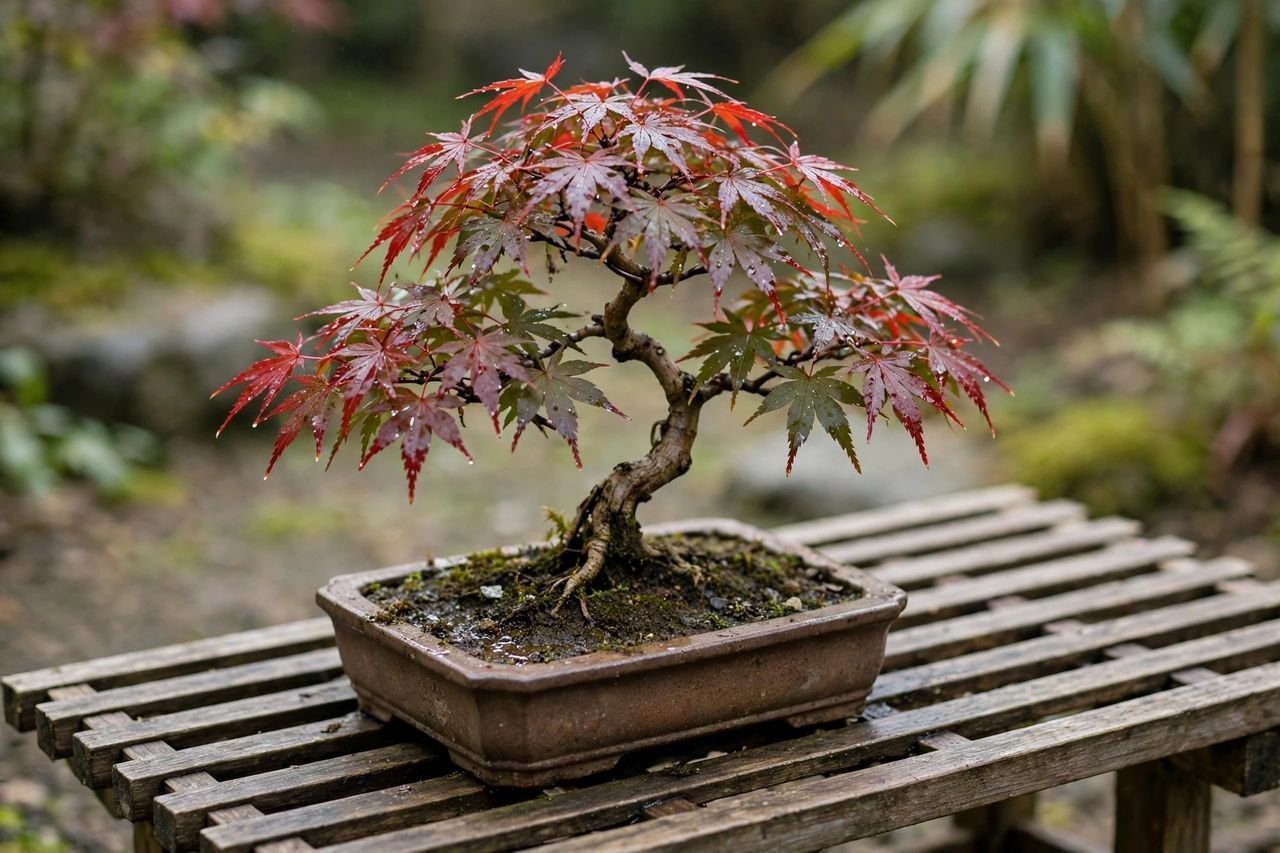
You watered the plant yesterday evening and this morning it is still very heavy. There is a lot of water in the saucer, the soil is dark and flat, and there hasn’t been any new growth from the tree in weeks. There is nothing dramatic that is happening. The issue with Japanese maple bonsai root rot is that it builds up slowly and won’t show until the root system has become damaged.
Japanese Maple Bonzai Root Rot occurs when the roots have been sitting in damp, anaerobic soil for too long and start to become damaged. The leaves will be the last thing to show symptoms. This article will show you the signs you can look out for in order, how to check the drainage without disturbing the roots and how to prevent this issue.
Root Rot at a Glance
Japanese maple bonsai root rot occurs when the roots become damaged and dying due to sitting in damp, anaerobic soil. The fine feeder roots are the first to go meaning the tree will slowly lose its ability to absorb water and nutrients. This can cause the tree to wilt.
If your plant is still heavy after watering and has a sour smell, plus there is no growth then you need to check the drainage. Check the pot, holes and bench before feeding, spraying or repotting.
What Root Rot Is, in Plain Terms
Healthy roots require moisture and air from the soil. This is held within the tiny spaces between soil particles. If the spaces become flooded then the air will be forced out. This causes the fine feeder roots to die back meaning the tree can no longer properly drink and feed.
This can cause organisms that thrive in damp soil to attack the roots. The most well known is Phytophthora. This is a fungus-like organism that attacks maples and many other woody plants. It spreads through water and infects the feeder roots just behind the root tip. Pythium behaves in a similar way in damp, cool soil.
This is important to know as it shows that the cause is the damp soil. There is no way to save the roots by spraying or feeding. The soil needs to be able to drain and dry between watering.
Why Wet Soil Harms Roots in Two Ways at Once
The roots absorb oxygen from the air in the soil. If the soil becomes waterlogged then there will be no oxygen and the root tips will stop working. The leaves may turn yellow, wilt or drop due to the roots not being able to transport water up.
The roots can become infected. Phytophthora can infect between 59-82°F (optimum 71°F). If the soil is slightly less than saturated then it can produce sporangia in 4-8 hours and release zoospores in 10-60 minutes (Penn State Extension).
The Warning Signs, Side by Side
Below is a table showing you what each Japanese maple bonsai root rot symptom could mean. Usually you will not get one symptom. You will want to look for two or three.
| Sign | What it may mean | First check |
|---|---|---|
| Pot stays heavy for days after watering | Soil is holding water, not draining | Lift the pot and check the drainage holes |
| Soil surface stays dark and wet, with a sour smell | Airless, waterlogged soil | Skewer test, then check the saucer |
| Leaves wilt although the soil is wet | Roots cannot take up water | Do not water more; check drainage first |
| Growth stalls in the growing season, shoots stay short | Feeder roots are failing | Compare with last year, then check the pot |
| Black, soft roots visible at a drainage hole | Rotting root tissue | Inspection is now justified |
Reading the Signs in Order
Early Symptoms
Japanese maple bonsai root rot is easy to miss as the tree appears to be fine. The first symptom you will usually notice is the pot. A healthy pot should be noticeably lighter the day/ two days after watering. If the pot remains heavy then the roots cannot utilise the water. The second symptom is the smell. Healthy soil should smell like damp earth.
Mid Symptoms
The leaves will not grow. The shoots will be short and the leaves will be smaller than usual. With Japanese maple bonsai root rot, new growth will stop during the growing season. This is when growers often get it wrong. The leaves appear to be thirsty so you will water again making the soil even more damp.
Late Symptoms
Large amounts of leaves will drop. The branches will die back from the tips. The tree will feel loose when moving the pot. Black and mushy roots may be visible from the drainage hole. If the drainage is improved and there are enough healthy roots then the tree may recover. However this will take time and cannot be guaranteed.
Drainage Checks You Can Do Without Disturbing the Roots
- Pick up the pot. The day after watering pick up the pot. Two days after watering it should be noticeably lighter. If it is still heavy then the soil isn’t drying.

- Observe the water. Water the plant slowly. If the mix is free draining then the water should drain through the drainage holes in seconds. If it is pooling then the mix has become compacted or there is a blockage.
- Stick a wooden skewer into the soil. Take it out after one minute. If the soil is very damp and sticking to the skewer then the root zone is becoming too damp.
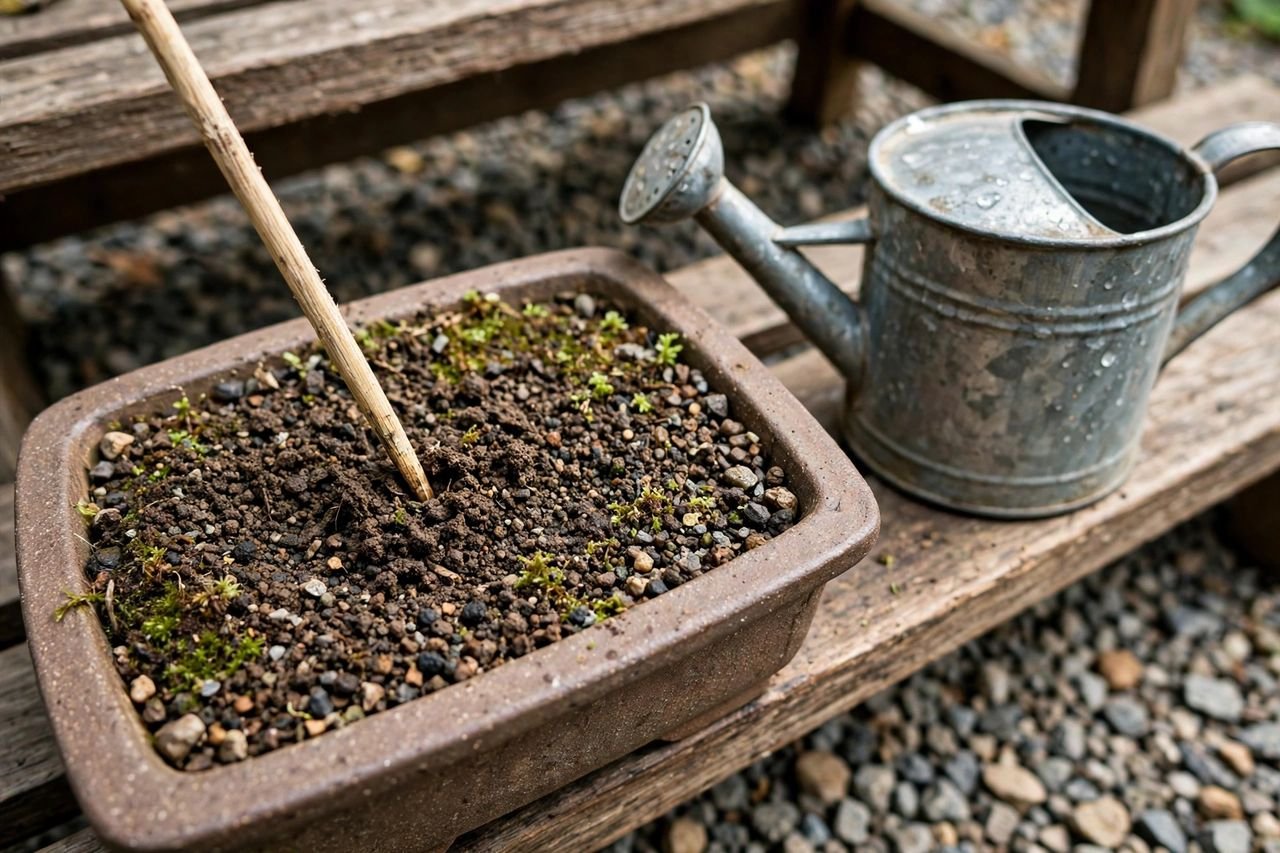
- Check underneath. After watering empty the saucer. If it is filling up then the bottom of the pot will remain damp.
- Check what the pot is sitting on. If it is sat flat on a solid surface or damp ground then it won’t drain well. If it is on a bench or bed of gravel then the water will drain away. Penn State Extension recommend using a bed of graded gravel 3-4 inches thick.
When a Root Inspection Is Justified, and How to Keep It Gentle
Don’t take the tree out of the pot just to see. Every time you check the roots you will damage the fine roots. Only check if there are multiple symptoms pointing to Japanese maple bonsai root rot.
If you do check then be gentle and quick. Gently slide the tree out of the pot. Don’t rinse the rootball too much or comb through. Healthy roots will be pale, firm and springy. Rotting roots will be dark grey/black and mushy.
Only cut the clearly mushy and dark roots back to the pale firm roots. Use clean sharp scissors and sanitise between cuts. Repot into fresh coarse free draining mix. Never repot back into the old damp mix. Water once and allow to drain completely. Place in bright indirect light.
The only way to confirm Phytophthora is to send a sample to the lab. Other root issues can cause the same Japanese maple bonsai root rot symptoms. If you need a definite answer then your local extension office or plant clinic can advise you on sending a sample.
Prevention Starts With the Pot and the Mix
The whole point of this article is prevention. As Penn State Extension say there is no chemical to cure a Phytophthora infected plant. Prevention should be your main aim. This starts with the pot and mix.
The mix should be free draining. It needs to allow air to flow through. See our soil guide for more information on what mix to use. If the mix is dense, fine or broken down then all the pores will be filled with water and there will be no air.
The pot should not be too large. If it is too large then there will be a ring of soil around the roots that won’t be reached. This will remain damp for longer.
Make sure the pot isn’t on flat damp ground. If it is on a bench, slatted stand or gravel bed then the water will drain away. Don’t leave trees in puddles or on the ground during a rainy winter.
Prevention in How You Water Through the Year
One of the most common causes of Japanese maple bonsai root rot is having a set watering schedule. During cooler, dull weather the tree will require much less water. Get into the habit of checking the soil.
Slow down during Autumn and Winter. Growth will stop and leaves will fall. Many growers continue to water as they would in the Summer. This causes the soil to remain damp for days and encourages rot. Water less frequently and in the mornings.
Where possible group your trees according to their watering requirements. Don’t water a thirsty tree the same as a slow drinker. Don’t use irrigation water from a suspicious tree on healthy trees. Don’t let containers sit in a puddle.
What This Looks Like on a Real Tree
A grower has two maples on the same bench. They are both watered the same. One is in a shallow pot with fresh gritty mix and sits on slats. The other is in a deep pot that is too large. It has old broken down mix and sits flat on a shelf with a saucer that is never emptied.
During a damp Autumn the first tree loses its leaves on time and buds normally in Spring. The second tree holds onto its leaves and wilts in Spring. The pot, mix and bench caused this issue.
Where Root Rot Goes Wrong
- Watering a wilting tree without checking the soil. If the tree is wilting in damp soil then the roots can’t drink. Always check the soil by lifting the pot. Adding more water will make the issue worse.
- Feeding a stressed tree. Feeding won’t help the roots. It can also burn the few healthy roots left. Only feed when the tree is growing well.
- Removing the tree from the pot as soon as you see an issue. A full root check will damage the fine roots. Check the drainage using the 5 checks above. Only check if there are multiple symptoms.
- Using the old mix or dirty pot. The old damp mix will carry the same organisms and drainage issue. Use fresh mix and a clean pot.
- Spraying without knowing the cause. Using a fungicide for leaf issues won’t help damp soil. It won’t cure Phytophthora. Find out what the issue is, improve drainage and ask your local to diagnose. Don’t waste money on a product.
Your Root Rot Questions
How do I know if my maple has Japanese maple bonsai root rot or I’m overwatering?
Overwatering is the cause of root rot. If the soil is remaining damp, the tree is wilting, growth has stopped and there is a sour smell then the roots are already damaged. Improve drainage.
Can a Japanese Maple Bonzai recover from root rot?
Sometimes. If there are enough healthy roots and drainage is improved quickly then they can. However this will take time and can’t be guaranteed. There is no chemical to cure an infected plant. Don’t feed or prune a weak tree.
Should I repot a tree I suspect has Japanese maple bonsai root rot?
Don’t guess. Check the drainage. Move the pot to a bench. Empty the saucer. Only repot if there are multiple symptoms pointing to damaged roots. Use fresh free draining mix.
Will root rot affect my other bonsai?
Yes. They can share water, puddles and dirty tools/pots. Keep the suspicious tree separate. Don’t use the water on healthy trees. Clean tools between trees. Wash pots.
Conclusion
Root rot in Japanese Maple Bonzai is a drainage issue. The fine roots will suffocate in the damp, anaerobic soil. Organisms will attack as they thrive in damp soil. Spot the Japanese maple bonsai root rot symptoms early and check drainage. Improve the pot, mix and bench.
Sources
Trusted reference guides for further reading: