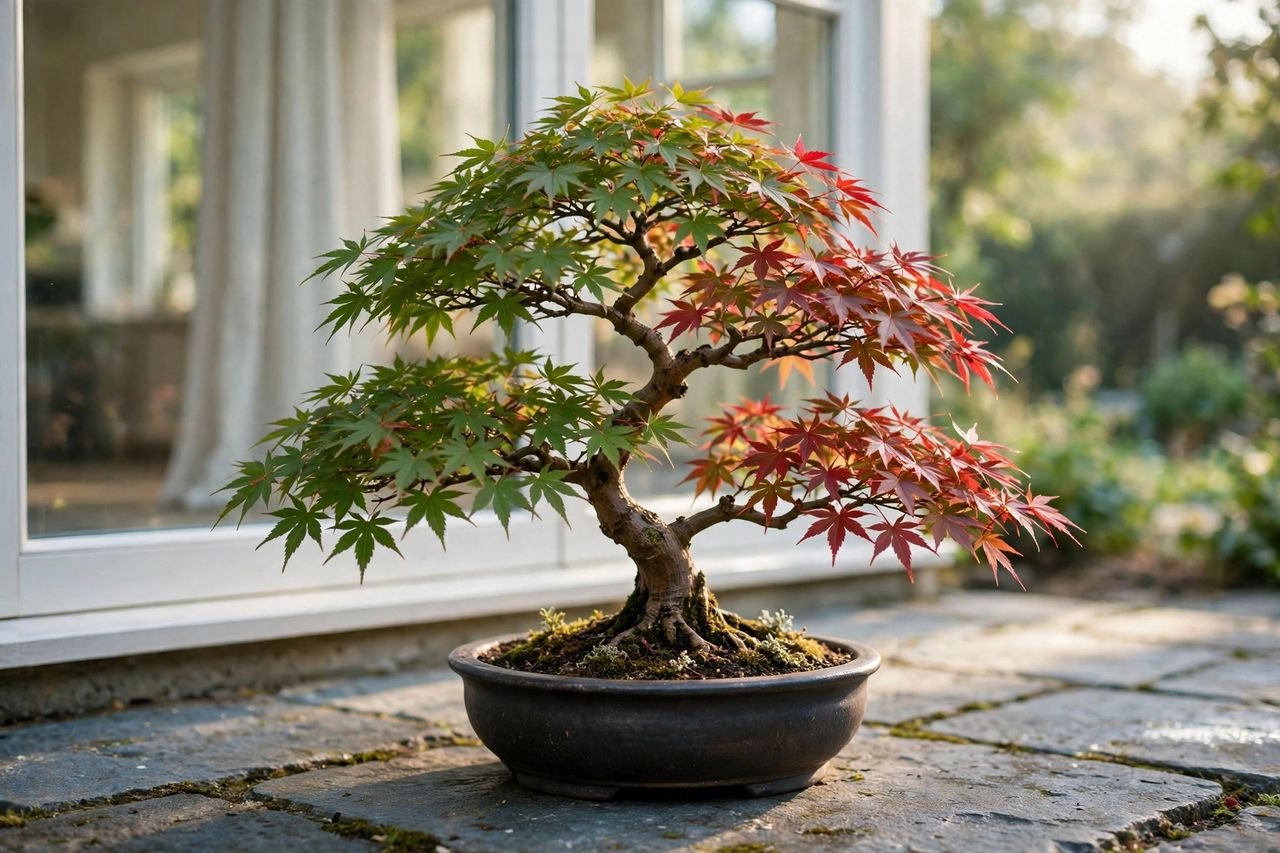
A Japanese Maple bonsai is sat on your kitchen table and is looking amazing in the bright window. Can it stay indoors? Although it would be lovely to leave your tree there, unfortunately it won’t work. Japanese maples thrive outdoors in a temperate climate and the living room cannot provide everything it needs to thrive. So, can Japanese maple bonsai grow indoors?
Growing Indoors, in Short
Japanese maple bonsai cannot be kept permanently indoors as they need a period of cold dormancy each winter. They can be put outside during the winter and brought inside for a short period during spring and summer to enjoy them. They are trees of the temperate climate and they will not thrive indoors.
If you have a table or bench outside they can be put on display but will need to be outside for the winter. If you are fortunate enough to have outside space, a sheltered, cold and bright spot is a better option. If you are wondering can Japanese maple bonsai grow indoors, the answer is only for a short display, not all year.
Why Winter Dormancy Is Not Optional
Japanese maples (Acer palmatum) originate from the temperate areas of East Asia, meaning they get cold winters and distinct seasonal changes. During the winter they will go into dormancy, shedding their leaves and resting to save energy and prepare the buds for when they open in the spring. As explained in the care guide: For anyone asking can Japanese maple bonsai grow indoors, dormancy is the part most people miss.
Dormancy occurs due to the shorter days and cooler temperatures during Autumn. The tree will stop growing, set their buds and create natural anti-freeze within their tissues. During Spring they will become active again once they have received enough cold. This is known as the chilling requirement and will vary depending on the species and cultivar. Most temperate species will require around 1000 hours of temperatures below 40°F (4°C). If they do not receive enough cold temperatures they can die due to an endless summer. As explained in this guide:
The problem with keeping your tree in a warm environment is that the temperature in a living room will be around 68 – 72°F (20 – 22°C) throughout the winter. Therefore your tree will not receive the required amount of cold. During the first year it may be fine as it will be using its stored energy. However by the second year it will not be growing as well and the leaves will be smaller or paler. By the third year many trees will not even leaf out. Often people blame the soil, water or fertiliser but really it is down to no winter.
Why a Bright Room Is Not a Substitute
Light
Japanese maples need lots of light throughout the day. Unfortunately a window will not give them enough. The glass will block some of the suns energy. They will only receive light from one direction and will only receive a few hours of direct sunlight. Outside they will receive light from the entire sky. They need a balance of sun and shade, explained in this guide:
They will become leggy with lots of long thin shoots and pale leaves. A bright window does not change the answer to can Japanese maple bonsai grow indoors.
Air and Humidity
Outside the tree will receive a nice breeze to remove any excess moisture from the leaves. This will also reduce any fungal issues. Indoors the air is stagnant and can often be very dry during the winter due to central heating. This will cause your maple to lose more water from its leaves than it can take up from the roots. The edges of the leaves will become crispy and brown. A humidity tray will help but cannot recreate the outside air. Dry, still air is one more reason the answer to can Japanese maple bonsai grow indoors is no for permanent life.
Temperature and Watering
Japanese maples need cool temperatures at night and distinct seasonal changes. The temperature in a house will be warm all year round meaning your tree will not harden off for winter. Watering will also become more difficult. The tree will not grow well and will not take up as much water. The soil will remain wet for longer encouraging root rot. You can check how moist the soil is using your finger. As explained in this guide: Those warm nights are part of why can Japanese maple bonsai grow indoors is not a permanent option.
This is even more important indoors as there is no wind or sun.
Temporary Indoor Display, Done Safely
It is fine to keep your tree indoors for a short period of time. Only keep it indoors whilst it is in leaf and healthy. Only keep it for a couple of days (2-3 days is a good guideline) and ideally no longer than a week. Keep it in the brightest spot you can and away from radiators. Do not feed whilst it is in display. Once you are finished, put it back outside. A few days on display is the safe limit when you ask can Japanese maple bonsai grow indoors.
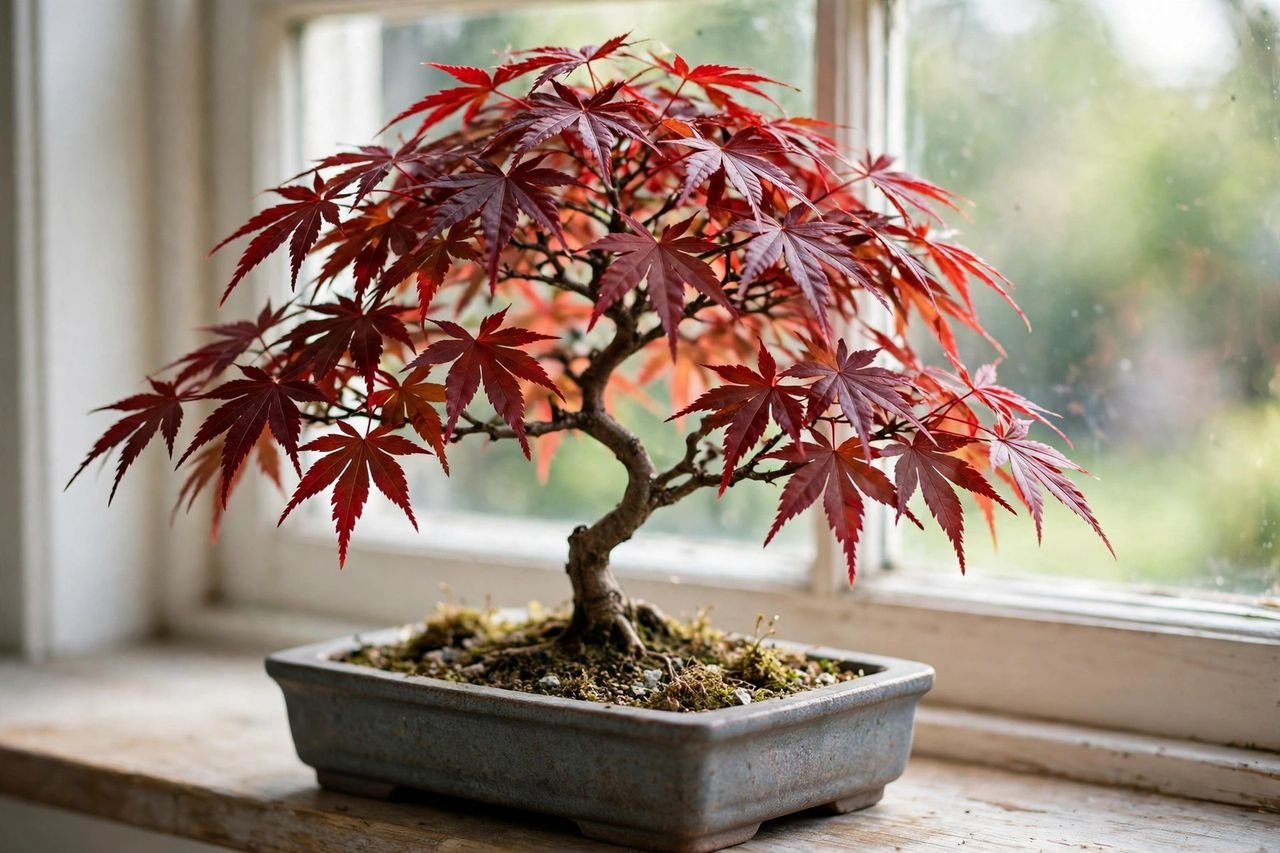
Do not display your tree if it is dormant and leafless. Only for an hour or two. The warm temperature can cause dormant buds to become active too early. When the next frost hits your tree will die.
A Safe Outdoor Home Through the Year
Outside your maple bonsai will need a specific spot. It will need morning sun and afternoon shade during the summer. It will also need to be in a sheltered spot with good air flow. If you live in a hot climate it will need some shade cloth during the hottest afternoons. Outside is where the tree belongs, which is the real answer to can Japanese maple bonsai grow indoors.
During Spring watch out for late frosts. Japanese maple leaves are very delicate and can turn black if they experience one frosty night. Move your tree to a sheltered spot or cover with some fleece. During Summer water daily. Sometimes twice a day during hot days. During Autumn let your tree colour and shed its leaves.
As explained in this guide from Bonsai Empire:
Japanese maple is frost hardy but should be protected when temperatures drop below 15°F (-10°C). This could be done in a cold frame. As explained by North Carolina Extension:
Japanese maple leaves will burn if they receive too much sun, wind or drought.
Winter Protection, Step by Step
Wait until your tree has shed its leaves. Let it colour and shed its leaves naturally before putting it into shelter.
Choose a cold and sheltered spot. A garage (without heating), cold frame or sheltered wall will all work. The temperature should be around 32-45°F (0-7°C). Do not let it get too cold and do not put it in a heated room.
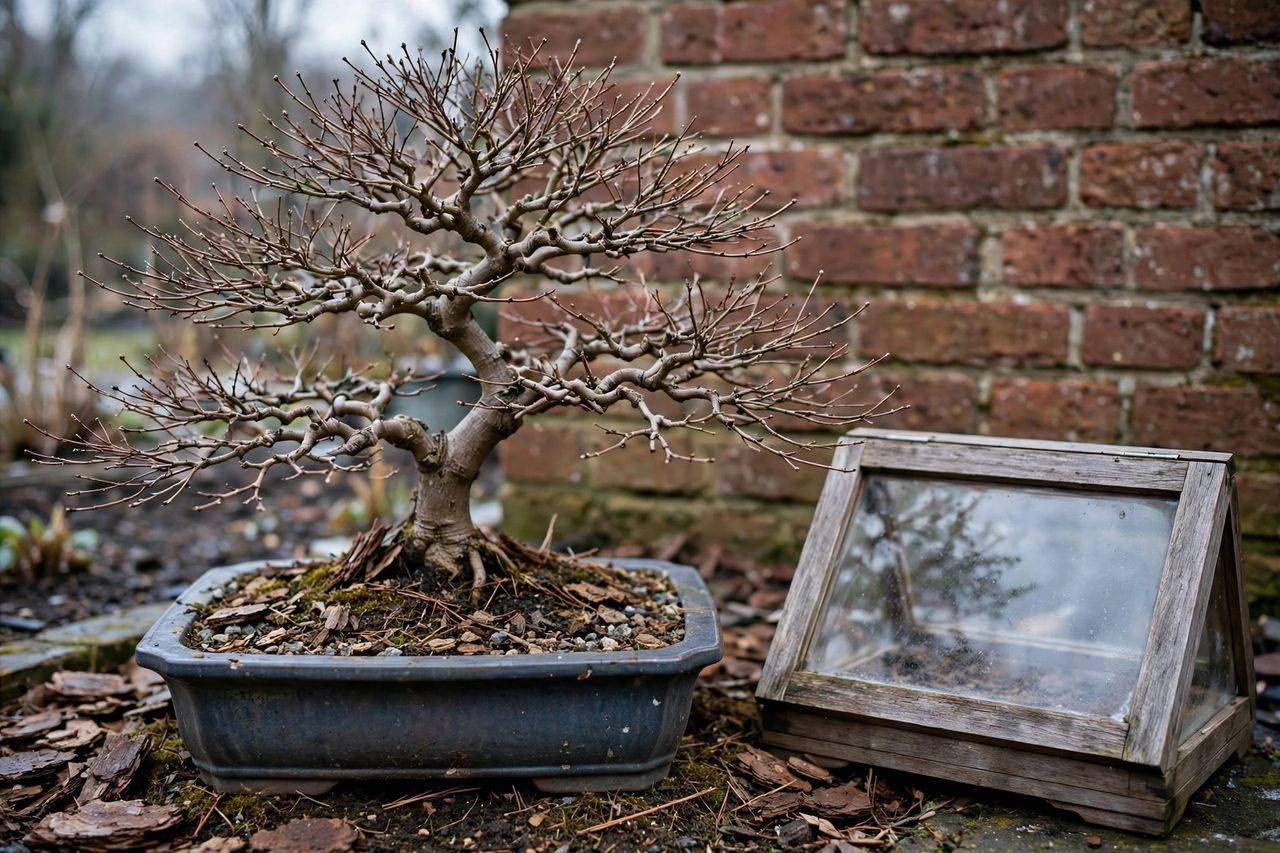
Protect the pot. Place the pot on the ground and mulch around it with bark or straw. This will prevent the roots from freezing.
Water sparingly. Your tree will not take up much water during dormancy but the roots will still need some moisture. Check the soil every week or so and give it a light watering on a mild day.
Avoid any warm periods. If your tree becomes active during a mild week in the middle of winter do not put it in a warm area. Keep it cold and it will usually sit and wait.
Gradually bring it back outside. Once the buds have swollen and there is no hard frost, move your tree back outside. Give it a couple of weeks in a sheltered spot to allow the new leaves to harden. That return outdoors is part of why can Japanese maple bonsai grow indoors is not a permanent option.
If you live in a warm climate and the temperature never gets cold enough during winter (USDA zone 9 or above) your Japanese maple may struggle even outside. They will not receive their chilling hours. A fridge dormancy is a technique used by experienced growers.
Cultivar, Climate and Pot: What Changes for Growing Indoors
The plain green Acer palmatum copes with beginner mistakes better than any other maple. Red cultivars (such as Bloodgood types) will need sun to keep their red colour. If they are in too much shade they will turn green and become soft. Variegated and laceleaf cultivars are the most delicate. Their pale or delicate leaves will burn easily.
A younger tree will be more vigorous than an older, refined tree in a small pot. The hardiest green forms still need winter cold, so can Japanese maple bonsai grow indoors remains a no for permanent indoor life.
If you live in a cool climate your tree will receive the cold temperatures it needs during winter. The main thing to do is protect the pot from hard freezes. If you live in a hot climate your tree will need more shade. It may not get cold enough during winter. A larger pot will protect the roots more. The soil should be a free draining mix of akadama, pumice and lava rock to keep the roots healthy (as explained in this guide). However it will dry out quickly:
Two Rooms, Two Different Results
A grower in a mild climate keeps their small green maple bonsai on a sunny windowsill all year round. During the first summer it will grow well. However during the second Spring the leaves will be smaller and paler. The shoots will become long and thin. During the third Spring it will not leaf out well and will not colour during Autumn. Fertilising and repotting will not help as it has never had a winter. That grower had asked can Japanese maple bonsai grow indoors, and the pale, leggy tree gave the answer.
Another grower in a colder climate keeps their red maple on a bench with morning sun and afternoon shade. Once it has shed its leaves they move it to an unheated garage. They mulch the pot and give it a light watering during winter. It will colour beautifully during Autumn. It will rest during winter and leaf out strongly during Spring. They bring it inside for the weekend and then put it straight back outside. These are just examples.
Mistakes That Make Growing Indoors Worse
Keeping your tree indoors all year. Whilst your tree can survive a couple of warm winters using its stored energy, it cannot survive without dormancy. Move it outside during growing season and give it a cold winter rest. This mistake is what the question can Japanese maple bonsai grow indoors is really about.
Putting your tree inside during winter to protect it from frost. The warm temperature will cause the buds to become active. The new growth will then be killed by frost. Protect the roots from hard freezes.
Assuming your tree has enough light. If your tree is becoming leggy and the leaves are pale it does not have enough light.
Watering regularly. Your tree will not take up as much water indoors. Watering daily can cause root rot. Always check the soil.
Still Stuck on Growing Indoors?
Your tree isn’t leafing out well during Spring after being indoors during Winter. It likely didn’t get its dormancy. Move it outside and water regularly. Do not force it with heavy feeding. Give it a proper cold rest next winter. Poor leafing out is a common sign after asking can Japanese maple bonsai grow indoors and keeping the tree in too long.
Leaves and shoots are pale. Your tree isn’t receiving enough light. Move it to the brightest spot you can. Gradually move it outside over a few days.
Edges of leaves are brown and crispy. This is usually due to the dry stagnant air indoors. Check the soil and move it outside. Misting will not help.
Buds are opening during mid Winter. Your tree has become active due to a warm period. Keep it cold. Do not move it into a heated room. Protect the new soft growth from frost.
No leaves by late Spring. Gently scratch a small twig. If it is green underneath it is still alive but just growing slowly. If it is brown and brittle it may have died. Ask your local bonsai club or nursery for a second opinion.
Growing Indoors Questions, Answered
Can I keep my Japanese maple bonsai indoors during Winter?
No, not in a warm room. Winter is the time your tree will need the cold most. Keep it in a cold sheltered spot outside, unheated garage or cold frame. Protect the pot from hard freezes.
How long can I keep my Japanese maple bonsai indoors?
A couple of days is safe whilst it is in leaf. Ideally no longer than a week. If it is dormant and leafless only bring it in for an hour or two. A couple of days is safe, and that is the practical limit for can Japanese maple bonsai grow indoors.
Can I keep my Japanese maple indoors with a grow light?
A grow light will help with the light but will not help with dormancy or temperature. Your tree will still need a cold winter rest every year.
Can I keep my Japanese maple bonsai in an apartment with no outside space?
Unfortunately it will be very difficult. Without a balcony, garden or unheated garage your tree won’t receive the cold rest it needs. A tropical bonsai species would be a better option.
What is the best place to put my Japanese maple bonsai outside?
Most trees will thrive in a spot with morning sun, afternoon shade, shelter from strong winds and good air flow. They will also need to be protected from hard frosts during Winter.
Conclusion
Japanese maple bonsai should be kept outdoors. They need a cold winter to go into dormancy and no windowsill can provide this. However, it is fine to keep your tree indoors for a short period of time whilst it is in leaf. Keep your tree outdoors in gentle morning sun with shade from the harsh afternoon sun. Keep your tree safe from the wind and harsh frosts. Providing your tree with a cold winter will make it leaf out nicely each spring. The kindest thing to do would be to keep your tree outdoors.
Sources
Trusted reference guides for further reading: