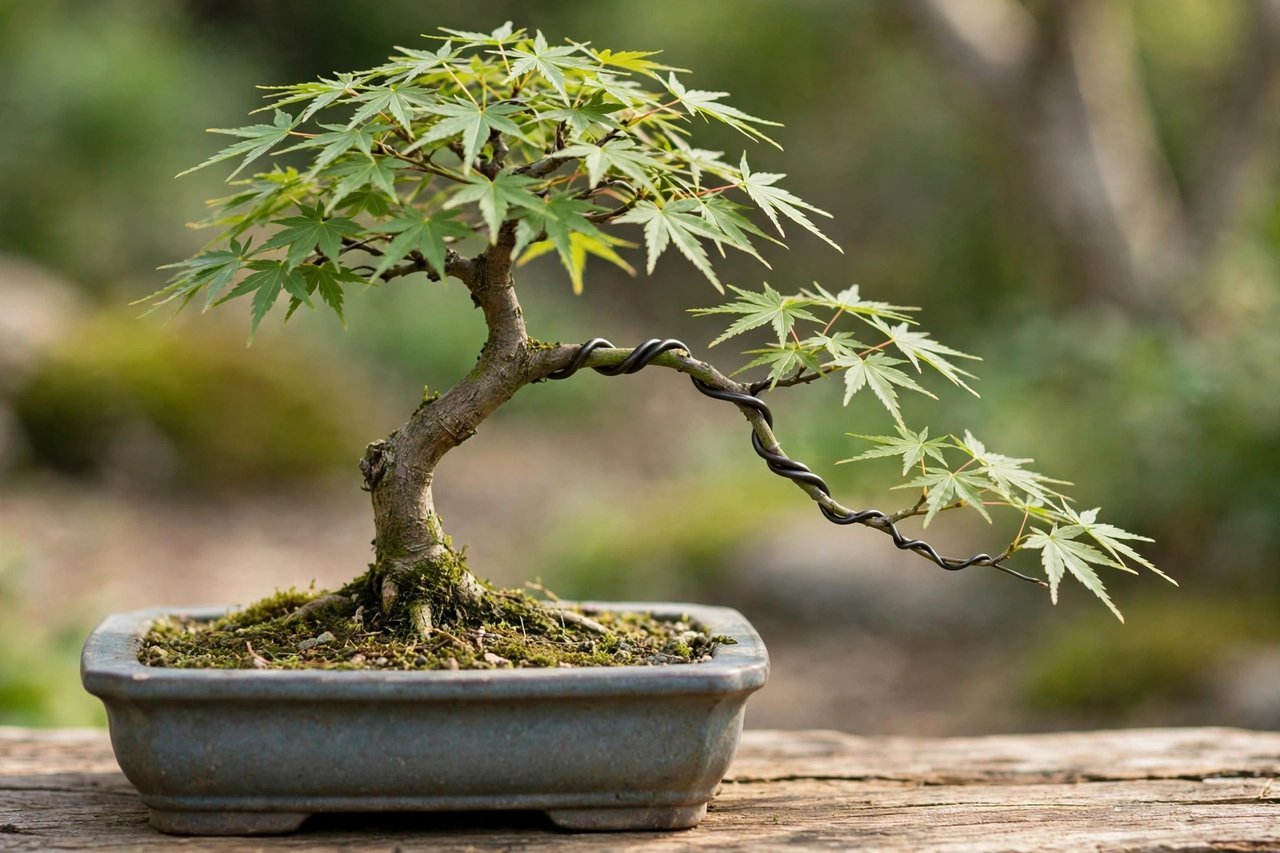
Wiring Japanese maple bonsai can move a branch that pruning cannot. You have a tree that is growing directly upwards but you need it to grow sideways. This can’t be fixed by pruning. You can use wiring but a Japanese maple has very thin and smooth bark so it will remember all of your mistakes. If you leave a coil on for too long, you will leave a spiral mark which can take a long time to fade.
The Short Answer on Wiring
Wiring Japanese maple bonsai uses aluminium wire about one-third as thick as the branch. Use anodized aluminium wire. Use around 1/3 of the thickness of the branch. Wrap the wire at a 45-degree angle. Gently bend the branch during late winter when the tree is leafless or mid-summer when the leaves have hardened. Check every 2 weeks and once the branch has set or the wire is starting to cause damage, cut the wire off. Usually this will take between 1-4 months. Never unwind the wire. If the branch only needs minor changes, consider using clip and grow.
Is Wiring Right for Your Maple?
Wiring Japanese maple bonsai is optional, not a requirement. Wiring is optional. If you just want to make a minor change to the direction of the branch, you can use clip and grow. Simply prune the tip back to a side bud. If the branch is thick, old or brittle, using wiring could cause it to crack.
Wiring can be useful if you want to make a real change to the direction of the branch. You may want to bend an upright branch, create some movement on a straight trunk, or open up a dense silhouette. However, only use wiring on a healthy tree. If the tree is weak, dry, recently potted or heavily pruned it will need a full season to recover.
As noted by Bonsai Empire, deciduous trees are much easier to wire during late winter. You’ll have no leaves to worry about and you can see the full structure of the branch. This is the best time to wire Your Maple. The second best time is mid-summer, once the first flush of leaves have hardened. Avoid wiring in early spring. Also avoid wiring when the temperature is over 95°F (35°C). See our pruning guide to see why.
Aluminium or Copper?
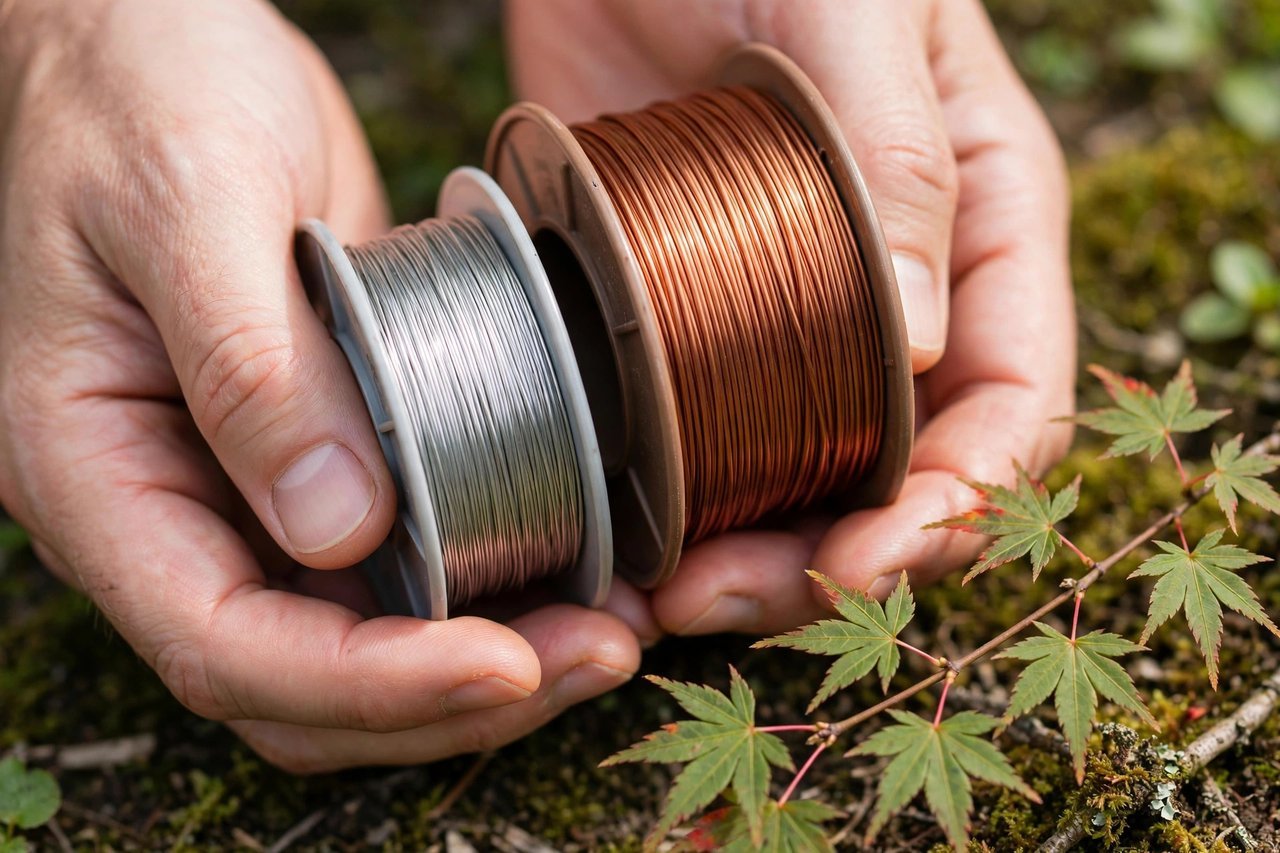
Wiring Japanese maple bonsai starts with anodized aluminium wire. Start with anodized aluminium. As noted by Bonsai Empire, deciduous trees should be wired with aluminium. Copper is harder and should be used on conifers or pines. Beginners should use aluminium as it is easier to use. It is soft, flexible and easy to remove. This is perfect for the thin bark of a maple. Copper is around 1.5x stronger but is stiff and not as flexible.
Choosing the Right Wire Size
Wiring Japanese maple bonsai needs wire about one-third as thick as the branch. Use around 1/3 of the thickness of the branch. So for a 6mm branch use 2mm wire. For a 9mm branch use 3mm. If the wire isn’t strong enough, use a second wire.
| Branch thickness | Aluminium wire to try first |
|---|---|
| 2–3 mm (fine twig) | 1 mm |
| 4–6 mm (secondary branch) | 1.5–2 mm |
| 7–9 mm (primary branch) | 2.5–3 mm |
| Over 9 mm (small trunk) | 3–4 mm, or two wires side by side |
How to Wire a Branch, Step by Step
Wiring Japanese maple bonsai safely means following the steps in order. Ensure you have everything you need. Wire, round wire cutters, pliers and raffia (soaked in water to make it flexible). Let the soil dry for a day. The drier the branch, the less likely it will snap.
- Secure the wire. Push 5-10cm of wire into the soil next to the trunk. Or hook it underneath a strong surface root. If the wire isn’t secure the coil will spin.
- Wrap at 45-degrees. Wrap the wire around the branch at 45-degrees evenly. Leave around the same distance between each coil as the thickness of the wire.
- Wire 2 branches. If there are 2 branches of similar thickness close together, use 1 wire. Never cross over wires.
- Thick Branch. If you have a thick branch and need to make it bend strongly, wrap it with damp raffia first. This will help spread the force of the bend.
- Gently bend. Hold the outer part of the branch with your fingers and gently bend it with your thumbs on the inside of the curve. If you hear any cracking stop immediately.
- Only bend once. Repeated bending will cause the branch of the maple to break. Tuck the ends of the wire or cut them flush.
Checking the Wire and Removing It Safely
Wiring Japanese maple bonsai means checking the wire every two weeks. As noted by Bonsai Empire, branches will grow around the wires in 1-4 months causing damage to the bark. Remove the wire before this happens. Check every 2 weeks during the growing season. If Your Maple is experiencing a strong flush of growth, check weekly.
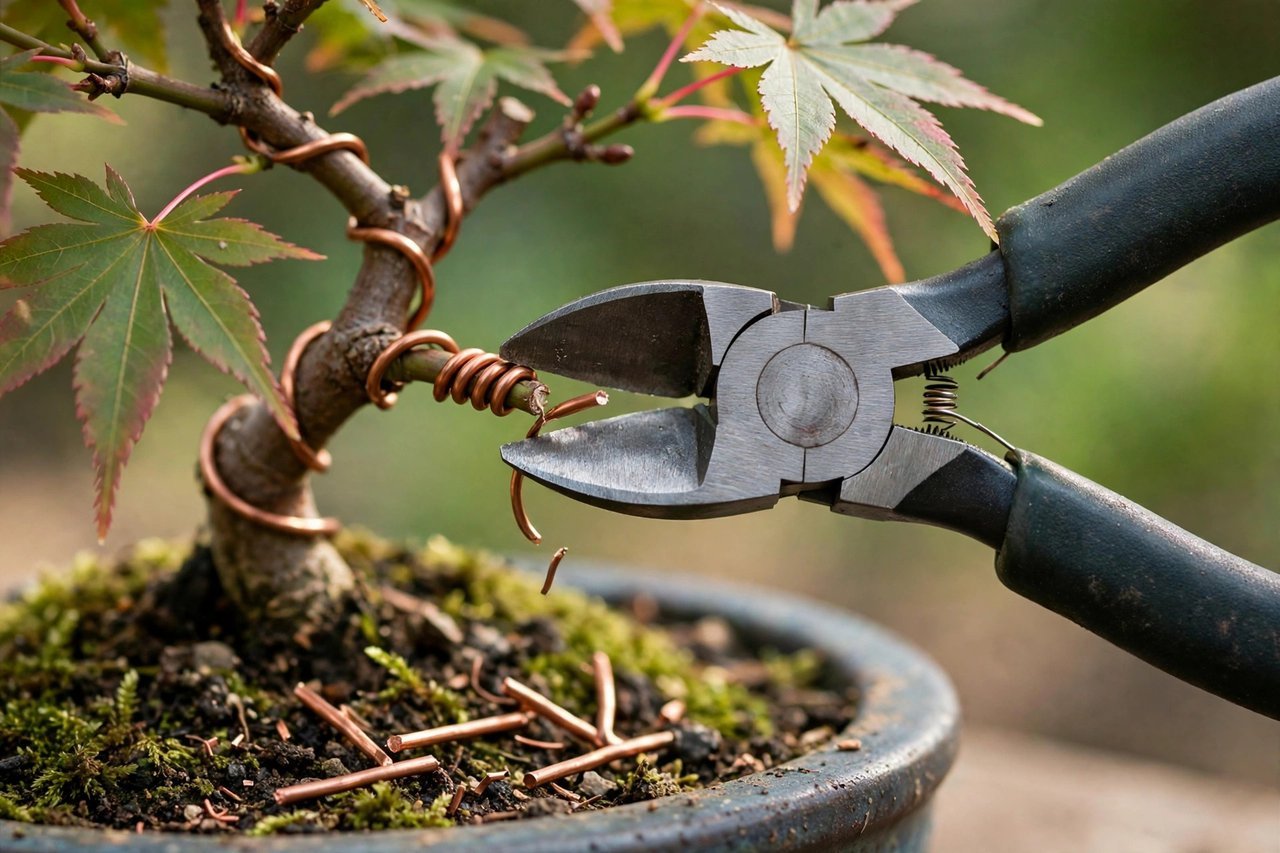
Remove the wire as soon as the branch has set into its new position or as soon as you notice any damage. If the damage is slight, it may grow out in a year or two. If it is a deep spiral mark it usually won’t go away. Cut the wire off. Never unwind. Use round wire cutters to cut each turn. Gently remove each loop. Once removed, give the tree some shade and water.
Safer Alternatives: Clip-and-Grow and Directional Pruning
Wiring Japanese maple bonsai is not always needed — clip-and-grow often does the job.
Not all branches need wiring. Clip and grow shapes a tree more gently than wire. Simply prune the shoot back to a bud facing the direction you want. Allow it to grow and then prune again. Over 2–3 seasons you will create movement without any wiring. Directional pruning is similar. Simply remove the branch that is growing in the wrong direction. See our pruning guide for details. Only use wiring on branches that can’t be moved with pruning.
Why Wiring Depends on Your Cultivar
Wiring Japanese maple bonsai is never the same job twice, since cultivar, climate, age and pot all change what is safe.
Green Acer palmatum is the toughest maple of all and the quickest to forgive. Red cultivars are more prone to scorching so should be shaded earlier. Variegated and laceleaf have the most delicate bark so should be wired the least. Use clip and grow.
If you live in a mild climate, there isn’t much time to wire when the tree is leafless. Wire as soon as possible. If you live in a cold climate, avoid the coldest time of year as the wood will be brittle. If you live in a hot, dry climate, the branches will set quickly and cause scarring. Check weekly. If the tree is young, it will be forgiving to a little heavy handed. If the tree is old, be as gentle as possible. Only wire in late winter. See our care guide for details on how to help the tree recover.
Two Wired Branches, Two Outcomes
These examples show wiring Japanese maple bonsai done badly and done without wire. These are examples.
A maple wired at the wrong time of year. A beginner wires their maple in early spring. The bend looks perfect but within 3 weeks the coils have sunk into the quick growing bark. If they had wired in late winter or waited until the leaves had hardened, the bend would have set without causing any damage.
A maple shaped with no wiring. The grower prunes back the upright bottom branch of a young maple to an outward facing side bud. Allow to grow and then prune back again to the next outward facing bud. After 2 seasons the branch has a gentle curve.
Wiring Mistakes to Avoid
Most mistakes in wiring Japanese maple bonsai come from leaving the wire on too long.
Wiring a weak or recently potted tree. A stressed tree cannot heal from the damage caused by the wire. Give it a full season.
Wire that is too thick. This will cause the bark to be crushed. Use a thinner gauge or double wire.
Tight wiring or crossing over. This will cause the wire to dig in within weeks.
Leaving the wire on for too long. Check every 2 weeks. Cut the wire off as soon as you notice any damage. If the damage is slight it may heal but if it is deep it won’t.
Unwinding the wire. This will twist the branch and may cause it to break. Always cut the wire off.
Wiring Not Improving? Check This
Troubleshooting wiring Japanese maple bonsai starts with the wire itself.
Wire digging in. Cut the wire off immediately. Rewire later using a looser coil or use clip and grow.
Branch bouncing back. The branch hasn’t set yet. Rewire using the same gauge.
Branch cracking whilst bending. Stop immediately. Gently bend back. If the crack is small, prop it up with a splint or tape. Leave it alone for the season.
Bark ripped where wires have crossed. Remove both wires. Keep the wound clean and dry. Don’t wire this area this year.
What Growers Ask About Wiring
Here are the questions growers ask most about wiring Japanese maple bonsai.
Can I wire my Japanese maple bonsai at any time of year?
The easiest time to wire is during late winter when the tree is leafless. The second best time is mid-summer once the leaves have hardened. Avoid early spring.
What thickness should I use?
Around 1/3 of the thickness of the branch. So 2mm for a 6mm branch.
How long can I leave the wire on?
Usually between 1-4 months. Check every 2 weeks and remove as soon as the branch has set or the wire is causing damage.
Will it damage my maple?
Only if you use too thick, tight or leave on too long. If wired properly and removed in time there will be no permanent damage.
Conclusion
Wiring Japanese maple bonsai well means bending once, checking often, and cutting the wire in time. Today look at your tree. Choose 1 branch that really needs to be moved. Check the time of year. Is it leafless or have the leaves hardened? Choose the thinnest aluminium wire that will hold the branch. Wrap at 45-degrees. Bend once. Check in 2 weeks. If it just needs a little nudge, prune it.
Sources
Trusted reference guides for further reading: