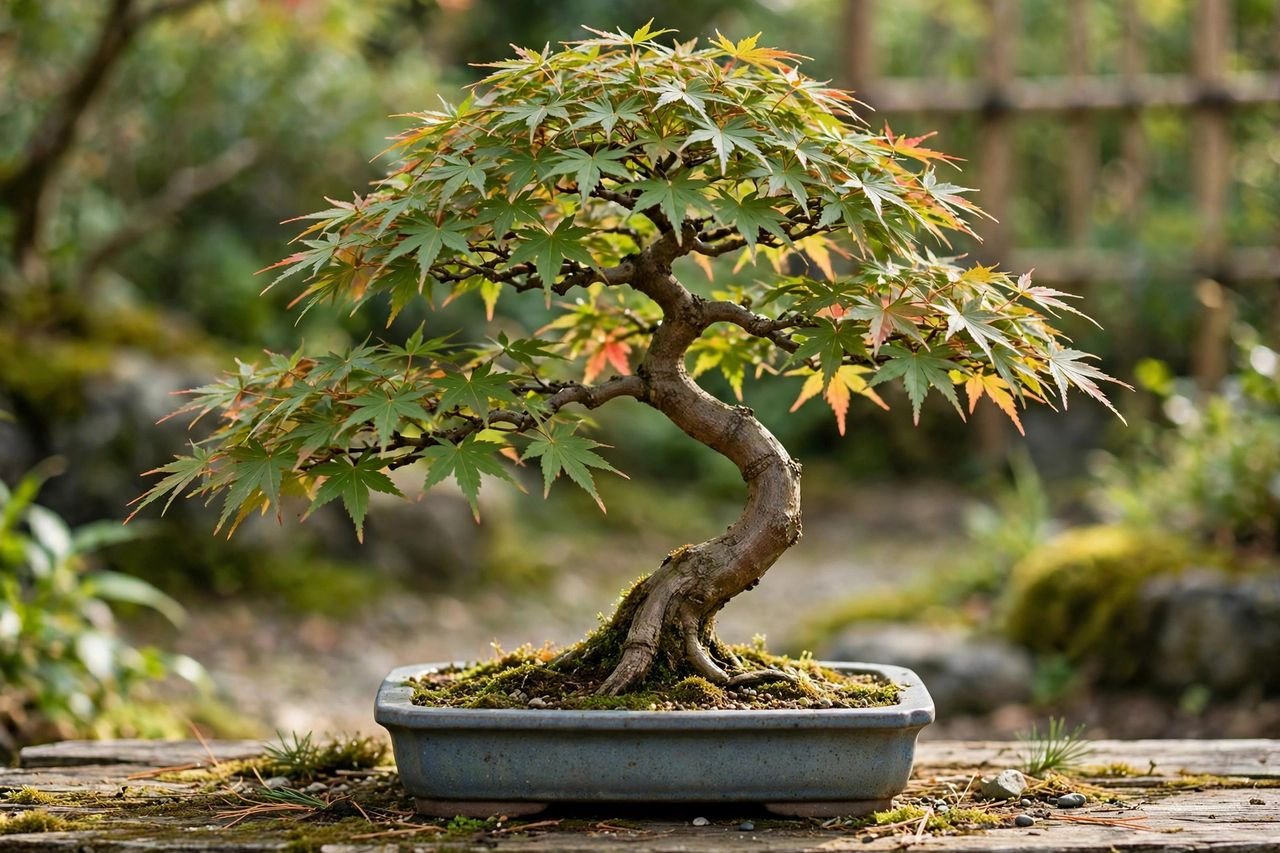
Japanese maple bonsai shaping starts with knowing what to keep, not what to cut. Your tree is looking healthy and is growing well, but still looks like a potted shrub. All the branches are growing upwards and the tree looks like a round ball. This isn’t an issue with how you’re caring for your tree, but more to do with shaping your Japanese Maple bonsai. Many beginners will leave their bonsai alone for years or over-prune in one afternoon. Shaping bonsai is mainly about knowing what to leave.
Shaping, in Short
Pick a front for your bonsai and keep the style simple. Most maples will look best with an informal upright style. Ensure the bottom branches are the longest and thickest. Remove any branches growing straight up, inwards and directly opposite. Use clip and grow to shape gradually. Prune shoots back to an outward facing bud. Let them grow and prune again. Prune a little at a time over a few seasons.
Read Your Tree Before You Cut
Before you even pick up your shears, take a look at your tree. Turn your pot slowly so you can pick a front. This should be the side with the best trunk, with the bottom half visible. Look at the trunk. Is it straight, gently curved or leaning? Is it tapered with a thick bottom? Look at the branches. Where are they coming off the trunk? Are they spaced out? Are they alternating? Step back and look at the silhouette.
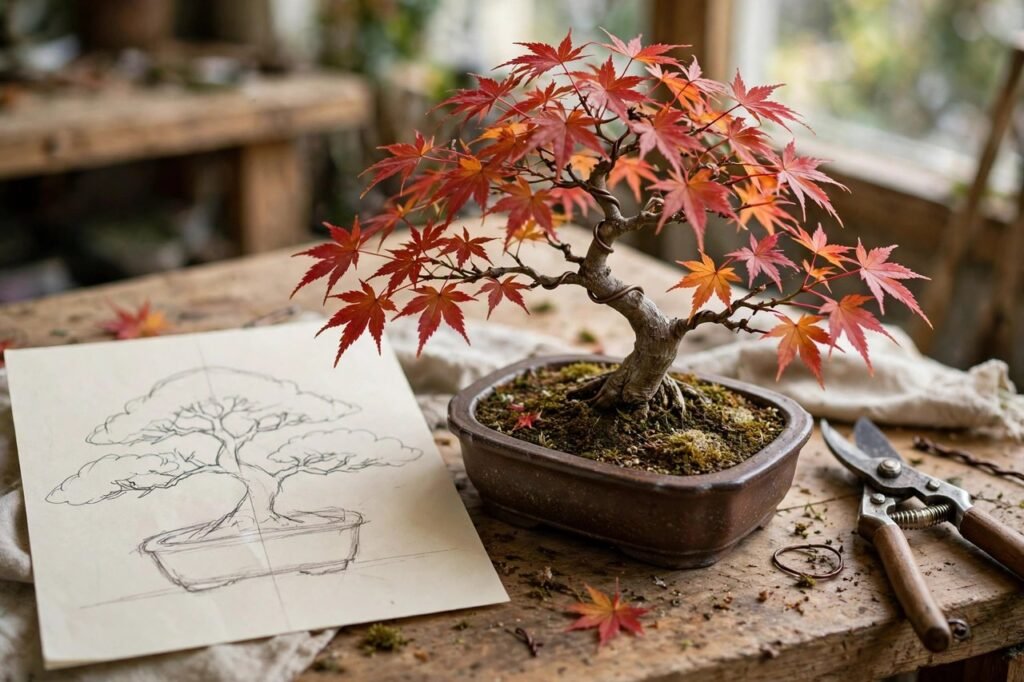
A nice maple silhouette should look like a triangle. The bottom should be the widest and the top should be a single point. Before you start pruning, sketch your tree. This way you won’t accidentally cut off any branches you’d like to keep.
Choose a Shape That Fits the Tree
Japanese maple bonsai shaping means choosing a style that fits the trunk. The styles of bonsai aren’t strict rules but give you an idea of what the trunk should look like. Formal upright has a straight trunk that tapers. The branches are evenly spaced out. Informal upright has a gently curved trunk (usually an s-shape). Slanting has the whole trunk leaning to one side with the bottom branch sticking out the other way to balance it.
An informal upright is the kindest style for a beginner maple. According to Virginia Tech Extension it is the best style for beginners as you’ll learn the most about bonsai design. The trunk will be curved with the main branches at the curves. The apex will be over the bottom. A formal upright needs a natural straight trunk that tapers well. Most maples from nurseries won’t have this. Choose a style that your trunk looks like it would naturally have.
Clip-and-Grow: the Slow, Safe Way to Shape
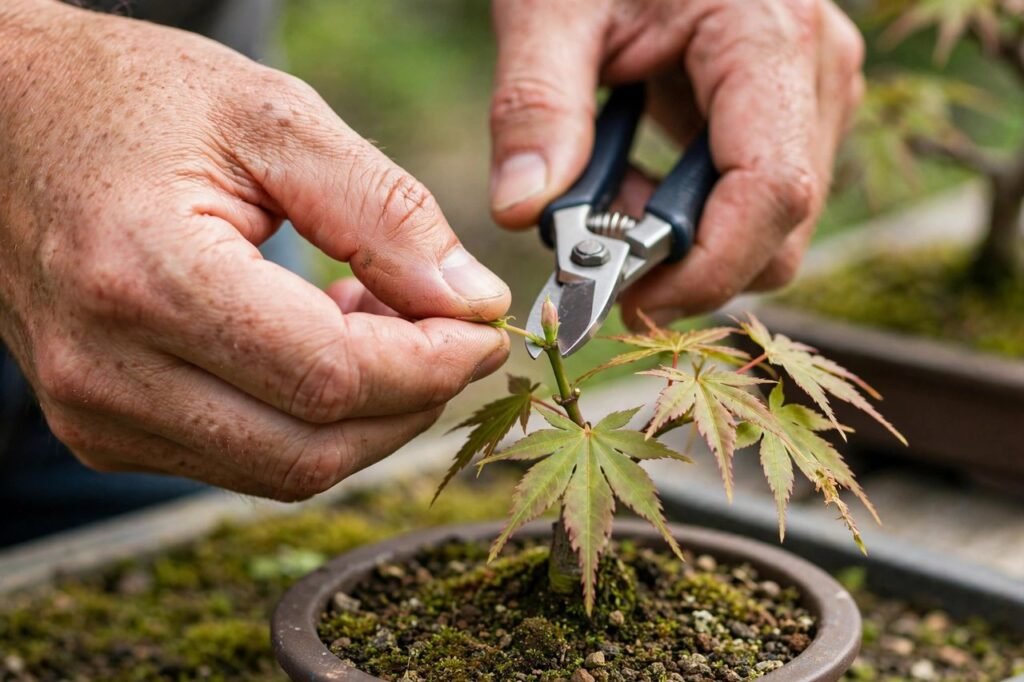
Clip and grow is the gentlest way to shape your bonsai. It is perfect for maples as they have thin bark. To clip and grow a branch, prune the shoot back to a bud facing the direction you want the branch to grow. Let the new shoot grow and then prune back to the next well positioned bud. This will create a slight curve and taper. According to Bonsai Empire this makes your tree look very natural. However, it will take longer to shape. This is a good thing!
Clip and grow is great for small adjustments and delicate twigs. It requires patience as you’ll want to let the new shoots grow a little to thicken them before cutting them back. It will take a couple of seasons to shape your bonsai.
Selective Pruning for Shape
Mostly shaping your bonsai will be about knowing what to keep. Start with the bottom of the tree. Remove any branches growing straight up, inwards and one from any directly opposite pairs. Keep the ones that are alternating. Shorten the branches you’ve kept. The bottom branches should be the longest. On a mature maple, the bottom branches will be the oldest, longest and thickest. The branches will get shorter as they go up. Prune just above a bud or side shoot. See our pruning guide for details on what to prune. See our pruning timing guide for when to prune. Never prune more than about a third of the foliage.
A Simple Design-Planning Process
Japanese maple bonsai shaping works best with a simple plan, done once a season. Do this once a season.
- Pick a front. Turn your tree so the trunk, root flare and best branch angles are visible.
- Sketch the silhouette. Draw what you want your tree to look like. A triangle with the bottom being the widest. Mark where the branches are.
- Pick what to keep. Pick 3-5 main branches that are alternating and getting shorter.
- Prune the worst offenders. Remove any branches growing straight up, inwards or directly opposite to what you’re keeping. Remove 1-2 branches.
- Shorten. Prune the branches you’re keeping back to an outward facing bud. The bottom branches should be the longest.
- Step back. Put your shears down and water your tree. Let it settle into its new shape for a few weeks.
Wiring as a Shaping Tool, Briefly
Wire is the second option for shaping your bonsai. It allows you to position your branch exactly where you want it. This can help if you want to bring a upright branch down or create more space in a busy silhouette. However, wiring is only a temporary solution for maples. You will need to check regularly and remove before it damages the bark. Only use a little and on a healthy tree. Never wire a weak or freshly potted maple.
The Same Shaping, a Different Tree
Japanese maple bonsai shaping changes with cultivar, climate, age and pot. The easiest maple to shape is a green Acer palmatum. They will grow well and back bud. Red cultivars will burn so be gentle when shaping. Shade after a big shaping session. Laceleaf and variegated maples have the most delicate growth so will require the least pruning. The climate will affect when you shape. If you have a mild climate, do some small shaping throughout the year. If you have a cold climate, do structural shaping when your tree is leafless.
Avoid doing any major shaping during a heatwave as they won’t recover quickly. Branches will always grow towards the light so if you keep your tree in one position it will always be lop-sided. Turn your pot a quarter turn every few weeks. See our sunlight guide to see where to position your tree. A young tree in a training pot will be forgiving with bold shaping. An old tree in a shallow bonsai pot will grow slowly so every cut will matter.
Two Trees Shaped Two Ways
These examples show Japanese maple bonsai shaping done too fast and done with patience. These are just examples.
A maple shaped in one afternoon. A beginner buys a healthy young maple. They see a round ball so remove half of the branches in one go to create a neat triangle. The tree survives but looks flat and there are no extra buds to fix the gaps. If they had done this over 3 seasons the gaps would have filled in naturally.
A patiently shaped maple. A grower decides to shape their maple into an informal upright. The trunk is gently curved so they remove 1 problematic branch each spring. They shorten the branches they’re keeping to outward facing buds. After 3 seasons their maple has a triangular silhouette. They never used wire.
Mistakes That Make Shaping Worse
Most mistakes in Japanese maple bonsai shaping come from cutting too much at once. Shaping a young tree. A young maple is still growing its trunk and branches. Shaping it like a finished bonsai will stop it from growing.
Over-pruning. Don’t prune more than a third of the foliage in one go or your tree will go hungry.
Keeping branches directly opposite. This will cause the trunk to swell and won’t be alternating. Remove one of the branches.
Top is wider than the bottom. The bottom branches should always be the longest.
No front. Usually you’ll remove the branch that would have made it look good. Always pick a front first.
Still Stuck on Shaping?
Troubleshooting Japanese maple bonsai shaping starts with the front view. Looks flat. You’ve only kept the front facing branches. Let a few side and back branches grow to create a 3D shape.
One side is much busier. Turn your pot a quarter turn every few weeks. Prune the busy side more.
All new shoots are growing straight up. This is normal after pruning. Remove or prune any you don’t need early. Keep any growing outwards.
Looks good but has grown out in a month. Shaping isn’t a one off. A maple in active growth will need a light tidy up every few weeks. Have a proper look once a year.
Shaping Questions, Answered
These answers cover the most common questions about Japanese maple bonsai shaping. What is the easiest bonsai shape? Informal upright. The gently curved trunk is forgiving for small mistakes.
How long does it take to shape a Japanese Maple bonsai? A few years. You’ll see some improvement in one season but it will take 2-3 seasons to look realistic.
Should I wire or prune my maple? Start with pruning and clip and grow. This is gentler on the thin bark.
Can I reshape my maple? Yes. As long as you haven’t removed branches you’d need.
Conclusion
Japanese maple bonsai shaping is a conversation that lasts for seasons. Today take a look at your maple. Pick a front, sketch your silhouette and pick 3-5 branches that fit. Remove 1 problematic branch. Prune the branches you’re keeping to outward facing buds. Stop there! Shaping your Japanese Maple bonsai is a conversation you’ll have over the seasons. The slower you shape your bonsai, the more they will look like they’ve never been shaped.
Sources
Trusted reference guides for further reading: