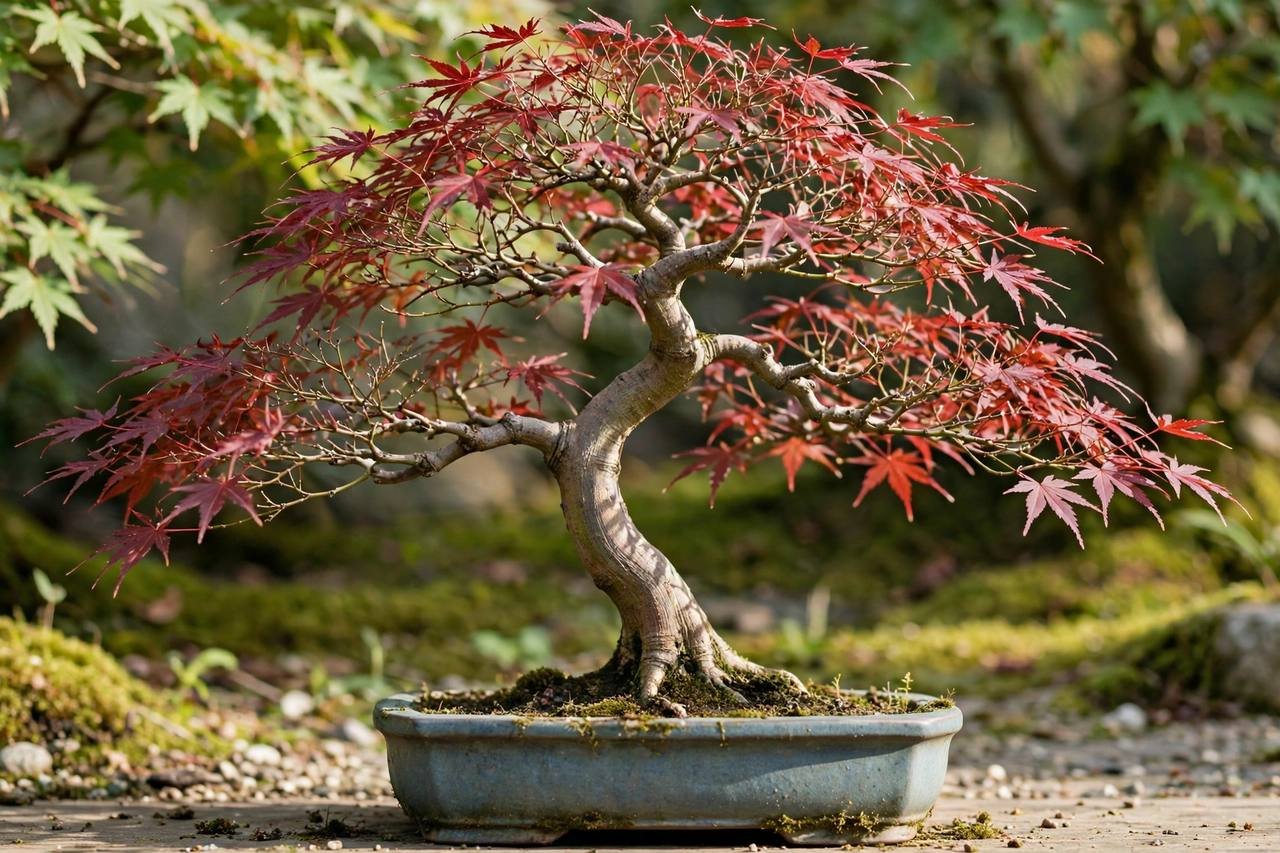
Your maple has lots of branches, but they are a bit of a mess. You have some crossing branches, multiple branches from the same point, the top is thicker than the bottom and there is a dark centre. This isn’t because you don’t have enough branches but because your Japanese maple bonsai doesn’t have a good branch structure. Good Japanese maple bonsai branch development means you have the right number of branches in the right place. They should all be thinner than the branch they come from.
Branch Development at a Glance
To get good Japanese maple bonsai branch development, start with the trunk. Select 3-5 main branches from different heights. They should alternate from side to side. The lowest branch should be the thickest and longest. Each main branch should have 1 or 2 secondary branches coming off them. These should have short tertiary branches. Remove any crossing, upright, inward or too close together branches. To get a good taper let the branch get long before cutting.
Primary, Secondary, and Tertiary Branches, in Plain Language
Imagine your tree has 3 levels. The main branch comes directly from the trunk. The secondary comes from the main branch. The tertiary comes from the secondary branch. Each branch should be thinner and shorter than the previous. If your secondary branch is almost the same thickness as your main branch your tree will look quite coarse and young regardless of how old it actually is.
A good place to start is by choosing a low branch on the trunk to be your main branch. From here choose your secondary and tertiary branches (Bonsai Station). Bonsai Mirai also state to “Establish the trunk line and main branches first. Then allow the secondary branches (thicker) to develop. Finally work on the tertiary branches.”

Choosing the Primary Branches
Take your time to choose your main branches. Hold your tree up to eye level and rotate it until you can see your trunk clearly. Your first main branch should be low on the tree, around 1/3 or 1/4 of the finished height. It should be the thickest and longest branch on your tree. Bonsai Station state that “You should have enough clear trunk below but not too much as it is extremely difficult to grow a new low branch.”
From here work your way up your tree. Each main branch should be slightly thinner and shorter than the last. They should alternate sides on the trunk. There should be a clear gap between each.
Why Maples Grow Pairs, and What to Do About It
Japanese maples can be a bit tricky when choosing your branches. The leaves and buds grow in pairs. This means that two leaves will grow from the same node but on the opposite side of the stem. This means that often you will have two branches growing from the exact same height. Once you have chosen your branches you need to prune them so they alternate from the trunk. Only one branch can grow from each node (Bonsai Station).
If you have two branches directly opposite each other you need to remove one. If you don’t you will have a bar branch. This means the trunk will bulge at this point and you won’t have a nice taper. Choose the one that is pointing outward and fits the alternating pattern. This is also the case higher up on your tree if you have two secondary branches growing from the same point on your main branch.
Building Taper Into Every Branch
A taper will give your branches an aged look. The thickness should be at the base of the branch (where it comes from the trunk/parent branch) and get thinner towards the tip. Virginia Tech Extension state that “the lower branches should be the longest and thickest. The upper branches should be progressively shorter and thinner.”
You can’t create a taper by cutting. The branch will thicken as it grows. Let your thin main branch grow long and leafy for a season. Cut it back to a good side branch. This will become your new tip. Now you have created a taper. Repeat this process to create a deeper taper. If your upper branches are becoming thicker than your lower branches you can cut them back hard.
Spacing, Crowding, and Light Inside the Tree
If your branches are shading each other you won’t have good Japanese maple bonsai branch development. If you have crossing branches you will need to remove one. Usually this will be the weaker branch or the one growing inwards. If you have a branch growing straight up from the centre this will shade everything below. Virginia Tech Extension state that “remove any vertical branches, inwards growing branches and one branch from any opposing pairs starting from the bottom.”
Stand back and look through your tree. You should be able to see daylight between your layers of branches. Your inner twigs should still have leaves on them. If your tree is looking bare and dark in the centre your outer branches are too thick. Thin them out a little. The sunlight guide will show you where to position your tree to keep your lower branches strong.
What to Inspect Before You Cut
Check your tree in winter. All of your branches will be visible without any leaves. Firstly check that your tree is strong enough. If your tree has poor growth, yellowing leaves or a thin canopy feed it and leave it for a season. Next check for any issues you will fix. This will include crossing branches, central upright branches and opposing pairs.
Use a small tag or coloured string to mark the branches you want to keep. Finally check your tools. A sharp pair of bonsai shears and concave cutter will give you clean cuts that will heal quickly. If your tool is blunt it will crush the wood and leave a wound. Cut just outside the branch collar. This is the slightly swollen ring where the branch meets the trunk. Never leave any stubs.
A Staged Development Plan
This will take a few seasons to build up.
- Look at your tree without any leaves. Mark your 3-5 main branches.
- Remove the worst. Remove any opposing pairs, crossing or inward branches. 1 or 2 at a time.
- Let your chosen branches grow. Let your main branches grow freely for a season.
- Cut back to a side branch. Cut your main branches back to a good secondary branch. Your lower branches should be the longest.
- Create your second layer. Let 1 or 2 secondary branches grow from your main branches.
- Let your tree rest. Give your tree a full season to rest. Have a look at it again.
Give your tree a rest between major stages. The pruning timing guide will tell you when to do each type of cut. The pruning guide will tell you how to do it.

How Your Cultivar Changes the Branch Development Advice
Green Acer palmatum is the easiest maple for Japanese maple bonsai branch development. They will have good growth, good back budding and recover well from a hard cut. Red cultivars won’t have as good growth and will burn easily. Create a slower branch structure and shade them after a big session (care guide). Laceleaf and variegated types won’t have much growth so keep their Japanese maple bonsai branch development simple.
The climate will affect how quickly your Japanese maple bonsai branch development progresses. In a mild climate make small cuts throughout the year. In a cold climate do your big cuts when your tree doesn’t have any leaves. If your tree is young and in a large training pot it will have quick growth on the trunk and main branches. If your tree is old and in a shallow pot it will have slow growth so every main branch you cut will be one you may not get back for years.
Two Branches, Two Different Shapes
These are examples.
No layers. A grower has kept all the branches they could see as they all looked healthy. After 3 years the tree has become a ball of twigs. The top is the thickest part. There are crossing branches at the front and the lowest branch has died due to being shaded.
Layered. A grower has chosen 3 main branches on the young maple. The lowest is around 1/3 of the height of the tree. In the first year they let them grow long. In the second year they cut them back to a strong side branch. In the third year they have 2 secondary branches growing from each main branch. In the third year they cut the secondary branches back to create a taper. They also pinch a few soft tips at the ends. The tree is still small but now has a clear structure. Anyone can see which branch is a main, secondary and where the fine twigs will go.
Where Branch Development Goes Wrong
Too many branches. More branches doesn’t mean better Japanese maple bonsai branch development. Your tree will have no taper and no light in the centre.
Opposing pairs. Having two branches from the same point will cause the trunk to bulge. Only keep one.
Pinching fine twigs. Pinching twigs whilst your main branches are still thin will waste energy.
Top is too long. Maples will grow the most at the top. Cut the top back.
Doing everything in one go. Cutting half your branches will starve your tree. Spread your cuts over 2 or 3 seasons.
When Branch Development Will Not Budge
Low branch dying back. This is because it is getting shaded. Thin out your upper branches. Rotate your pot so the weak side is facing the light. Let your low branch grow freely.
Thicker branch. Cut back to a smaller side branch.
All new growth is coming in pairs. This is normal for a maple. Prune one of each pair early on whilst they are still soft.
No side shoots to cut back. Let your branch grow freely for a full season. New buds will form along the branch. Next winter cut back to the best one.
Your Branch Development Questions
How many main branches should I have?
3-5. They should alternate from side to side. The lowest should be the thickest and longest.
How long will it take to create good Japanese maple bonsai branch development?
A few seasons. 1-2 years for your main branches. 1 or 2 years for your secondary branches.
Should I use wiring for Japanese maple bonsai branch development?
Wiring will help you to position your branch but won’t create any taper or thickness. This will be created by growth. Use minimal wiring on a healthy tree.
Can I fix a tree with a bad branch structure?
Usually yes. As long as your trunk is healthy you can cut back to the best branches you can find. Build up your layers over 2 or 3 seasons.
Conclusion
Look at your maple without any leaves. Count how many layers you have. Find your 3-5 main branches. They should alternate up the trunk and be thinner than the previous branch. Remove 1 opposing pair, 1 crossing branch or 1 inward branch. Note down which branches you have kept and which you will remove next year. This will help you to have a plan for next winter. Japanese maple bonsai branch development will take time and should be done 1 layer at a time.
Sources
Trusted reference guides for further reading: