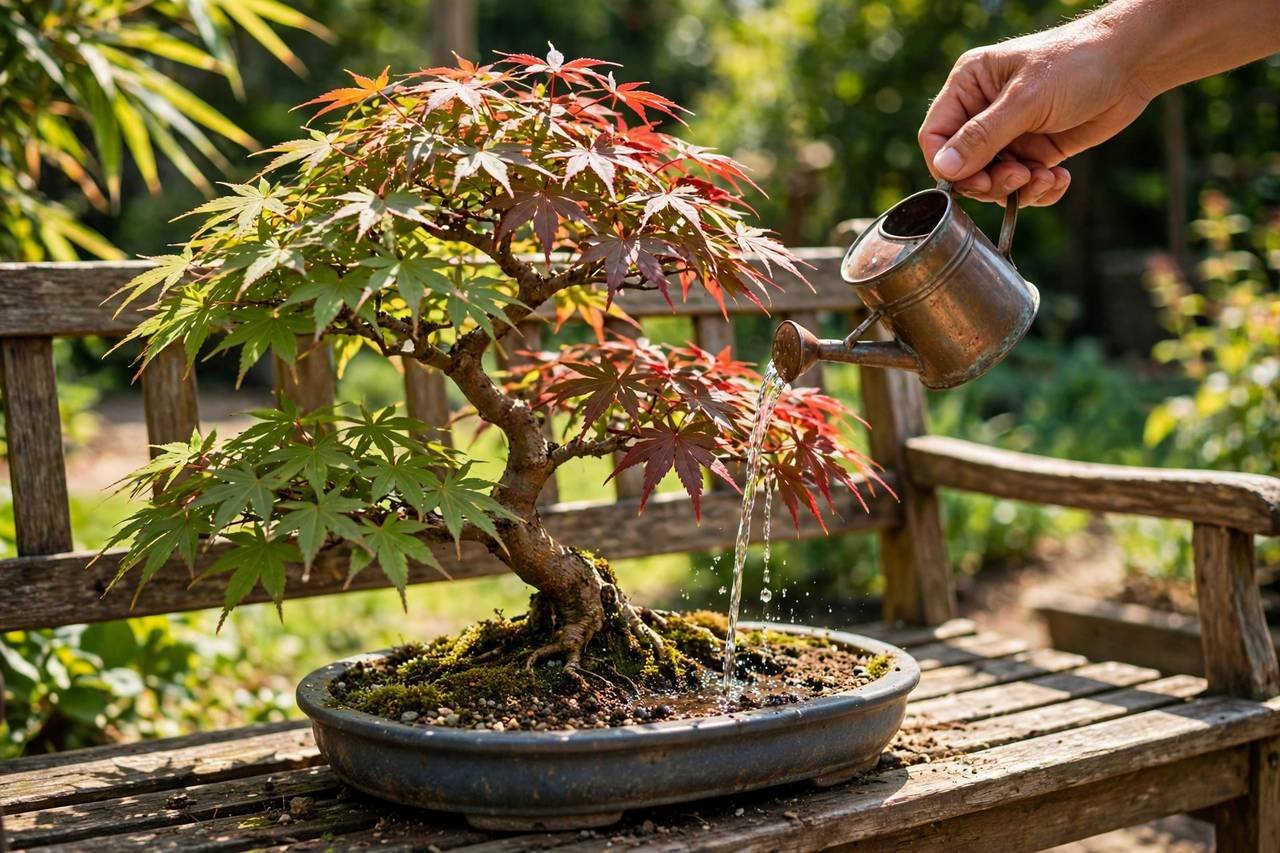
Watering Japanese maple bonsai in hot weather takes care and timing. During a hot afternoon your Japanese Maple bonsai will start to show signs of wilting and the soil will become dry. The obvious answer is to water more, however, you must be careful not to over water. Japanese Maples can suffer from leaf scorch if they don’t get enough water. However, if you over water in a hot pot it can cause the roots to rot. The key is knowing when to water the soil.
This guide explains watering Japanese maple bonsai in hot weather step by step, from checking the soil to giving shade.
The Hot-Weather Watering Answer, Briefly
When watering Japanese Maple bonsai in the heat, check the soil and only water when needed. Water thoroughly so that water runs freely out of the drainage holes. During a heatwave, you’ll want to check twice a day. Water early in the morning. If the soil has dried out again in the late afternoon, water again. Make sure your tree gets morning sun and afternoon shade. Protect from drying winds. Never allow the soil to dry out completely.
Good watering Japanese maple bonsai in hot weather starts with checking the soil first.
Why Hot Weather Changes the Watering Rules
The soil within the bonsai pot is minimal. This means it will heat up and dry out much quicker. The pot will be warm from the sun, causing the leaves to dry out quickly. The wind will cause more moisture to be lost. If there is more moisture being lost from the leaves than can be supplied by the roots, the edges and tips of the leaves will begin to dry out causing leaf scorch.
That is why watering Japanese maple bonsai in hot weather needs a different routine from watering in mild weather.
Japanese Maples are very susceptible. Acer palmatum should be grown in dappled shade with moist but well-drained soil. They should be protected from drying winds. However, they can suffer from leaf scorch if they receive too much sun, wind or drought. Their leaves are very thin and finely divided so don’t offer much protection from harsh sun. The bonsai pot will be shallow so there isn’t much soil to draw moisture from.
Thin leaves lose water fast, so watering Japanese maple bonsai in hot weather must replace that moisture without drowning the roots.
The soil can become very dry. If using a free draining mix, it will dry out quickly. If using a heavier mix, the roots can become very soggy.
How to Check the Soil Before You Water
The best way to check if you should water is by using your finger. This only takes 10 seconds. Push a finger into the soil at the edge of the pot, about 1cm deep. Cool and damp means no water today. If it is dry, water. You can find out more about how often to water here.
For watering Japanese maple bonsai in hot weather, the finger test is the quickest check.
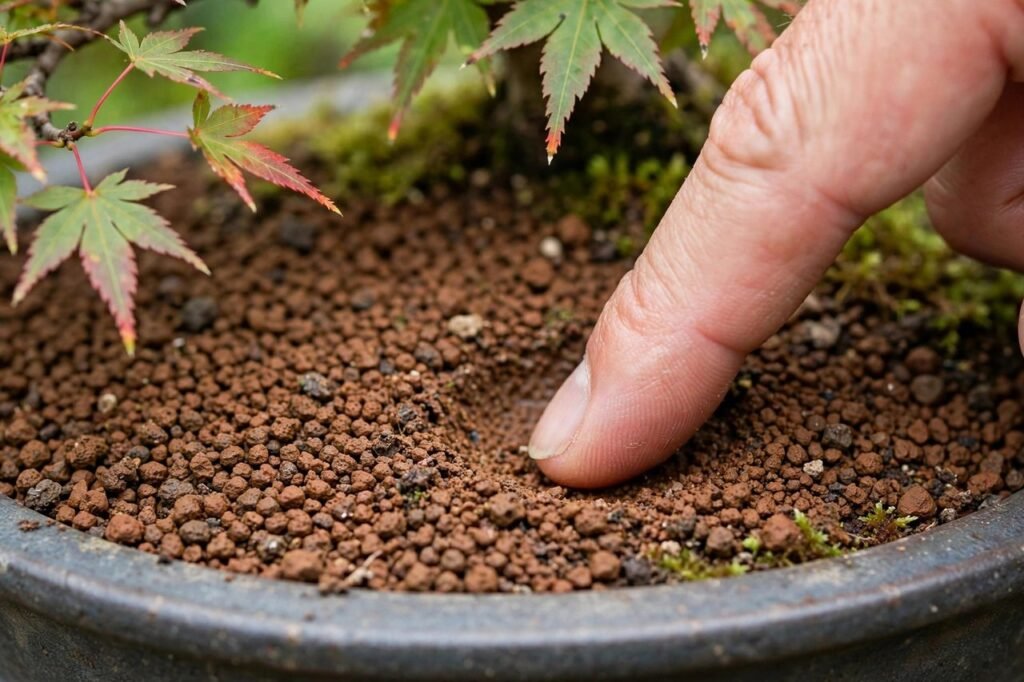
You can also lift the pot. If it has just been watered it will weigh significantly more. You can also check the akadama. If it is dry it will appear pale and dusty. If it is damp it will be darker. However, always check with your finger.
During changing weather, check more regularly. During mild weather, once a day is sufficient. However, during hot weather (Over 30°C/86°F) or if it’s a hot wind, check in the morning and late afternoon. Small pots, young trees and trees in full sun will dry out the quickest. After rainfall, you should still check. Often a shower will only water the canopy and not the root ball.
Rain does not change watering Japanese maple bonsai in hot weather: always check the soil after a shower.
How to Water Thoroughly When It Is Needed
If your soil is dry, water thoroughly. Spritzing will only water the top of the soil. Water slowly using a fine rose attachment on your watering can. Water all over the surface until water is running from the drainage holes. Wait a minute or two and water again. This will ensure the soil is soaked.
When watering Japanese maple bonsai in hot weather, water slowly twice so the whole root ball is soaked.
As advised by Bonsai Empire, water very thoroughly so all of the roots are soaked. Never allow the soil to dry completely. Japanese Maples should be watered daily during the growing season. If the soil is well drained and the tree is healthy and vigorous, you may need to water several times a day during the hotter days. Always water based on observation. Use plain water and ensure the pot is completely drained. Never allow the pot to sit in water. The roots will quickly become rotten without air.
When to Water: Morning First, Afternoon Only If Needed
Water as early in the morning as possible. This ensures the tree will absorb the water before it gets too hot. The foliage will also dry quickly in the morning sun. You can also check the tree.
Watering Japanese maple bonsai in hot weather in the morning gives the tree a full drink before the heat builds.
Sometimes you may need to water again in the late afternoon. However, only if the soil is dry. This is after the worst of the heat. Never water a damp pot as this will cause the roots to rot in the summer. If possible, try to avoid watering in the middle of the day. The pot will be at its hottest. If the tree is looking very wilted, move it into the shade first and water gently.
Watering Japanese maple bonsai in hot weather in the afternoon is only for soil that has dried out again.
Shade, Wind, and Where the Tree Stands
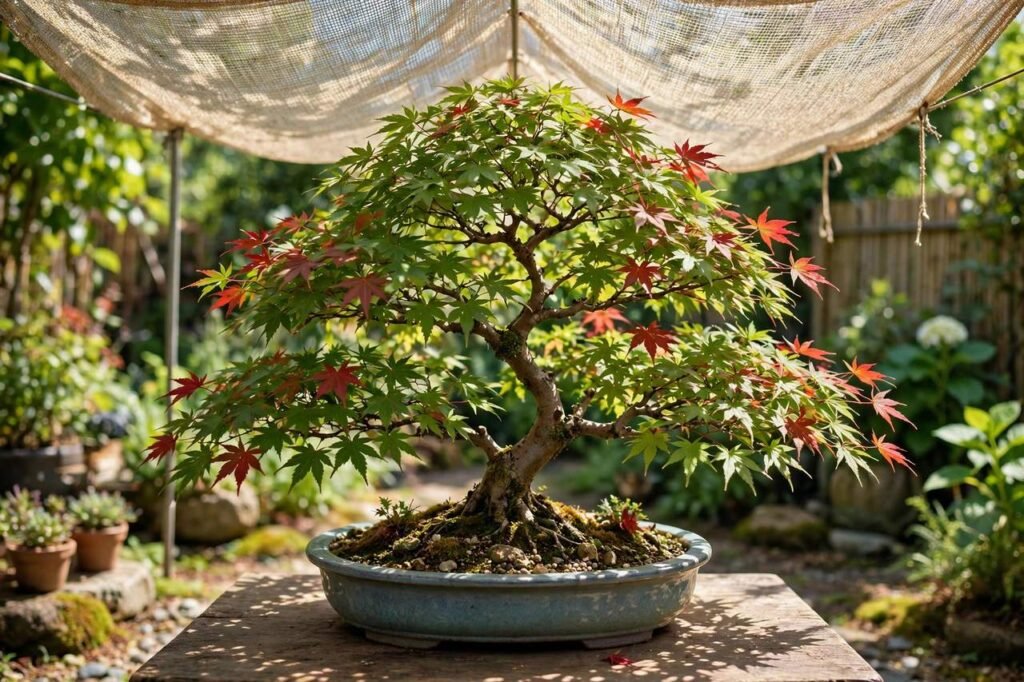
If your maple is in full sun during the afternoon and there is a hot wind blowing, you won’t be able to save it by watering. Japanese maples do best with morning sun and afternoon shade. During hot weather it is even more important to move the tree into the shade from midday. Place a shade cloth over the bench or on the east side of a wall or fence.
Shade also helps with watering Japanese maple bonsai in hot weather, because a shaded pot dries out more slowly.
Windy
A quiet thief! A drying wind pulls moisture from the leaves all day long. Ensure the tree is protected behind a fence, hedge or wall. However, don’t completely block the airflow. This can cause issues with fungus. Never place the tree against a sun baked wall or on hot paving. This will cause the pot and leaves to get hot.
Wind protection is part of watering Japanese maple bonsai in hot weather, because wind dries the leaves all day.
A Hot-Weather Routine and Checklist
Keep it simple!
- Check in the morning. Use your finger, lift the pot and check the akadama.
- If the soil is dry, water thoroughly. Water slowly twice.
- Ensure the tree is in the shade before midday. Give it morning sun, afternoon shade, and shelter from the wind.
- Check again in the late afternoon. If the soil is dry, water again.
- Check the leaves. If they are looking wilted in the morning there is an issue. If they are looking wilted at midday but perk up in the evening, this is usually due to the heat.
- Ensure the pot isn’t on a hot surface. Place on feet or a bench.
Before a heatwave, ensure the drainage holes are clear and have a mesh. The pot should have feet. Ensure you have a shade cloth ready. Decide who will be watering whilst you are away. You can find out more about the pot here.
A simple routine for watering Japanese maple bonsai in hot weather is to check, water if dry, give shade, and check again.
How Your Cultivar Changes the Hot-Weather Watering Advice
Not all maples will dry out as quickly. Plain green Acer palmatum stands up to heat and missed watering better than any other type. Red cultivars need sun to keep their colour but are more prone to leaf scorch during a heatwave. They should be shaded like any other maple. Variegated and laceleaf maples are the first to show damage. Their pale and finely divided leaves will lose moisture quickly and easily burn. Check these first and provide shade first.
When watering Japanese maple bonsai in hot weather, check the most delicate cultivars first.
If you live in a hot and dry climate, you may need to water twice a day. Using a deeper glazed pot can help retain moisture. If you live in a hot and humid climate, the leaves won’t lose as much moisture but the soil will stay damp for longer. Don’t overwater. If you live in a cool climate, the dangerous time will be during one hot week. The tree and owner won’t be used to the heat.
The size of the pot and type of soil will determine how quickly the edges disappear. Small pots will dry out quickly. A large pot buys you about half a day before the soil dries. Using a free draining akadama mix will cause the soil to dry out quickly but will protect the roots. Using a heavier mix will keep the soil damp for longer but can cause rot. Find out more about the soil here. Young vigorous trees will drink more than older refined trees. Always check the soil.
One Hot Day, One Watering Routine
A grower living in a hot and dry climate will water her small green maple every morning. However, during a heatwave with drying winds, by the second afternoon the edges of the leaves are crispy. She continued to water once a day. To fix this, she should check twice a day. If the soil is dry, water again in the late afternoon. Move the tree into afternoon shade. New growth will appear however the crispy edges won’t recover. This is just an example.
Her story shows why watering Japanese maple bonsai in hot weather means checking twice a day in a heatwave.
What Not to Do With Hot-Weather Watering
Watering on a schedule. Whilst it sounds organised, a cool and cloudy day doesn’t need the same amount of water as a 38°C windy day. Always check the soil.
A fixed schedule fails at watering Japanese maple bonsai in hot weather, because a cool day and a hot, windy day need different amounts of water.
Spritzing. Spritzing will only moisten the top of the soil. Water thoroughly twice.
Watering a damp pot as the leaves are looking wilted. Often the leaves will perk up by the evening. If the soil is still damp, this is due to the heat and sun. Provide shade.
Feeding the tree. Feeding won’t help with leaf scorch. If the tree is stressed, feeding it risks burning the roots. Wait until the tree is growing strongly again. Find out more about feeding here.
If Hot-Weather Watering Still Fails
Crispy brown edges on the leaves after a hot day. This is usually leaf scorch. The leaves lost more moisture than the roots could provide. Move the tree into afternoon shade and water if the soil is dry. The leaves won’t recover however new growth should appear.
Most problems with watering Japanese maple bonsai in hot weather come back to too much sun, drying wind, or soil that is too dry or too damp.
Wilting leaves every afternoon. The tree is struggling but just about making it. Water earlier and check again in the afternoon. Provide more shade.
Wilting leaves in the morning. Check the soil immediately. If it is dry deep down, water thoroughly twice. If it is damp, the roots may have been damaged. Allow the soil to dry slightly and improve the drainage. Don’t feed.
Yellowing and dropping leaves after heavy watering in the heat. The soil has been too damp and the roots aren’t getting enough air. Stop watering until the top of the soil has dried. Ensure the drainage holes are clear and the pot isn’t sitting in water.
Hot-Weather Watering: Questions and Answers
How often should I water my Japanese Maple bonsai in the heat?
As often as needed. Usually once a day. During a heatwave, twice a day. Check in the morning with your finger and again in the late afternoon. Only water if the soil is dry 1cm down.
That is the heart of watering Japanese maple bonsai in hot weather: water only when the soil is dry.
Should I water my bonsai twice a day in the summer?
Only if the soil is drying out twice a day. Many maples in small pots will need watering twice during a heatwave. However, if the pot is larger and in the shade, you may only need to water once. Use your finger to check.
Is it better to water in the morning?
Yes. The tree will absorb the water before it gets too hot. The foliage will also dry quickly. If the soil is dry again, it is fine to water in the late afternoon.
Why is my maple suffering from leaf scorch even though I’m watering daily?
Leaf scorch sets in when leaves lose moisture faster than the roots can supply it. Even if the soil is damp, if there is too much sun, drying winds or damaged roots, leaf scorch will occur. Provide afternoon shade and protection from wind.
Shade and wind protection matter as much as watering Japanese maple bonsai in hot weather itself.
Conclusion
Start tomorrow with watering Japanese maple bonsai in hot weather the simple way: check the soil, water thoroughly if dry, and move the tree into afternoon shade.
Check if the soil is dry 1-2cm down. If it is then give your tree a good watering. This should soak through the whole root ball. Water your tree in the morning so they have a good drink to combat the heat. Keeping your tree in shade, keeping them safe from the wind and adding a layer of moss will help reduce how quickly the soil dries out. Shallow pots and small trees will dry out quickest. Just check if the soil is dry and give a good watering.
Sources
Trusted reference guides for further reading: