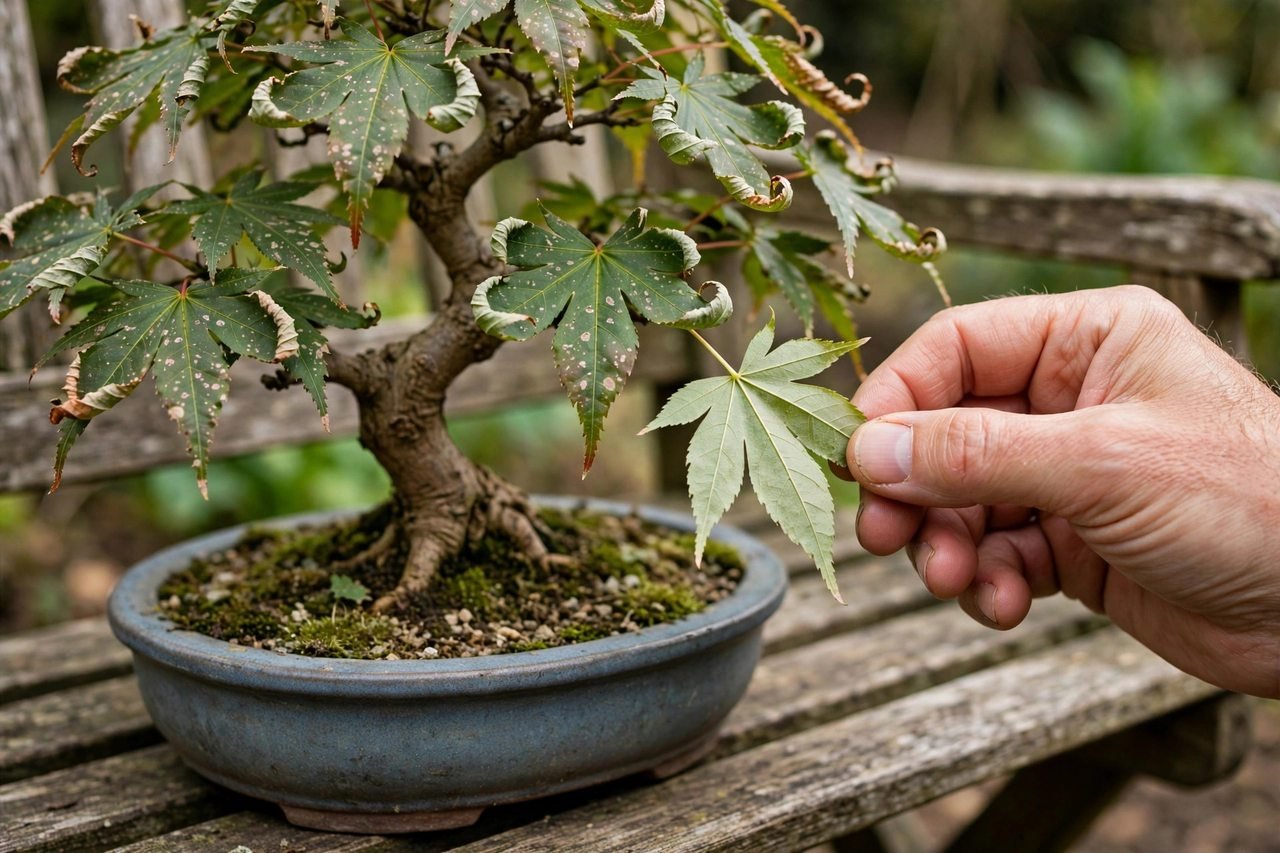
Often the first indicator of issues with Japanese maple bonsai pests will be the shine on the bench under your tree, the curling of your leave or halt of growth on your shoot.
As most Japanese maple bonsai pests are a small insect, they will often feed out of sight either on the underside of your leaves or within the bark crevices. So start by checking the damage and location.
The Short Answer on Pests
Check the underside of your newest leaves. Pear shaped clusters usually means you have an aphid infestation. Puffy non-moving bumps are scale. Pale speckles with tiny webs are spider mites. Rolled up leaves with silk – leaf roller. Neatly chewed holes in your leave are caterpillars (listed as maple worms on NC State Extension for Acer palmatum).
Once identified, isolate your tree from your others. Remove as much as you can manually. Then check in a few days. Most issues will be solved by just removing what you can. If you are also seeing leaves falling then follow the losing leaves guide.
How to Inspect Your Tree
Take 5 minutes to closely Inspect Your Tree. Using a hand lens (a 10x magnification will be fine) and a white piece of paper. Start from the top of the tree, as aphids will feed on the soft new growth and scale will tend to sit on older shoots. Turn over all suspected leaves. The University of Georgia Extension highlight that many pests are very small and will be found on the underside of your leaves.
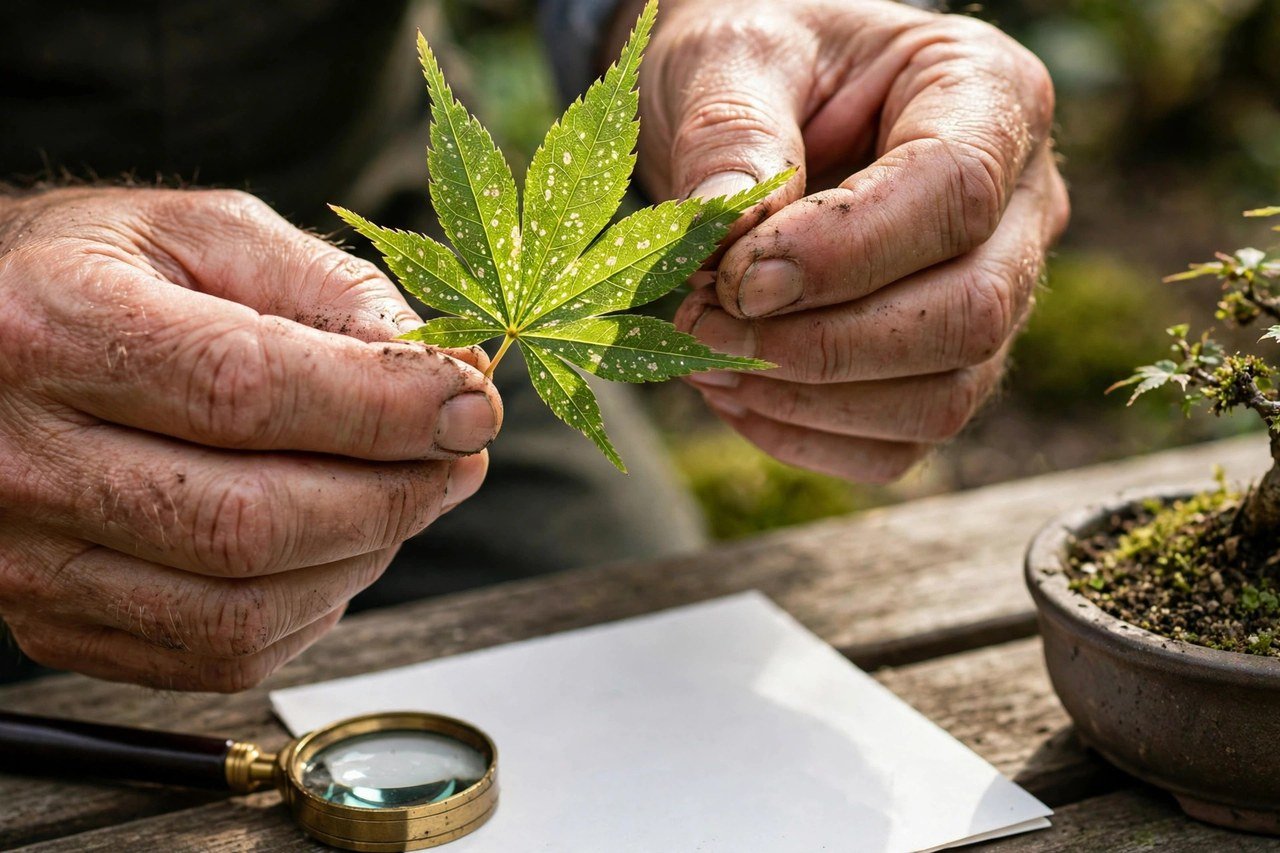
Hold the damaged leaf up to the light. If there are stippled spots then you’ll see tiny pale spots. Tap the branch sharply onto the white paper. If there are any moving spots then you have a problem. Check the area between the branches and around the top of your pot as these are the areas that crawlers and ants will sit.
Do this weekly throughout the growing season. And after bringing your tree home.
The Pest Identification Table
Make sure at least 2 of your columns match.
| Pest | Signs | Where to look | First action |
|---|---|---|---|
| Aphids | Small soft insects in clusters, curled leaves, sticky shine | New shoots, leaf undersides | Water jet, recheck in 3 days |
| Scale insects | Bumps that do not move, yellowing leaves | Twigs and bark crevices | Rub off by hand or toothbrush |
| Spider mites | Fine pale speckling, tiny webs | Leaf undersides | Water jet on the undersides |
| Leafrollers | Leaves rolled with silk, chewed inside | New leaves, shoot tips | Open the roll, remove the caterpillar |
| Leafhoppers | Pale stippling, insects that jump when touched | Leaf undersides, new growth | Water jet, recheck in a few days |
| Maple worms | Clean chewed holes, green droppings | Leaves, anywhere | Pick off by hand, check the leaves above |
Aphids: Clusters on Soft New Growth
Aphid is usually the first pest you’ll encounter. They’re small (usually 1/8” or smaller), soft bodied and pear shaped. They can be green, black or red. The key thing to look for is the pair of tubes (called cornicles) on the rear of their bodies. They will cluster on your new shoots and leaf underside. Their life cycle can be as short as 1-2 weeks (Missouri Extension).
Leaves will curl up and pucker. They will also turn yellow. As they feed, they release excess sap in the form of honeydew. This is a clear sticky substance that will cause black sooty mould to grow. Ants are attracted to it so if you can see ants crawling up your pot you may have a problem.
Ladybird beetles, lacewing larvae and tiny parasitic wasps will all feed on aphids. So most will be removed by hosing them down with a strong jet of water. Re-check in 3 days.
Scale Insects: The Bumps That Do Not Move
Scale insects can look like part of the tree. They spend most of their life attached to one spot covered in their protective shell. Armoured scales such as oystershell and San Jose scale have a hard waxy shell. Soft scales such as cottony maple scale are bigger and produce lots of honeydew.
They can be tricky to spot as damage builds up slowly. Leaves will turn yellow and fall off. Shoots will die back and the bark will crack. Armoured scales can cause death to your trees if they build up (Missouri Extension). If your leaves are turning yellow as well as having bumps then follow the brown leaves guide.
To identify them feel them. Dead scale will be hollow and flaky. Live scale will be squishy. Use a 10x lens to see round holes where the parasitic wasps have exited. The vulnerable stage of scale is the crawler. This is the tiny legged young that will crawl or blow to a new spot. Try to catch them at this stage.
To treat scale on your bonsai rub them off with your thumb or a soft toothbrush. This will damage their mouth parts so they won’t attach again. Check every few days for crawlers.
Spider Mites: Stippling and Fine Webs
Although they aren’t insects, they are arachnids. They have 8 legs and no wings. They’re very small so can be difficult to see. They feed on the underside of your leaves. This will appear as pale stippling on the top of your leaves. In more severe cases you’ll see fine webbing on the underside. Your leaves will turn bronze and fall off.
They love hot dry weather so if your tree is in a small pot in the afternoon sun they’ll thrive. They can sometimes be confused with leaf scorch. This causes the edges of your leave to turn brown. Whereas stippling will be all over the top of the leaf. Follow the leaf scorch guide.
Tap any suspected branches onto your white paper. If you can see any speckles moving then you have a problem. Hose down any light infestations. Make sure you water your tree. To check your soil is correct follow the watering guide.
Leafrollers and Leafhoppers: Curled and Chewed Leaves
Both of these pests are listed as occasional pests on your Acer palmatum by NC State Extension. A leaf roller is a small caterpillar. They roll up a leaf with silk and feed inside. Gently unroll the leaf and the caterpillar will usually be there.
A leaf hopper is a small wedge shaped sucking insect. They’re found on the underside of your leaves. They cause stippling similar to spider mites. However, they will jump off when you touch the leaf. They’re both occasional Japanese maple bonsai pests on your maple. So small numbers will just be monitoring.
Maple Worms: The Chewing Caterpillars
Maple worms are caterpillars that chew on your maple leaves. They cause the simplest damage. Clean holes, missing edges and small green droppings underneath. They won’t cause any twisting or sticky residue.
Check the upper leaves. Caterpillars will feed at night so will be hiding on a higher leaf during the day. Usually only small numbers will be present on your bonsai so simply remove them manually.
What to Do Once You Know the Pest
Follow these steps. Stop when the pest is gone.
- Isolate your tree. Place on its own bench and check weekly for 2 weeks with no issues.
- Remove any visible pests. Caterpillars can be removed manually. Scale can be rubbed off with your thumb or a soft toothbrush.
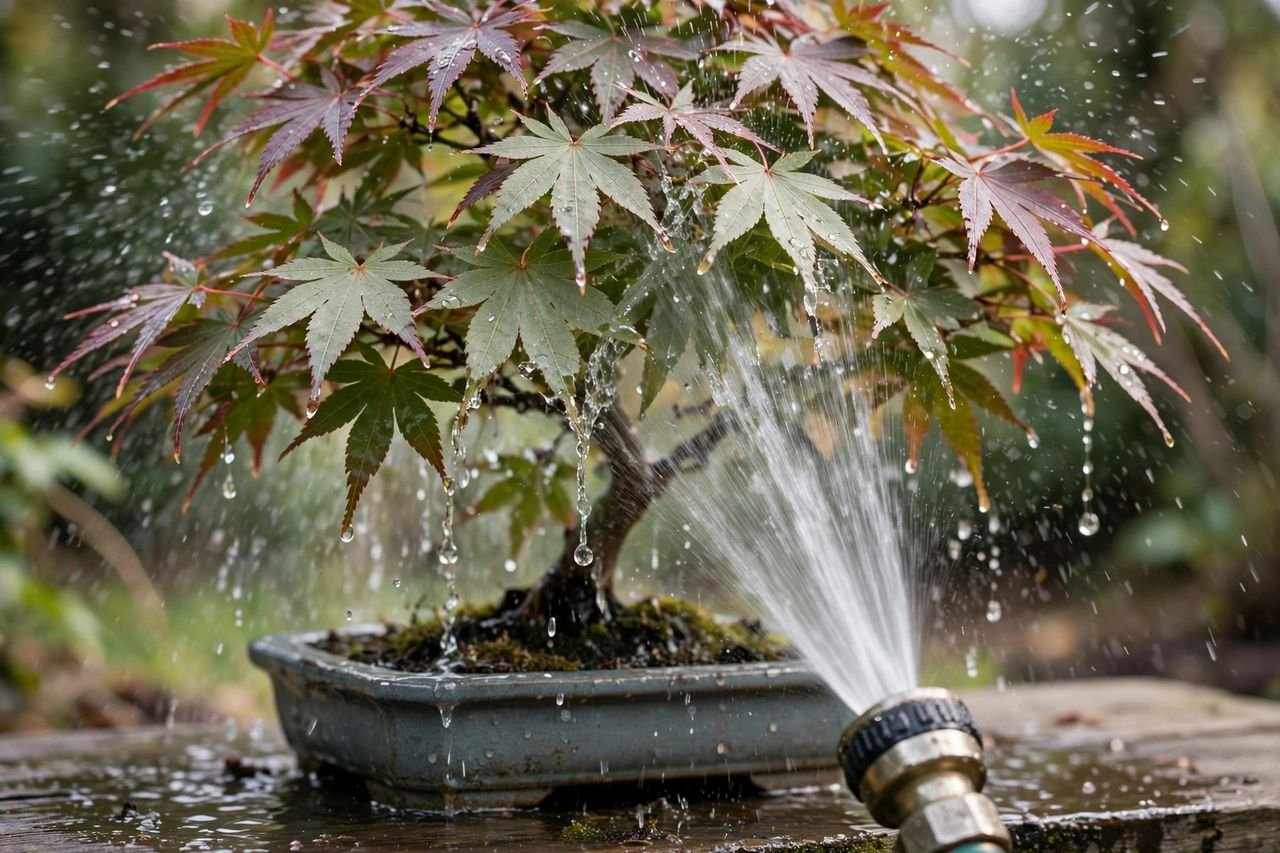
- Hose down your tree using a strong jet of clean water. Aim at the underside of the leaves. Do this in the morning. If numbers are still increasing then hose down again in 3 days.
- Check for any natural predators. Most garden trees will have ladybird beetles, lacewing larvae and parasitic wasps. If numbers are reducing then leave them.
- If you need to use a product make sure it’s labelled for Japanese maple bonsai pests and plant. Try a small branch first.
- Continue to check. Check again in 3 days. Then weekly. As pests will return from eggs and crawlers you may have missed.
Using Products Carefully
Products should be a last resort. Make sure it’s labelled for Japanese maple bonsai pests, plant and that the instructions are suitable for your small potted tree. Make sure it’s registered locally and suitable for your plant.
Spray in the cool of the morning/evening. Never in hot sunshine or on a dry tree. Spray the underside of your leaves. Don’t go over the recommended amount. If after 2 correctly timed sprays you still have Japanese maple bonsai pests then it’s likely you’ve got the wrong identification. Ask an expert.
Why Pests Depends on Your Cultivar
Japanese maple bonsai pests will be the same however the tree they end up on will differ. Laceleaf varieties with fine cut leaves will show stippling and curling quicker. If you have a hot dry climate then spider mites will be your default choice from June. If you have a humid climate then soft scale and sooty mould will be more likely. Aphids will be an issue in spring, mites in summer and scale in autumn.
A younger tree will show signs quicker and take longer to recover. A small shallow pot will dry out quickly in the heat. A stressed tree will be the first to get Japanese maple bonsai pests. Scale will thrive on stressed plants (Missouri Extension). Overfeeding will cause excessive soft growth which aphids love. Follow the feeding calendar in the fertiliser guide.
Two Infested Trees, Two Different Pests
A grower brings their maple inside for a show in May. The next week they put it back on their bench. Within 10 days they notice their new shoots are curled and sticky. Ants are crawling up the pot. They flip over a leaf and find green aphids underneath. They isolate their tree. Hose down the shoots. Check in 3 days. No products were used.
A grower notices pale speckling on their laceleaf maple in the heat of July. They think it’s leaf scorch so move it to the shade. However the stippling is spreading. They tap the branch onto their white paper and see moving speckles. They realise it’s spider mites. They hose down the underside of the leaves. Keep the soil moist. Check twice a week until the stippling stops.
Pests Mistakes to Avoid
Spraying without identifying. If you spray to kill aphids then it won’t help scale as they’re underneath their shell. If you spray the top of the leaves then it won’t help mites. Always identify first.
Only treating once. After you’ve sprayed the eggs will hatch and crawlers will settle. Your tree may look clean on day 1 but could be infested on day 7.
Only checking the top of the leaves. Most pests feed on the underside. Your tree could have a full colony hidden.
Returning your tree too soon. If you have 1 infested tree on a shared bench then it can spread to your whole collection. Isolate until checked and found clean for 2 weeks.
What Growers Ask About Pests
Can pests kill my Japanese maple bonsai?
Rarely. A light infestation will weaken your tree. However if you have a heavy infestation of armoured scale then they can kill your shoots and branches. Especially if your tree is young/stressed.
Will they spread to my other bonsai?
Yes. Scale crawlers will crawl and blow to nearby shoots. Aphids will fly to new hosts in the summer. Isolate your tree. Keep new trees separate for 2 weeks.
What is the black coating on my leaves?
This is usually sooty mould. This grows on the honeydew that aphids and soft scale produce. It isn’t a disease.
Do I need to re-pot?
No. Re-potting will cause damage to the roots and stress your tree making it easier for pests. Treat Japanese maple bonsai pests as they are.
When should I ask an expert?
If you can’t identify the pest, numbers are still increasing after 2 correctly timed treatments or a branch is dying back.
Conclusion
To know what Japanese maple bonsai pests will affect your Japanese maple bonsai look at the damage. You can easily identify the pest by knowing what they do to the tree, where they are and their name. Wash off as much as possible and check underneath weekly. Finding Japanese maple bonsai pests early is usually just a case of washing them off and waiting.
Sources
Trusted reference guides for further reading: