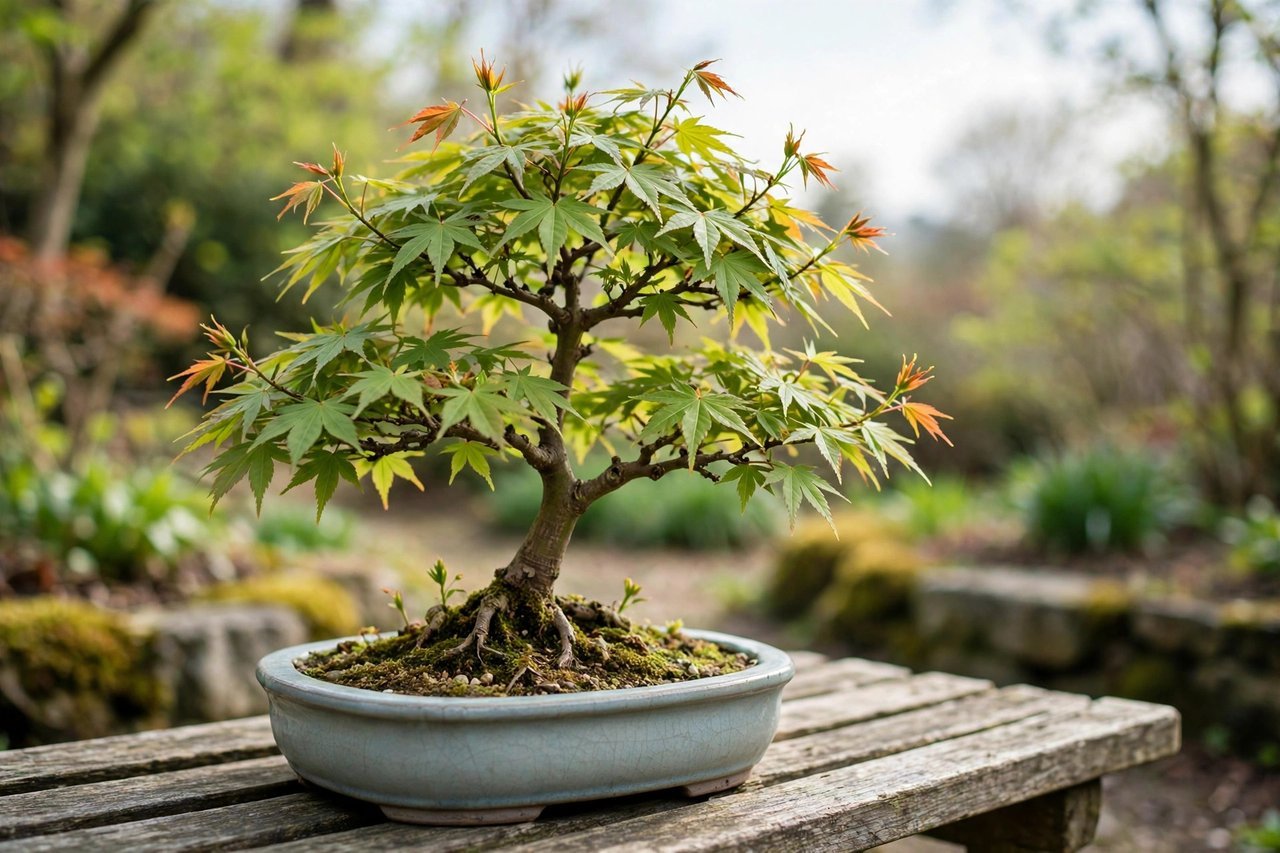
Two growers have the same cultivar of Acer palmatum. One is growing outside Minneapolis and the other outside Atlanta. The tree in Atlanta is fully leafed in mid-April but needs afternoon shade. The tree in Minneapolis is still tightly budded and the pot is covered. Both growers have bought a calendar that says to feed in spring and protect in winter. This is correct, but 6 weeks difference! A Japanese maple bonsai seasonal calendar will only help if you know how to adjust it for your area.
The issue isn’t the calendar. The issue is that you’re using the month as a guide. Maples don’t leaf because it’s April, they leaf because they’ve had enough cold and enough warmth. The amounts of cold and warmth depends on where you are. Potted plants will have a greater difference because the pot is shallow and will be reacting to the air temperature. Therefore, this article will give you an adjustable calendar.
The Seasonal Calendar Answer, Briefly
A Japanese maple bonsai seasonal calendar can be used by looking at it as a sequence. Find your USDA hardiness zone and then adjust the tasks to fit your tree and the forecast. Spring tasks will begin when your buds swell, summer shade will increase when the temperature rises, autumn tasks will begin when your tree changes colour and winter protection will begin when the nights are cold.
In a cold climate (zones 5-6) the sequence will be 2-4 weeks later than in a mild climate (zone 7). In a warm climate (zones 8-9) it can be a month earlier in spring and a month later in autumn.
What a USDA Zone Actually Tells You — and What It Does Not
Your USDA hardiness zone is simply a number. It shows you the average extreme minimum temperature in winter. The 2023 USDA Plant Hardiness Zone Map divides the USA into 10 degree bands. There are also 5 degree half zones. You can enter your zip code and find your zone. Zone 5 will have minimum temperatures of -20°F to -10°F. Zone 8 will have minimum temperatures of 10°F to 20°F.
This matters because Acer palmatum is generally hardy in zones 5-8. However, whilst they are hardy in these zones, they will require different care at different times of the year. Zone 5 will be very cold and have late frosts. Zone 8 will be very hot and have drying winds.
Because bonsais aren’t grown in the ground. Trees in the ground will have the whole earth to insulate them, whereas trees in a shallow pot will only have a few inches of substrate. The RHS state that bonsai maples will have sensitive roots and should be grouped together, protected and covered.
Finally, your microclimate. Most calendars will fail to take this into account. Gardens in the same zone can be weeks apart. South facing walls will cause buds to open early, a dip in the garden will cause cold air to pool and a patio will cause the pot to be very hot. The higher your garden is the colder it will be. For every 1,000ft you’ll be around 3-5 degrees colder. Gardens near the coast will be mild in winter and cool in summer. Whereas gardens inland will be harsher with colder frosts and hotter afternoons.
The Seasonal Calendar
This Japanese maple bonsai seasonal calendar covers the whole year. Tasks for each season will depend on what your tree is doing. The 3 columns on the right will show you how the season will be different in a cold, mild and warm climate. The links in the centre column will show you the details for each season.
| Season | What the tree is doing | Main jobs — see the season guide | Zones 5–6 — cold | Zone 7 — mild | Zones 8–9 — warm |
|---|---|---|---|---|---|
| Spring | Buds swell, leaves open, then harden | Check buds, water as growth starts, watch late frost — spring care guide | Everything 2–4 weeks later; keep frost cover ready into May | The middle of the map; watch the forecast | Bud break as early as February; shade new leaves by April |
| Summer | Full leaf; growth slows in heat | Shade, water checks, cool the pot — summer care guide | Long days, mild heat; scorch is rare | Afternoon shade from July | Heat plan from June; shade cloth up |
| Autumn | Colour, then leaf drop | Ease off feeding, let the tree slow down — fall care guide | Colour early, leaf drop by October; wrap pots early | Colour in November | Colour late or muted; leaf drop into December |
| Winter | Dormant; roots at risk in a pot | Shelter, mulch, monthly moisture check — winter care guide | Coldest: group pots, wrap, unheated garage below 0°F | Shelter from wind; wrap in cold snaps | Mild: mostly wind shelter; watch for a warm spell waking buds |
The centre column will be the same for all growers. The left and right columns will vary. If you have a late frost in zone 5 or a heatwave in zone 8 it can change the task by weeks in one day.
How to Shift the Calendar for Your Climate
Find Your Zone, Then Find Your Garden
Firstly, find your zone. You can do this by entering your zip code on the USDA zone map. Once you know your zone you can look at your garden. A garden can vary greatly depending on your garden. A south facing wall, paved patio and area under a large tree can be several degrees different.
The wall will store heat causing buds to open early. The patio will be very hot. The area under the tree will be in shade keeping the soil cool. Ensure you keep your tree in the correct area for the season. The most important thing to consider are frost pockets. Cold air will pool in dips during clear still nights. Therefore, a tree in a dip may get frosted whereas a tree a few feet higher will be fine.
Elevation, Coast, and City
Altitude will affect your dates. As a general rule, for every 1,000ft up you’ll be around 3-5 degrees colder. A garden on a hillside can be a colder zone. Gardens on the coast will be mild in winter and cool in summer. Gardens inland will be colder at night and hotter in the afternoon. Urban areas will be warmer. The bricks and paving will store the heat from the day. A balcony in an urban area can be a full zone warmer than the surrounding countryside. After a few springs of watching your buds open you’ll know where your garden is.
Use the Tree’s Signals, Not the Month
The best Japanese maple bonsai seasonal calendar to use is your tree. If you use a set month and the weather doesn’t go as planned it’ll be off. However, using your tree as a guide means you’re using the weather.
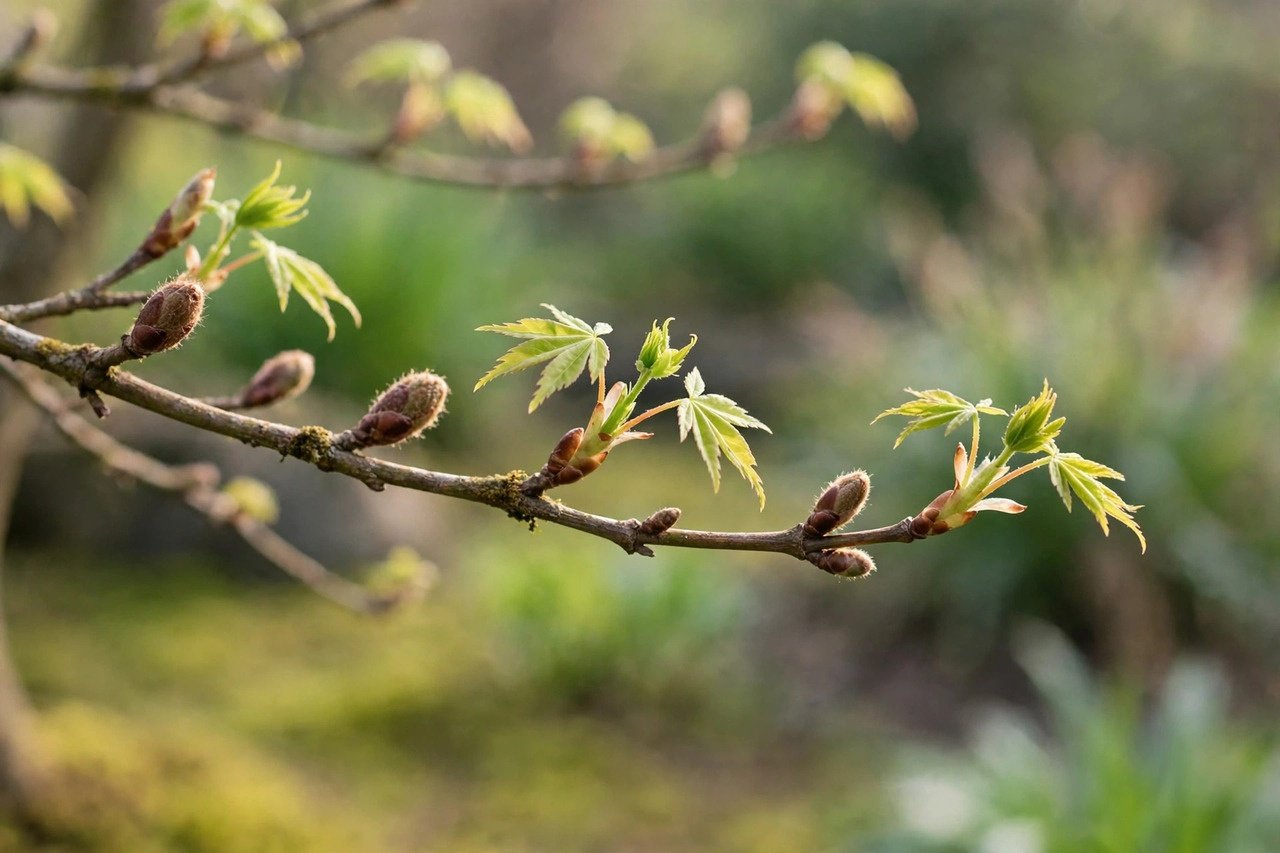
Look at the buds. If they’re swelling and opening (scales parting) then you should do your spring tasks. Water, light feeding and watch for frost. If they’re tight and hard then wait.
Look at the leaves. If they’re soft and pale then they’ll need shading and protection. If they’ve hardened and darkened they can take more sun and wind. See the spring bud opening guide for more info.
Check the soil and pot. Use your finger test to see if you should water. If the pot is hot in the summer or icy in the winter then move your tree.
Check the forecast. If there’s a frost warning, heatwave or a week of rain then adjust. Cover, shade or wait. See late spring frost guide.
Write it down. By writing one line per week you’ll have your own Japanese maple bonsai seasonal calendar in a year. For example:
Same Month, Different Job
April is the most obvious example. In zone 5 it’s still winter. The tree will be dormant or just opening its buds. The pots will still be protected. You’ll need to watch for the first buds to open. Have your frost cover ready. In zone 8 it’s late spring. The leaves will have hardened and you’ll need to provide shade. You’ll want to prevent scorching on new growth. Same month, same species but completely different tasks.
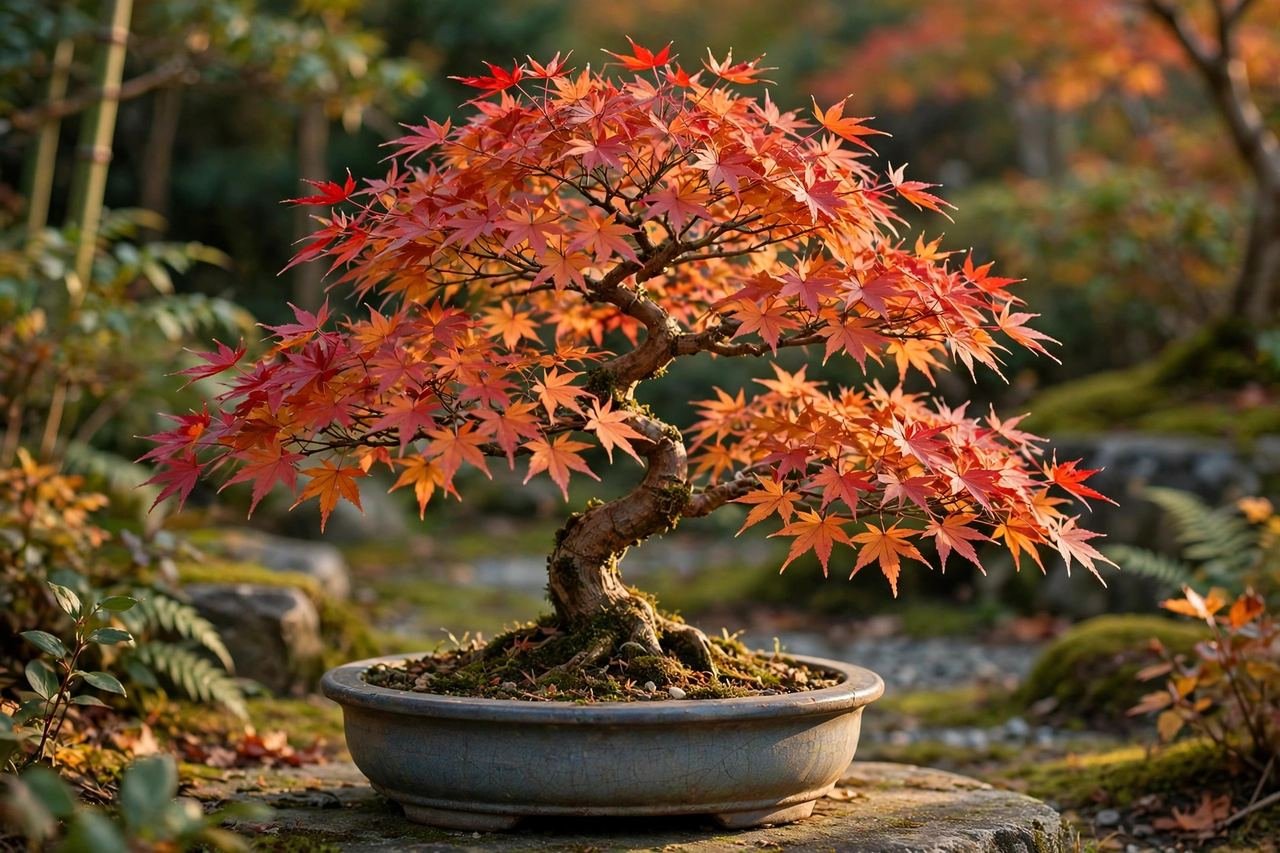
October is the reverse. In zone 5 it’s the end of the year. You’ll have no feeding, leaves will have dropped and your pots will be grouped and covered. In zone 8 it’s still the end of the growing season. You won’t need to protect from winter for weeks. There is no October work.
A Year With One Tree
Two growers have the same cultivar and printed Japanese maple bonsai seasonal calendar. The grower in Minneapolis feeds in March as it says to on the calendar. However, the tree is still dormant and the feed goes to waste. The tree then gets damaged by late frost. The grower in Atlanta waits. They only feed when the buds open. They provide shade for the new leaves in April and check the pot daily. This is just an example.
What Not to Do With The Seasonal Calendar
Using a Japanese maple bonsai seasonal calendar from another zone. If your calendar is for zone 7 then it’ll be off by weeks in zone 5 and 9. Use your own zone from the table.
Thinking the zone relates to care. The zone only shows you the coldest night of winter. It doesn’t tell you anything about the heat in summer, last frost or soil.
Moving your tree on a set date. March can be very sunny but it’s not spring! Wait for the buds to open and no frost forecast. Otherwise you’ll lose your first leaves of the year.
Thinking a warm zone doesn’t need winter protection. Zone 8/9 still need protection from wind. If there’s a warm period and your buds open early then they’ll be vulnerable to the next cold night.
If The Seasonal Calendar Still Fails
Your tree is leafing weeks later than the Japanese maple bonsai seasonal calendar says. Check the buds. If they’re opening then your tree is just doing its own thing. If they’re dry and brittle then scratch a twig to see if there’s any green underneath.
Your tree changed colour early in autumn and dropped its leaves quickly. This is usually because of a dry summer or early cold snap. Continue watering regularly. Don’t feed.
You never had a mild winter. If it wasn’t cold enough then your buds may open slowly and unevenly. Don’t try and force them by warming up or feeding. Give them time and expect a slow spring.
The Seasonal Calendar: Questions and Answers
What zone am I in?
Enter your zip code on the USDA Plant Hardiness Zone Map. It’ll tell you your zone based on your average extreme minimum temperature in winter.
Can I grow a Japanese maple bonsai in zone 9?
Some cultivars (e.g. Bloodgood) can be grown in zone 9. However, you’ll need to provide afternoon shade and regular moisture.
Is zone 4 too cold?
The species can be grown in zone 5. However, in zone 4 you’ll need to provide serious winter protection for your potted maple. Keep in an unheated garage or cold frame.
Will the Japanese maple bonsai seasonal calendar change for a young tree?
Yes. Young trees will leaf later, dry quicker and be more vulnerable to frost and heat. Check them first.
Conclusion
The Japanese Maple Bonsai Seasonal Calendar is not set in stone. Simply look up your zone, check the table and then decide the date based on how your buds are looking and the forecast. By doing this for a whole year it will become your own Japanese maple bonsai seasonal calendar.
Sources
Trusted reference guides for further reading: