
You have just watered and there are still damp soils however, your leaves are turning brown. Your first thought is to give your plant more water, mist or feed and hope it goes away. In reality this will make your leaves worse as they can be suffering from many different issues including lack of water, too much water, too much sun or cold nights.
When your Japanese maple bonsai leaves start to turn brown it’s simply a sign that the very tip cells of the leaves are dying due to a lack of water being delivered to them. The tips and edges will always be the first to go.
The Brown Leaves Answer, Briefly
Generally your Japanese maple bonsai leaves turning brown is a sign of leaf scorch. This is what happens when the leaves lose more water than the roots can supply. Usually caused by the leaves getting too much sun, drying wind or dry soils. The leaf tips and edges will turn tan or brown.
However, Japanese maple bonsai leaves turning brown can also happen due to the opposite issue, the soil staying too wet causing the roots to become starved. It could also be that the leaves have gone brown due to a late frost, fertiliser or salt burn. A less common cause would be a vascular disease stopping the water flowing up the branch. Take note of four things; location of browning, is it only on one branch or the whole tree, how quickly has it happened and feel the soil.
Read the Pattern First
This will help you to identify what is happening. Scorch is a symptom rather than a cause (University of Wisconsin Extension).
| Pattern | What it looks like | Likely causes | First check |
|---|---|---|---|
| Tip burn | Only the pointed tips of the leaf lobes turn brown and dry; the rest of the leaf stays green | Light frost, fertiliser salts, a dry spell after feeding, wind on soft new growth | When it started — after a cold night, or after feeding? |
| Edge scorch | A brown, crisp margin creeps in from the leaf edges; worst on the sunny or windy side | Hot sun, drying wind, dry soil, roots that cannot keep up | Soil moisture and the tree’s position in afternoon sun |
| Whole-leaf browning | Entire leaves turn brown, often soft or limp first, then dry; may drop while still brown | Root damage, waterlogging, severe drought, a hard freeze, verticillium wilt | Soil wetness, drainage, and the roots |
| Spots and blotches | Round or irregular brown or black spots, sometimes with a dark rim, scattered across the leaf | Fungal leaf spot or anthracnose after wet weather, bruising, insect damage | Wet spring weather, spots with dark centres, recent handling |
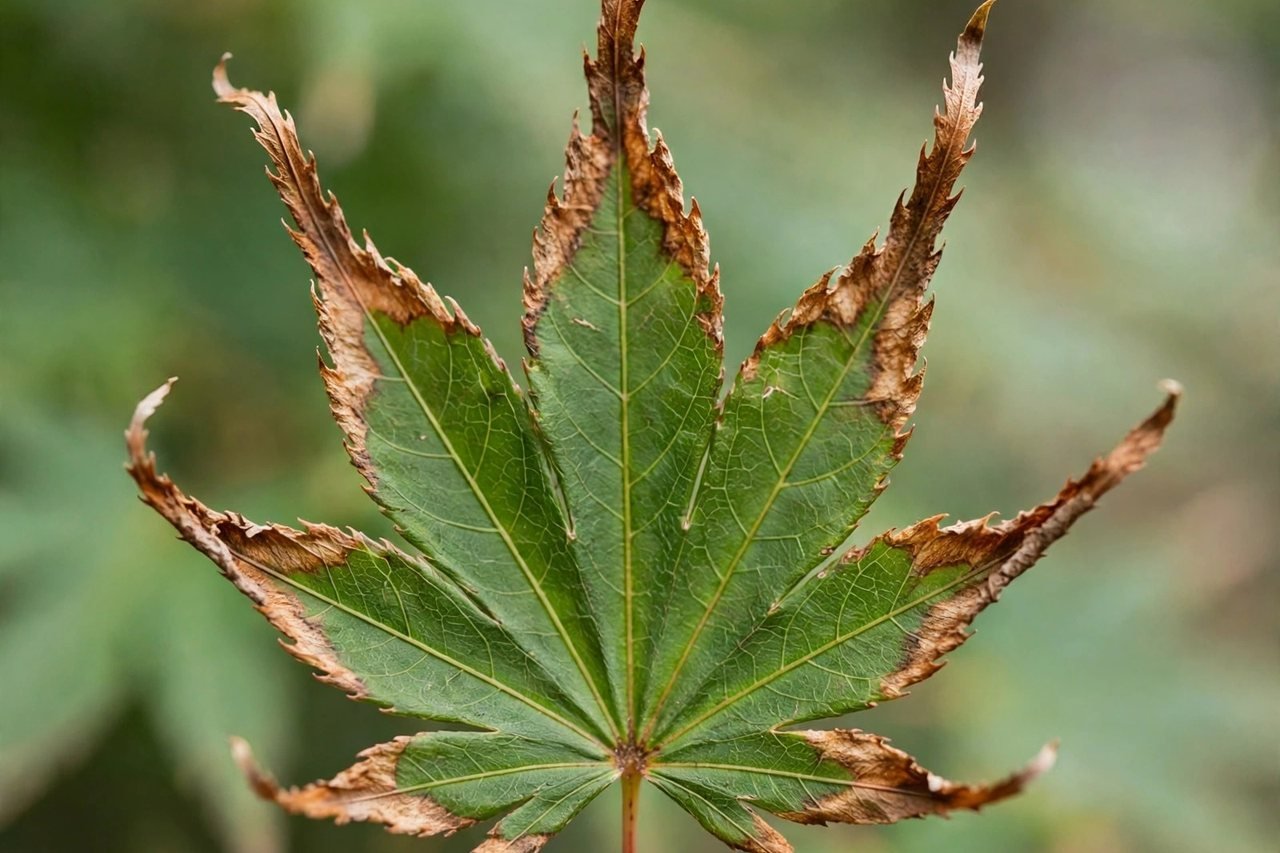
Tips and edges only
The classic scorch pattern. Only the tips and edges of the leaf are turning brown. The edges will be the first to go as they are the furthest from the roots. Usually the outer leaves, top canopy and side of the tree that receives afternoon sun/wind will be the worst.
One branch, or one side
If only one branch is turning brown whilst the rest of the tree is still green this is the most concerning pattern. Environmental scorch will affect the whole tree fairly evenly. If only one branch is wilting and turning brown it means only that branch is having a problem with water. This could be due to a vascular disease, physical damage or root issues on one side.
The Ten-Minute Inspection
Follow this list in order and take note.
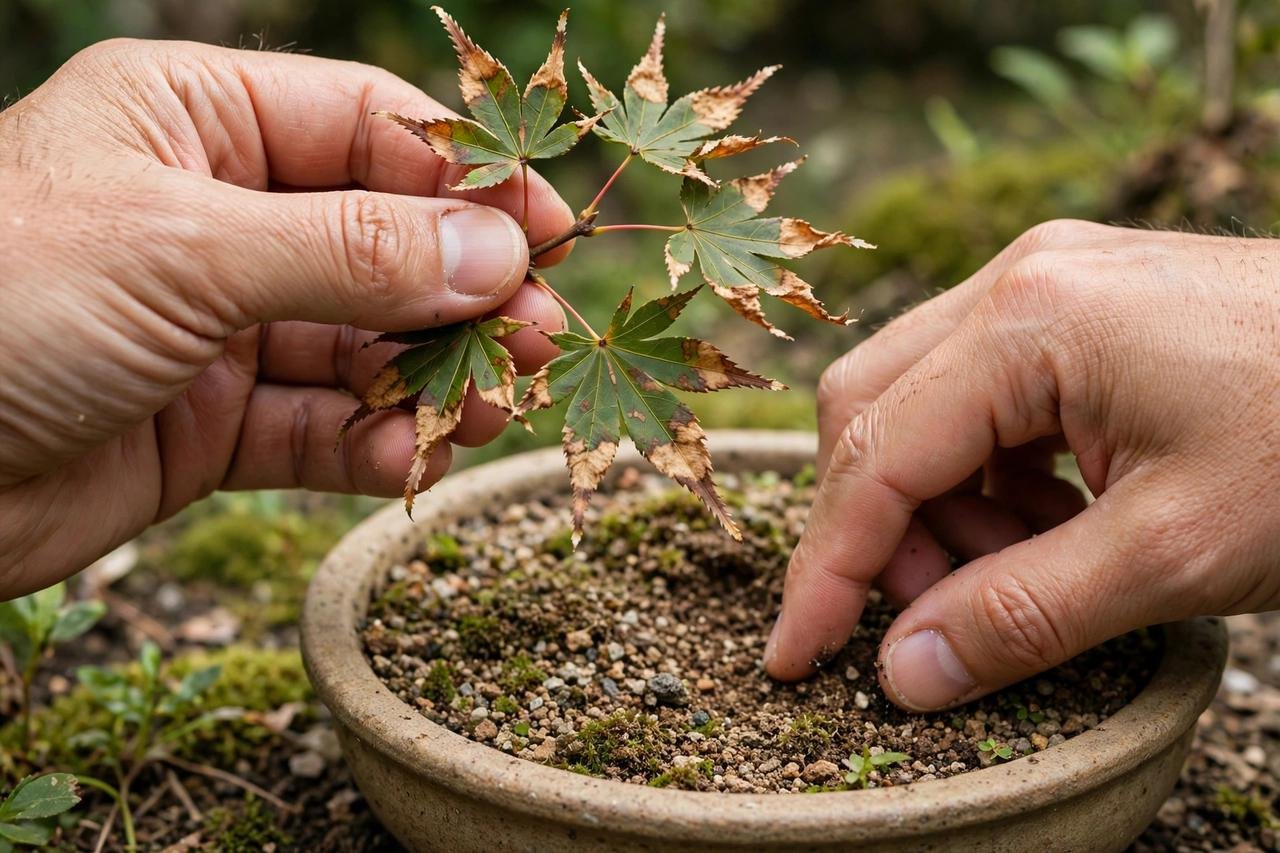
- Distance. Are there lots of leaves turning brown or just a few? One side or all round?
- Look at one leaf. Is it crispy and dry? Or soft and dark? Any yellow line? Any spotting or holes?
- Weather. Has it been over 90°F? Hot drying wind? Cold night? No rain for a week?
- Soil. How moist is the soil? Stick a finger in and deeper. If completely dry it’s drought. If wet and cold for days it’s drainage.
- Pick up the pot. If it’s light it’s completely dry. If it’s heavy and stays heavy it’s waterlogged.
- Pot & Location. Is it on a hot path, west facing wall or wind tunnel? Is the pot small and dark?
- New Growth. New tender leaves will go brown first with a frost or fertiliser burn. Older leaves will go brown first with drought.
- Underneath Leaves. If there are tiny insects, fine webs, fluffy white or sooty black patches there is likely to be pests.
- Think. Have you fed, repotted, moved or sprayed in the last week?
When the Roots Cannot Keep Up
Most Japanese maple bonsai leaves turning brown is due to your leaves losing more water than the roots can provide. Usually caused by not enough water due to dry weather, compacted soils or physical damage. Dry weather with warm temperatures is the most common cause (University of Wisconsin Extension).
As bonsai are grown in shallow pots the leaves will suffer quicker than they would in the ground. The simplest reason is drought. The soil will be completely dry and the fine roots will dry up first causing the edges to go brown. See watering in hot weather for how to check using your finger.
Overwatering can look like drought. As the roots are sitting in soggy, anaerobic soil they cannot take up any water so you’ll get leaf browning. If the pot is heavy and the soil smells sour don’t water. Check the drainage holes and allow the pot to drain.
Sun, Wind, and Frost
Sun and wind rarely happen on their own. Usually the tree has a lack of water in the roots. Acer palmatum can suffer from leaf scorch due to too much sun, wind or drought. New leaves are sensitive to frost and aren’t drought tolerant. Delicate leaves will show first.
Usually the cause is afternoon sun. Morning sun isn’t too harsh. However after midday, especially on a west facing side, the leaf can dry out quicker than the roots can provide water. If the leaf is going brown on the afternoon side it needs to be shaded during the hottest times. See sunlight for how much sun your tree should receive. See summer care for shading and cooling the pot.
Frost will cause Japanese maple bonsai leaves turning brown in the opposite season. A late frost in spring can cause the new tender leaves to go black as they’ve just opened. Often overnight. The older leaves will remain green. Usually the tree will recover and leaf again, however the damaged leaves won’t. See late spring frost.
When Browning Is Disease or Pests
Most Japanese maple bonsai leaves turning brown isn’t caused by disease. A common mistake is to spray without reading the pattern. However there are two patterns that indicate disease.
Verticillium wilt. This is a serious disease. Maples can suffer from this vascular wilt disease. Symptoms include wilting, scorching/browning, discolouration, stunting, defoliation and dieback. Symptoms can appear on just part of the tree such as one branch (Virginia Tech Extension).
The fungus enters from the roots and attacks the vascular tissues. This means the leaves on the branch won’t receive any water. Cutting a wilting branch can reveal dark discolouration inside. This will appear in rings or arcs following the growth rings. There is no cure. Prune off any dead branches back to healthy tissue. Disinfect your tools between cuts. Don’t add to your compost.
Fungal leaf spots & anthracnose. These will appear as distinct brown or black spots. Often with a yellow ring around them. They’re worst in humid wet weather. This is the opposite of scorch. Rarely will this kill your bonsai. Don’t spray as soon as you notice. Remove badly effected leaves, improve air circulation and water from the soil.
What to Do Now, and What to Leave Alone
Once you’ve identified the cause of Japanese maple bonsai leaves turning brown your tree will usually recover quite quietly. First move your tree out of any harsh afternoon sun and drying winds. This will stop the damage continuing. Next sort out the watering. If the soil is dry water well. If it’s wet allow it to dry.
Don’t feed, prune or repot your tree whilst it’s under stress. This will cause more stress. Feeding pushes out tender growth that the roots cannot support. Don’t remove any brown leaves. Half brown leaves are still feeding your tree.
Only remove completely dead and dry leaves. Only prune any obviously dead branches. Scratch the bark to see if there is any green underneath. New growth is the key. Fresh growth that opens green and undamaged tells you the problem is behind you.
One Tree Browning, One Staying Green
A grower notices Japanese maple bonsai leaves turning brown on the edges in July. She waters twice a day however the leaves continue to go brown. During her inspection she notices the pot is heavy, the soil is moist to finger depth and there is standing water. The tree is drowning! She stops watering, clears out the drainage holes and moves it to a bench to allow air under the pot. Within a week the leaf browning has stopped.
What Not to Do With Brown Leaves
Don’t overwater. If the soil is already moist you’ll be causing root rot. Always check the soil first.
Don’t feed. Feeding a tree that is suffering will cause tender growth that the roots can’t support. A high feed can actually burn the roots. Only feed if your tree is growing well.
Don’t remove all the brown leaves. Half brown leaves are still feeding your tree. Removing them will take away food and cause more wounds. Wait for them to fall off.
Don’t spray. Most leaf browning is environmental. A fungicide won’t help sun, wind or water. Read the pattern and only spray once you’ve found the pest/disease.
If Brown Leaves Still Won’t Improve
Japanese maple bonsai leaves turning brown despite the soil being moist. This means it’s due to drainage, root issues or vascular disease. Check the drainage holes and look for one branch pattern.
Japanese maple bonsai leaves turning brown every summer in the same spot. This is due to the location. West facing wall, hot path or wind tunnel will cause scorch every year.
Brown Leaves: Questions and Answers
Can I get my leaves to turn green again?
No. Once an area is scorched it is dead and will not come back. However they will still feed your tree. Check new leaves.
Should I remove the brown leaves?
Unless they’re completely dead and dry leave them. Half brown leaves will still photosynthesize. Removing healthy leaves will slow recovery.
How do I know if they’re browning or autumn colours?
Autumn colours will affect the whole tree. The leaves will turn red, orange and gold depending on the season. See fall care. Leaf browning due to stress will be dry, crispy and patchy. It will happen in summer.
Conclusion
Japanese maple bonsai leaves turning brown is a message. Once you’ve read the pattern and checked the soil you’ll usually know the cause. Solve this one issue and leave the leaves. Next growth will tell you if you were right.
Sources
Trusted reference guides for further reading: